Blog Archives

There Are Still Good People Out There
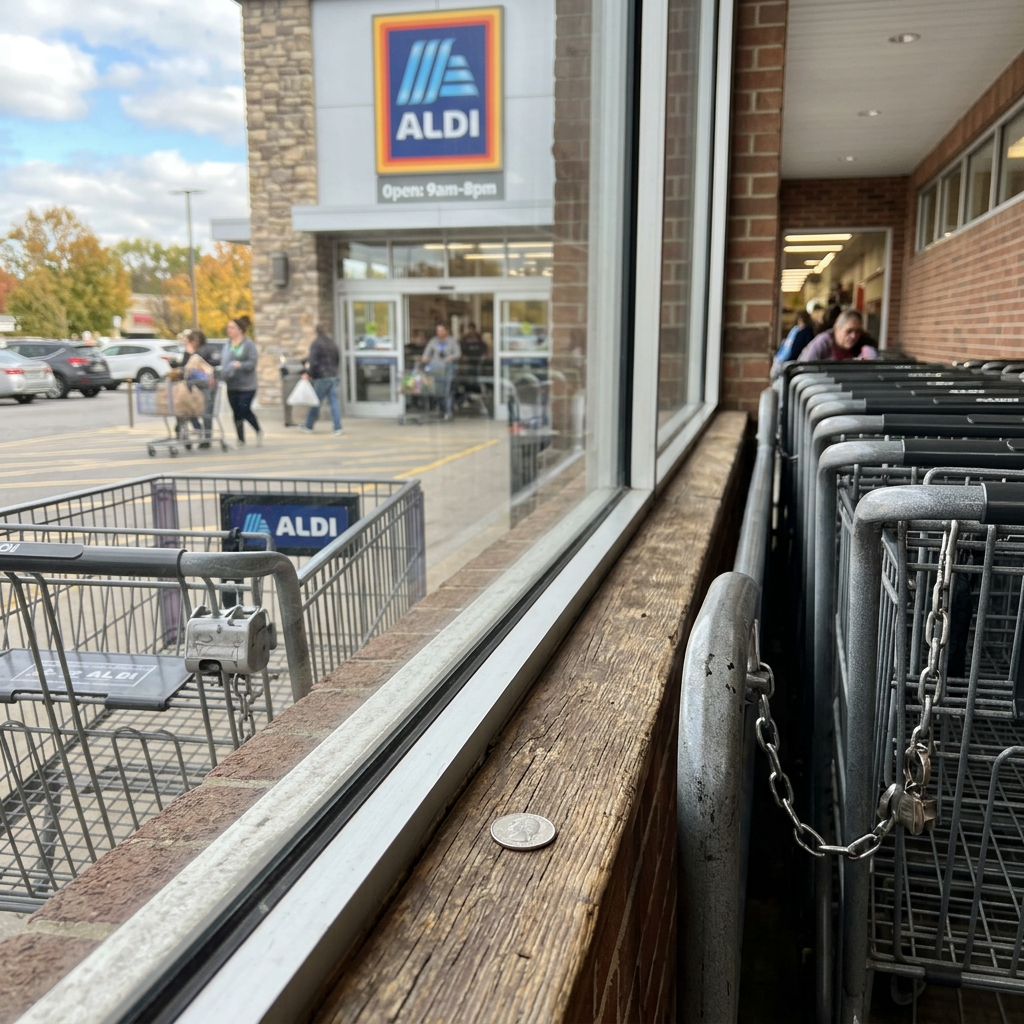
I stopped at the Aldi in my neighborhood and noticed a quarter sitting on the window ledge near the grocery carts. Someone had left it there for the next person who needed a cart.
I used it, did my shopping, and put the quarter back in the same spot. It was such a small gesture, but it made me smile.
To whoever left it there, thank you. And thank you to everyone who does little things like this without expecting recognition. It was a welcome reminder that there are still good people out there. Sometimes all it takes is a quarter to pass that feeling along.

Racing to Help Others
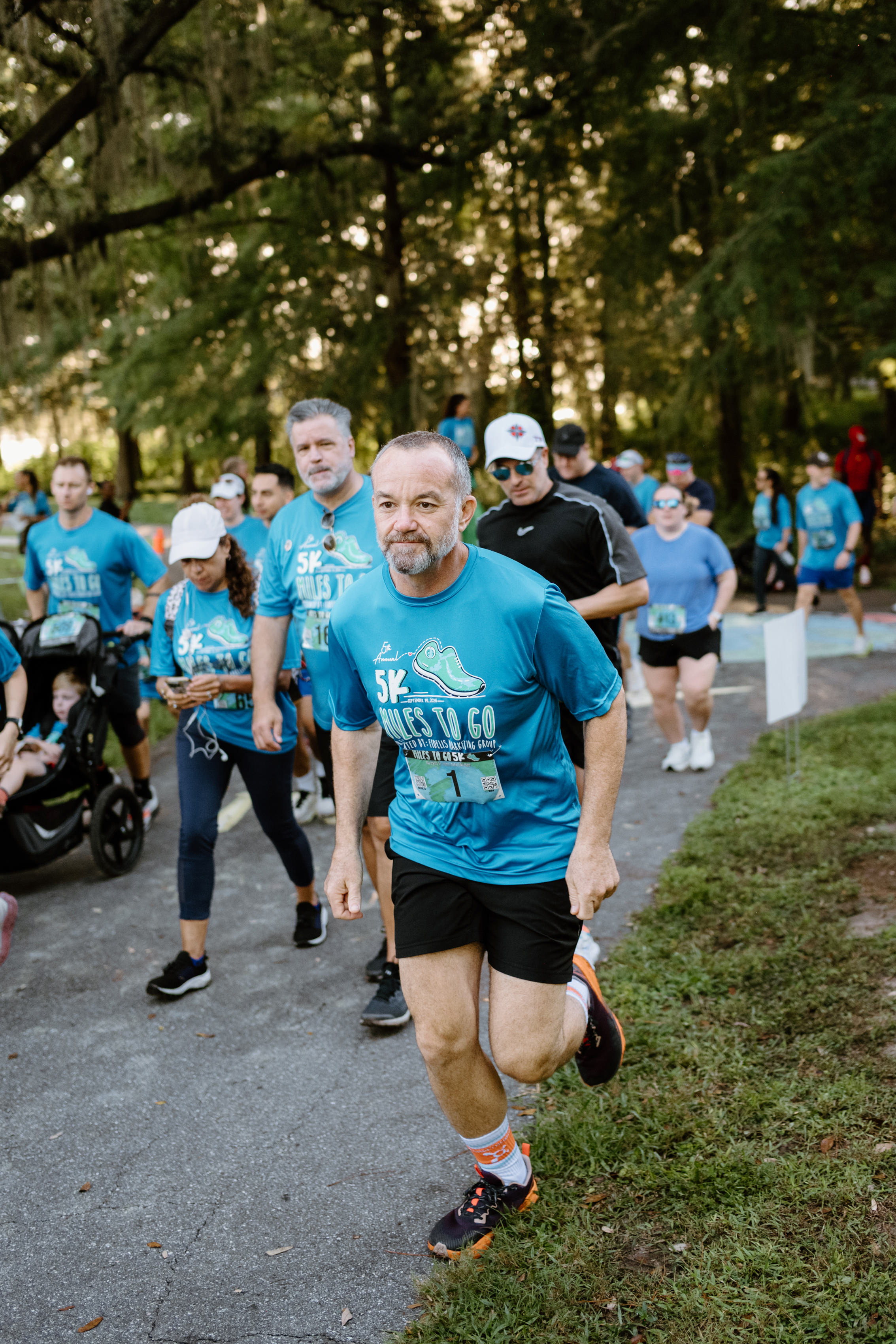
This was LOUJSWZ Inc.’s first promotion supporting Miles to Go, a local nonprofit helping people experiencing homelessness throughout Orange County.
What a great feeling it was to give back—not only by supporting such a worthwhile organization, but also by helping others participate in the race and contribute to an important cause. Seeing our community come together reminded me that even a small company can make a meaningful difference.
I am especially grateful to my clients. The work we do together provides the resources that allow LOUJSWZ Inc. to support organizations like Miles to Go. By trusting us to help improve their lives and businesses, our clients also help us give back and lift others toward a better place.
This race represented more than crossing a finish line. It was about community, gratitude, and putting our values into action.
Thank you to Miles to Go, every participant and volunteer, and especially our clients for helping make this possible. This may have been our first promotion supporting a charitable organization, but it will not be our last.
At LOUJSWZ Inc., success means more when it helps someone else succeed.
Service Should Start Close to Home
I have been thinking a lot about what it means to give back without making it about yourself.
One of the things I have always admired about the ideals of our founding fathers is the belief that citizenship carries responsibility. You contribute. You serve. You try to leave your community a little better than you found it.
That is something I want reflected in my little company as well.
I am fortunate that the business has created some profit, and rather than simply talking about community, veterans, service, or helping others, I decided I wanted to actually do something with a portion of it.
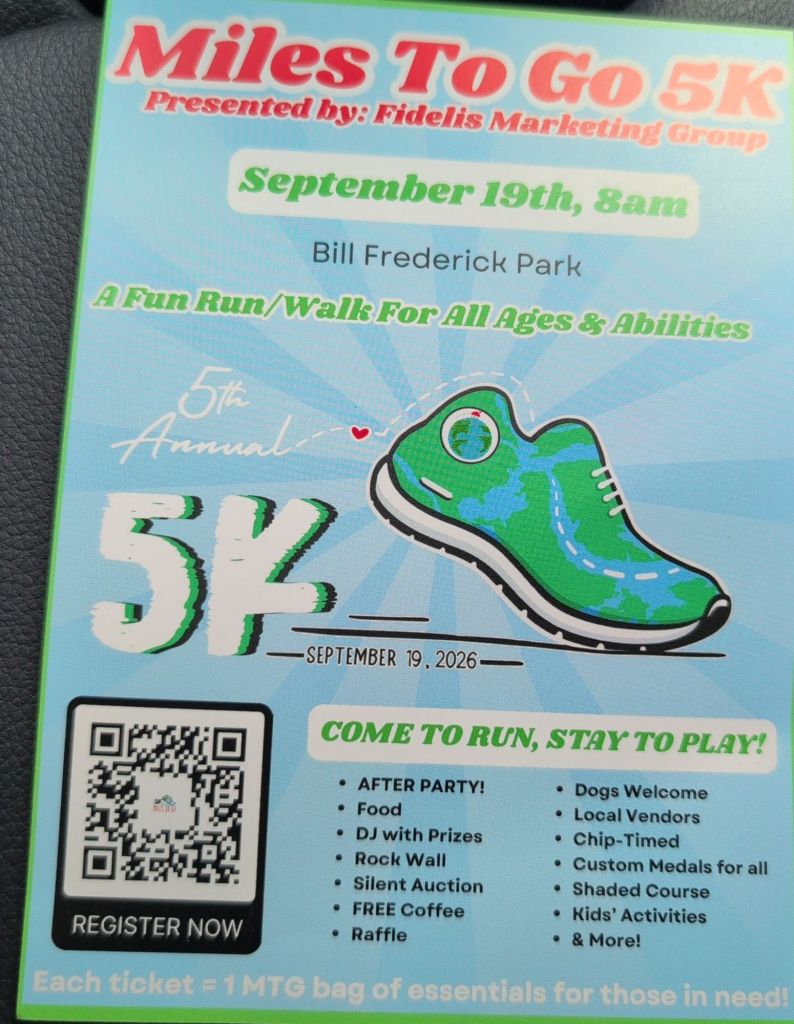
I selected a local nonprofit, Miles to Go, that helps people experiencing homelessness in the Orlando community. Homelessness is difficult enough under any circumstance, but homeless veterans in particular are something I have always cared about.
At the same time, health and fitness have long been an important part of my life. So when I saw an opportunity to support a 5K that benefits Miles to Go, it felt like a natural fit.
I anonymously paid for several people to participate.
I am not sharing that because I think it is some grand gesture. It is not. I am sharing it because I think businesses, even very small ones, have an opportunity to decide what they stand for through their actions.
We hear people say all the time that we should help veterans, support our communities, care for people in need, and improve our health. Those are good words. But somewhere along the way, the words have to become actions.
As the old saying goes, put your money where your mouth is.
For me, this is also about honoring the people and experiences that have shaped my life. It is about my late wife, my family, my military service, the people who have supported me, and the values I continue to hold dear.
Service does not always have to be large, public, or complicated.
Sometimes it is simply deciding that when you have a little extra, you share a little of it.
My company is small. Its contribution is small.
But if that contribution helps someone take another step forward, then it mattered.
And for me, that is enough.
The Torch Has Been Passed
I did not think this day could come. Even after my son raised his right hand, a part of me never truly believed I would one day watch him become an active duty service member.
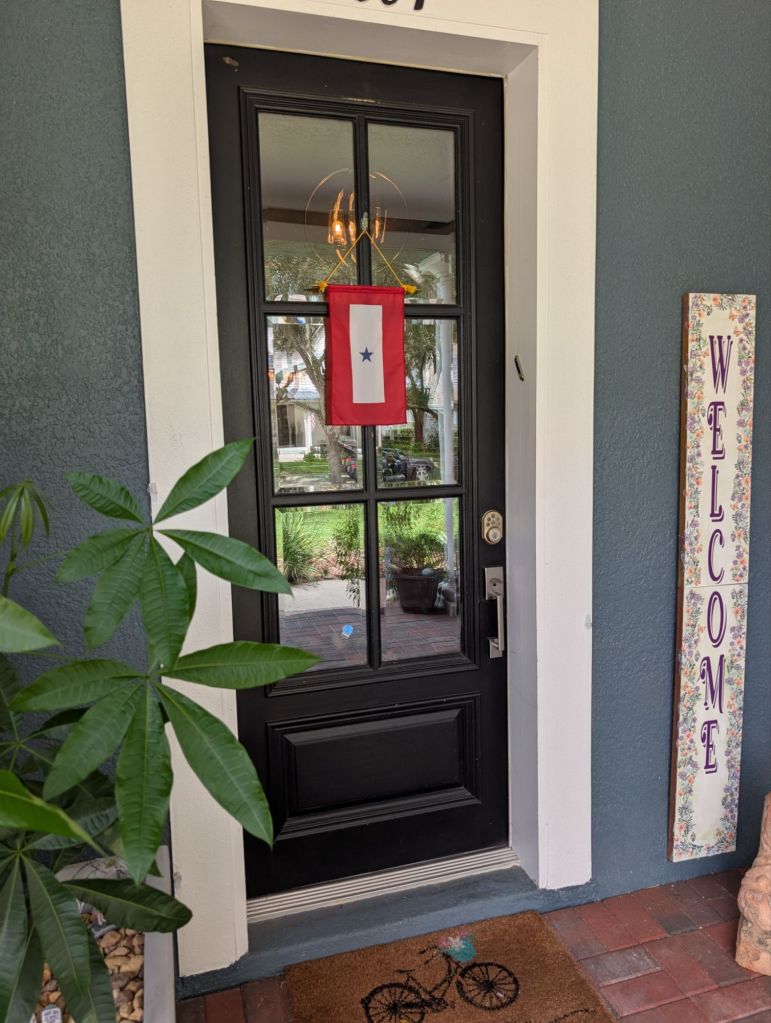
I recently hung a Blue Star Service Flag in my window. It is a daily reminder that the next generation continues to answer our nation’s call, accepting personal risk for a higher calling.
As a young boy, I knew I was meant to serve. Throughout my Army career, I rarely thought about the danger. The mission always came first. It wasn’t until I was saying goodbye to my own children before deployments that I began to understand where the real burden was carried.
Today, I see that burden through different eyes.
I used to reassure my family by saying it was more dangerous driving to the base in Atlanta than serving in the area of operations or on a forward operating base. At the time, I believed it. It was easy to say because I was the one going.
It is different when it is your son.
Modern warfare is different with these drones. But Information is still limited, uncertainty is constant, and the waiting can be relentless. Yet one truth has never changed: the hardest part of military service is often carried by the families who remain behind.
I have always been proud to serve my country.
Today, I am equally proud—and humbled—to be the father of someone who has chosen to do the same.
The torch has been passed. My prayers now travel with him, his wife, and every family waiting faithfully at home.
When the Ramps Found Their Next Home
Yesterday was a good day.
My neighbor is a Vietnam veteran. Neuropathy has slowly been taking its toll on his legs and lower back, and lately he’s been falling more often. While talking with his daughter, who cares for him, she mentioned they wished they had a safer way to get down the front steps.
“Hold on a second,” I said.
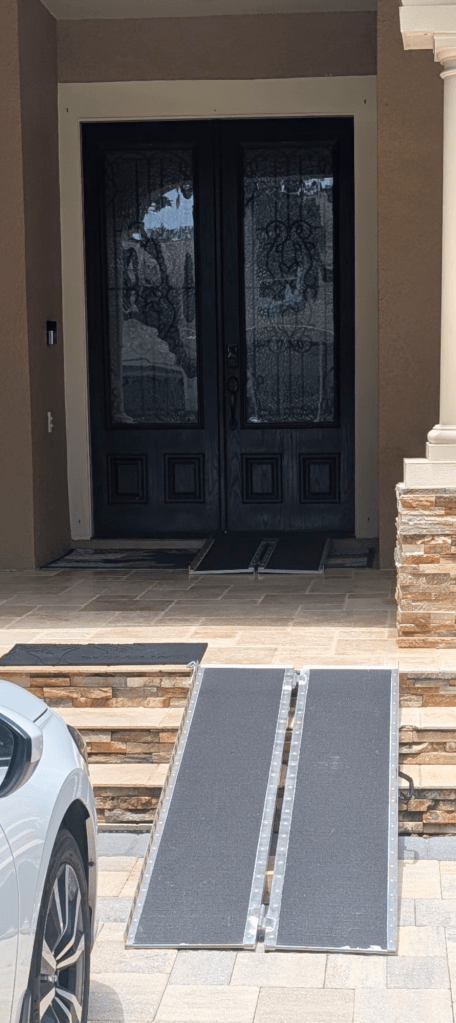
I walked across to my garage and brought back the two ramps for Sherri. Within minutes, we had them secured to their front steps. Just like that, they had a safer way for him to get in and out of his home.
It made me think.
It took us nearly a year to realize how much we truly needed those ramps. When you’re caring for someone with an incurable illness, watching them slowly lose their mobility, your mind is consumed by the next appointment, the next medication, the next crisis. Something as seemingly simple as installing a ramp somehow becomes another impossible decision. Which ramp? What angle? How do you secure it? Will it be safe? None of it feels simple when you’re living under constant pressure.
Yesterday, those hard-earned lessons allowed me to help someone else before it was too late. My neighbor gets to use the ramps while he can still walk with assistance, preserving a little more independence and, hopefully, preventing another fall.
I know Sherri loved this.
Even though she’s no longer here, her kindness continues to reach people she’ll never meet. Those ramps once carried her safely home. Now they’re helping a veteran like her father do the same.
Maybe that’s one of the quiet gifts of love. It doesn’t end when a life ends. It simply finds another person who needs it.
Yesterday wasn’t just about a couple of aluminum ramps.
It was another reminder that Sherri is still making the world a little better—through the people she changed, the lessons she taught, and the love she left behind.
Is This What Healing Feels Like?
Lately, I’ve been asking myself questions that don’t seem to have answers for.
Does everything eventually become routine?
Does everything that is new eventually become old?
They call it the “daily grind” for a reason, don’t they?
When does something lose its luster?
And perhaps the harder question…when do we?
The past year has changed me in ways I never expected. Losing my wife after watching her fight with every ounce of strength she had, trying to raise my daughter, helping fellow veterans navigate a system that often overwhelms them, trying to build a business with purpose—it has all been meaningful. Yet, at times, it has also been exhausting.
People sometimes tell me how strong I am.
The truth is, strength isn’t the absence of questions. Sometimes it’s simply continuing to put one foot in front of the other while carrying them.
Why do I struggle to feel purpose on some days when I know my work changes lives?
Why does my soul sometimes feel quiet instead of alive?
It isn’t that I lack free will. Every day I choose to move forward.
It isn’t that I cannot love. If anything, loving deeply has become both my greatest gift and my greatest source of pain.
So what is it?
Is my tank full—but filled with sand instead of water? Have years of responsibility, military service, loss, caregiving, and simply surviving filled every available space until joy has difficulty finding room?
Or is it something simpler? Is my brain still healing from grief? Are the chemicals that shape emotion simply trying to find their balance again?
I honestly don’t know.
What I do know is this: purpose doesn’t seem to be something we find once and keep forever. It fades. It changes. It asks us to search for it again and again.
When I help a veteran receive benefits they earned decades ago, I see purpose.
When I teach someone how to navigate the VA system so they can eventually do it themselves, I see purpose.
When my daughter smiles, I see purpose.
But even purpose doesn’t erase grief. It simply gives grief somewhere meaningful to stand.
Maybe that is what healing really is.
Not waking up one morning and feeling whole again.
Not forgetting the people we’ve lost.
Not pretending life is the same.
Maybe healing is learning that even when life loses some of its shine, it still has value. That even when our soul feels quiet, it is still there. That even when we don’t have all the answers, we can still choose kindness, service, and love.
I don’t know if everything eventually becomes ordinary.
I do know that the people we help, the lives we touch, and the love we give never truly lose their value.
Perhaps that’s enough for today.
Tomorrow, I’ll ask the questions again.
And I’ll keep walking anyway.

Serendipity
There are moments in life that feel accidental at first glance, but later settle into your heart as something much deeper. Moments where friendship, love, timing, grief, and grace all quietly intersect in a way that cannot simply be explained away as coincidence.
This past week, I took my first trip in four years without the overwhelming dread or guilt of leaving my wife behind. That alone felt strange to me. For years, every decision, every outing, every mile traveled carried the weight of caregiving and concern. Even moments that should have been joyful often carried an undercurrent of worry.
But this trip was different.
I traveled to Charleston to attend the graduation of the son of one of my classmates from our alma mater. It was a wonderful celebration filled with memories, laughter, and the strange realization that time continues to move forward whether we are ready for it or not. I stayed with another longtime classmate who still works at the school, and for a few days, I was surrounded by nearly forty years of friendship and shared history.
The morning after the celebration, I woke early and sat having coffee with my friend’s wife, someone I have also known for nearly four decades. We spoke quietly in that way people do in the early morning, before the world fully wakes up.
She shared how they had recently moved her parents from Maine to live near them in an independent living facility. Her father suffers from Alzheimer’s, and her mother from dementia. We talked about the difficult reality families face when navigating those diseases.
One of the strange truths about Alzheimer’s is that, as horrible as it is, there is often a somewhat defined progression. Dementia, however, can be incredibly broad and unpredictable. Symptoms vary wildly. Behaviors change suddenly. Good days and difficult days arrive without warning. For families who have never walked through it before, it can be exhausting, confusing, heartbreaking, and frustrating all at once.
Even after only a couple of months, I could already see the emotional toll it was taking on her.
She explained how her mother had insisted on hip surgery because she believed it would improve her quality of life, but instead, it had left her nearly immobile.
And immediately, my mind went to Sherri’s scooter.
For months, it had been sitting quietly in Sherri’s office gathering dust. A bright pink mobility scooter that no one else could ever possibly mistake for their own.
Of course it was pink.
Sherri insisted on pink.
Not just any pink scooter either. I had to drive more than one hundred miles to find one because she refused to settle for anything less than the exact shade she wanted to match her love of Lilly Pulitzer colors and style. Then she decorated it herself. She made a Lilly Pulitzer-style cover for the back seat, and because she was so tiny, we even added a piece of pink foam so her feet could comfortably reach the pedal.
That scooter was unmistakably hers.
As my friend’s wife spoke, I realized that the scooter sitting unused in Orlando could suddenly become something meaningful again.
I told her, “I have something that can help.”
It is amazing how easy it is nowadays to move something across the country. There truly is an app for everything. Within a short period of time, I found a kind gentleman willing to transport the scooter from Orlando to Charleston the very next day.
And just like that, Sherri’s little pink scooter was headed north to help another family carrying a burden of love and caregiving.
I sat there afterward thinking about how strange and beautiful life can sometimes be.
What are the odds that I would finally take my first trip away?
What are the odds that this conversation would happen over early morning coffee?
What are the odds that a scooter sitting unused for months would suddenly become exactly what another family needed?
Some people call that coincidence.
I do not.
I believe there are moments of divine intervention woven quietly into our lives. Moments where love continues moving long after someone is gone. Moments where friendship creates opportunities for compassion. Moments where grief transforms into purpose.
Serendipity is a funny thing. It often arrives carrying both sorrow and joy at the same time.
What touched me most was realizing that even now, Sherri is still helping people.
Even now, her kindness, personality, style, stubbornness, humor, and love are still moving through the world in tangible ways. A pink scooter decorated by her own hands is now going to reduce the burden on another daughter caring for her parents.
And honestly, I think that would make Sherri smile.
Life can be unbelievably difficult. Illness, loss, aging, caregiving, and grief all remind us how fragile we really are. But friendship, love, and compassion remind us that none of us were ever meant to carry those burdens alone.
Sometimes the greatest acts of grace are not the massive miracles.
Sometimes they are simply a cup of coffee, an old friendship, a heartfelt conversation, and a pink scooter finding its next purpose exactly when it is needed most.

When I think of Sherri,
The first thing I think about is her aura. Sherri had a golden aura, like a sunrise—quiet, calm, and bright, full of promise.
The first time I saw her in person was on our first date. It was at Seasons 52 on the perimeter in North Atlanta. I was sitting at the bar eagerly awaiting to finally meet her.
When I turned and saw her, I was struck by her refined, elegant presence and her physical beauty. I felt her aura immediately. I knew in that instant through her smile that there was something extraordinary about her. Yes, she was physically beautiful, but it was always so much more than that.
Long before I saw her face, I had already come to know her character through months of writing to each other through emails as we seemed so busy with life to meet. She had strength, depth, and a goodness that shined from within. I had read it in every email she wrote and this aura I felt proved it.
Her life shaped the strength that all of us came to admire. Born in Vietnam during the war in a U.S Army Hospital. She was raised in a family that through all the setbacks they never gave up on each other. Losing both of her parents in tragic accidents at a young age, she still rose above every hardship. She worked full time, cared for her siblings, and earned both her undergraduate and graduate degrees paying for her schooling herself. She never bragged about any of it as that wasn’t Sherri. She was a woman of action not words. Extraordinary in every way, yet humble enough to rarely speak of herself.
Sherri was the most patient person I have ever known, and when I say patient, I mean years, hell she was married to me. She saw the good in people even when others could not. She listened beyond words. That was one of her greatest gifts. No matter the country, culture, or language, people felt her kindness, her serenity, and her goodness. Animals felt it too. Every creature we had, naturally found their way to her. She made every living thing feel safe but she was also tough.
She was very tough, but always fair. That fairness is why she rose in positions at State Farm, where she led hundreds by her daily example of servant leadership. I still smile thinking about a day in Las Vegas working for State Farm. She was handling an accident claim for Andre the Giant. I think we all have heard of him but if you haven’t, he was a world-famous professional wrestler that stood 7 foot 10 and weighed 500 pounds. His Rolls-Royce had been hit, and he was furious that the rental car did not match the kind of vehicle he was used to driving. He demanded to come into the office and deal with her face-to-face. That poor fellow had no idea who he was dealing with. Our Sherri, never intimidated by anyone, calmly handled the situation and sent him on his way satisfied, I assume with a regular car that he was due. That was her—steady, fearless, fair, and always in command without ever raising her voice. She was strong without ever making a person feel small.
She had vision in everything she did—whether it was leadership, fashion, family, or the way she could see the ripple effects of decisions four and five levels deep. I used to say if I had known Sherri when I first came into the military, I would have been a four-star general, because she had that rare ability to bring people together and lead them without ever needing the title. She was the matriarch of our family.
I relied on her so much. To smooth things, I roughed up. To make it all better for us all. Everyone asked her without knowing to do that for them. She was our Sage. She just made us better.
In the hardest chapter of her life and her life was hard; she showed us all what true strength and love looked like.
I do not think you can fully understand her character until you understand what she endured in her final years. The pain she carried, the stoicism she showed, the way she kept smiling even in the most horrific moments and through it all she was still thinking and doing for others.
When her body was gone, she endured for her family to be here for as long as she could; she never never gave up. In the middle of her own suffering, she gave counsel from the bed side and listened to all of her friends and family while telling them everything would be ok. For the last year she could not walk, Her mouth was disfigured from the malignancies. She suffered six broken bones from the pressure, eleven hospital stays and surgeries, every movement was painful but she was always smiling. The last picture I have of her was with a Reese’s peanut butter cup and her smile the day before she died.
Sherri was my Briar Rose, my partner, my example of grace, toughness, fairness, beauty, and vision. She had a way of making people feel seen, heard, and loved.
Her life was not only beautiful in how she lived it, but in how she lifted every one of us around her.
And though her physical presence is gone, her aura—the same golden aura I felt the first time I saw her—still rises with us
and will always rise with us every new day.
May she rest in peace.

What is planted in love is rarely lost.
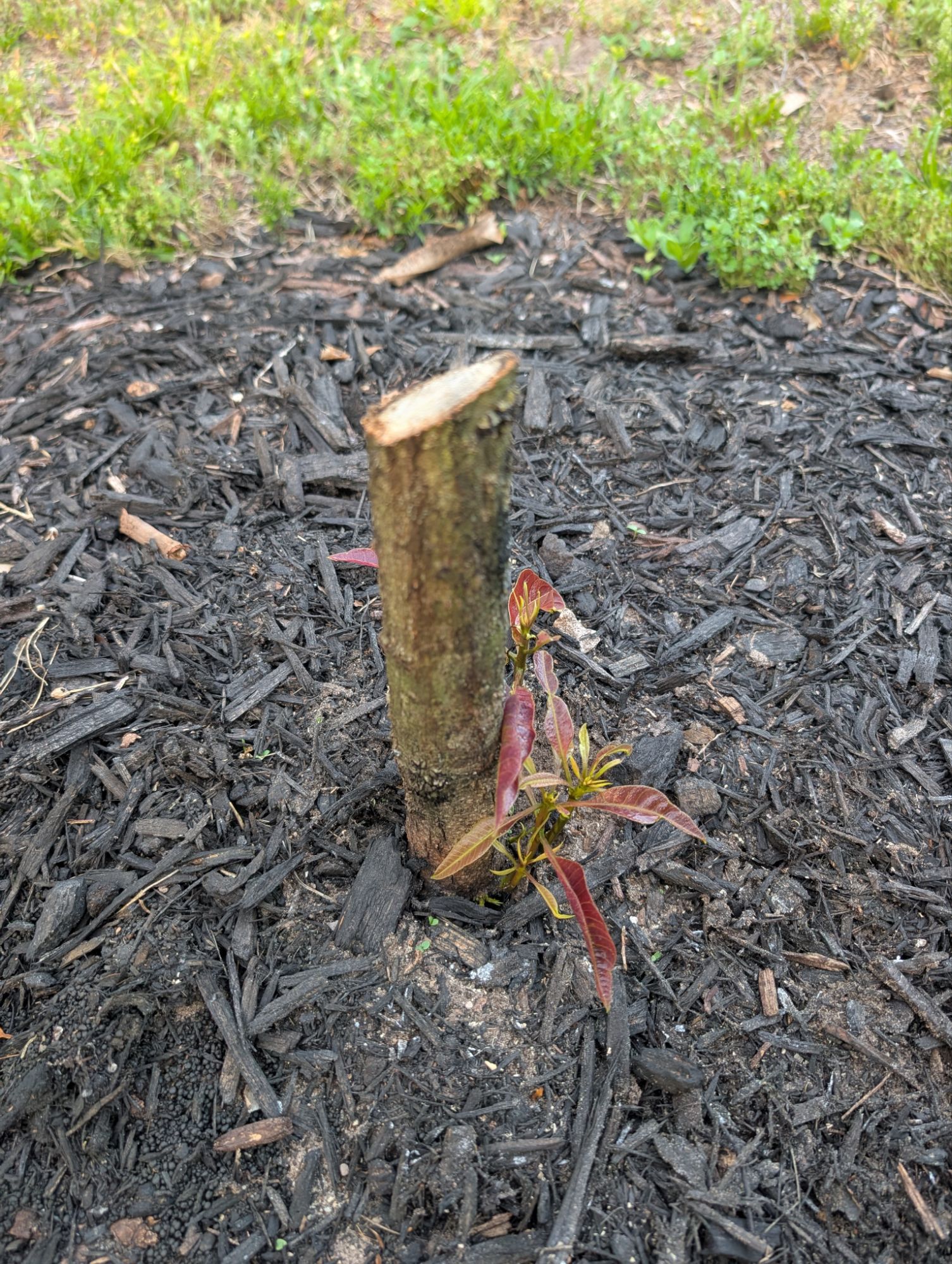
After the freeze, I posted a question on “Nextdoor” about our Kent Mango trees. I asked; are they beyond saving? They were so badly burned in the bitter frost even though I covered them and wet them. A gentlemen posted a response to cut them to the stump and they might grow back.
I hesitated for a month or two. I first cut the leaves, then the branches, then finally all the way to the stump. It’s been a month or two now, maybe even three.
I have lost track of time since Sherri has passed. I had given up on the two little Kent Mango trees. Her favorite variety. It took me months to find them for her.
Lo and behold, they’ve come back.
Sherri’s gone now.
I planted these trees for her. She did get to see them and they did even bloom once, but the frost killed them. But did it really? Like Sherri, they’re still here..
Like Sherri, everything she touched, is still here, still growing, still shining.
Her physical presence was touched by something so cruel and final, and yet what she planted in this world—through love, service, grace, banana bread, courage, family, and the way she made people feel seen—did not die with the frost. It remained in the roots of everyone she loved.
It will always be.

A Journey to Acceptance: My Eye-Opening Experience with Medical Marijuana
I was born and raised in Miami, Florida — in the middle of chaos and change. The city I grew up in during the 70s and 80s was a powder keg of race riots, refugees, and drugs. Miami was overrun — and that’s putting it kindly. Cocaine, marijuana, and the war on drugs were everywhere.
I never touched any of it. Not once.
It was a badge of honor, a personal vow. My father was a judge, and I took pride in the discipline that kept me away from substances that, to me, represented weakness and failure. I saw alcohol as adult, social, and controlled. Marijuana? That was for the lost.
For most of my life, I never questioned that belief.
But life has a way of testing the walls we build around our certainty.
When my wife’s illness began to take over our nights, sleep became hard. She was in constant pain, and nothing — not the pills, not the prescriptions, not the endless “next options” — brought her relief without a cost. Then one night, she tried a simple gummy. She slept through the night.
That experience made me aware — painfully so — of my own hypocrisy. While she found healing through a plant I had long dismissed, I was numbing myself each night with alcohol — not to enjoy, but to stop feeling, to force sleep. I told myself it was normal, acceptable, even earned. But it wasn’t helping.
It wasn’t until I was helping a client — a veteran — through her VA disability claim that the truth caught up with me. She confided in me about her fear of admitting she used marijuana to manage anxiety and sleep. I told her what I believed: that she shouldn’t be ashamed, that seeking help isn’t weakness, and that medical care, when legal and responsible, is private and protected.
Then it hit me like a mirror.
How could I coach her toward honesty and healing while denying myself the same?
That same day, I called my wife’s physician, scheduled an appointment, and applied for my medical marijuana card. Since then, I take a gummy every night. I sleep. I think more clearly. I drink less. I feel present.
My view has changed completely — not because of politics or persuasion, but because of experience. What I once called weakness, I now see as wisdom. The real weakness was refusing to see past my own judgment.
In Florida, medical marijuana has been lawful since 2016. But for me, it only became personal when life humbled me enough to listen.
The more I experience life, the more I understand that nothing truly changes until we become aware. Awareness brings empathy, and empathy brings wisdom. And wisdom — I’ve learned — is not the privilege of youth, but the product of life lived honestly.


