Blog Archives
Service Should Start Close to Home
I have been thinking a lot about what it means to give back without making it about yourself.
One of the things I have always admired about the ideals of our founding fathers is the belief that citizenship carries responsibility. You contribute. You serve. You try to leave your community a little better than you found it.
That is something I want reflected in my little company as well.
I am fortunate that the business has created some profit, and rather than simply talking about community, veterans, service, or helping others, I decided I wanted to actually do something with a portion of it.
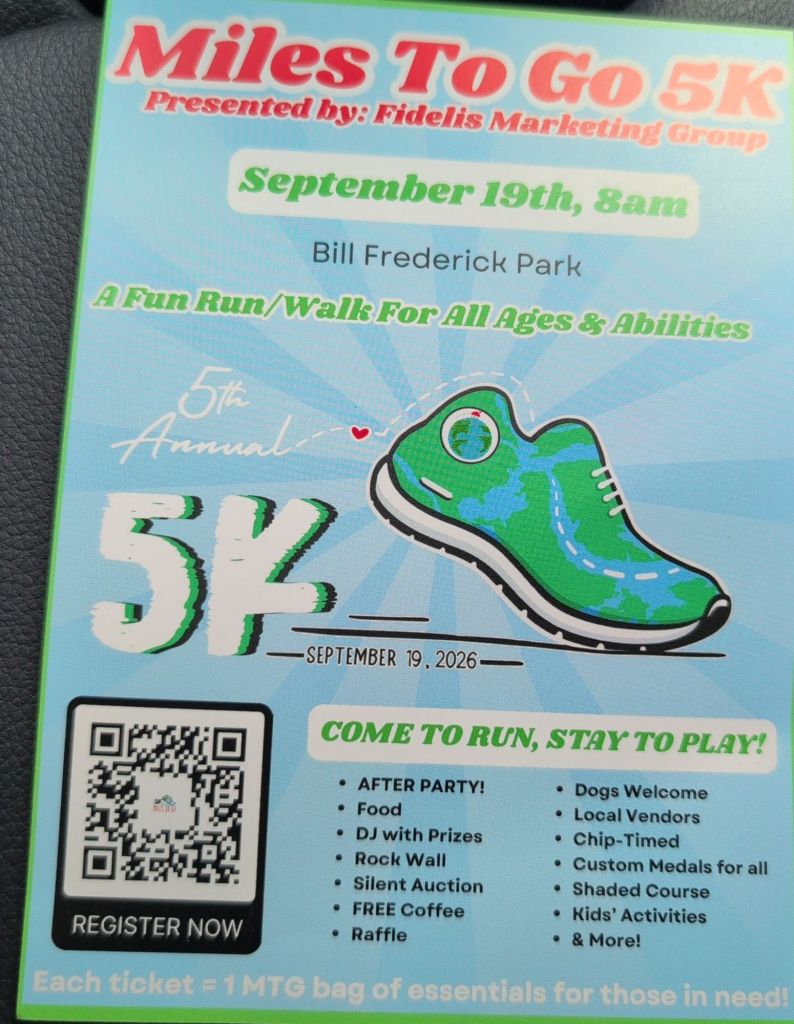
I selected a local nonprofit, Miles to Go, that helps people experiencing homelessness in the Orlando community. Homelessness is difficult enough under any circumstance, but homeless veterans in particular are something I have always cared about.
At the same time, health and fitness have long been an important part of my life. So when I saw an opportunity to support a 5K that benefits Miles to Go, it felt like a natural fit.
I anonymously paid for several people to participate.
I am not sharing that because I think it is some grand gesture. It is not. I am sharing it because I think businesses, even very small ones, have an opportunity to decide what they stand for through their actions.
We hear people say all the time that we should help veterans, support our communities, care for people in need, and improve our health. Those are good words. But somewhere along the way, the words have to become actions.
As the old saying goes, put your money where your mouth is.
For me, this is also about honoring the people and experiences that have shaped my life. It is about my late wife, my family, my military service, the people who have supported me, and the values I continue to hold dear.
Service does not always have to be large, public, or complicated.
Sometimes it is simply deciding that when you have a little extra, you share a little of it.
My company is small. Its contribution is small.
But if that contribution helps someone take another step forward, then it mattered.
And for me, that is enough.
Yesterday was a great day.
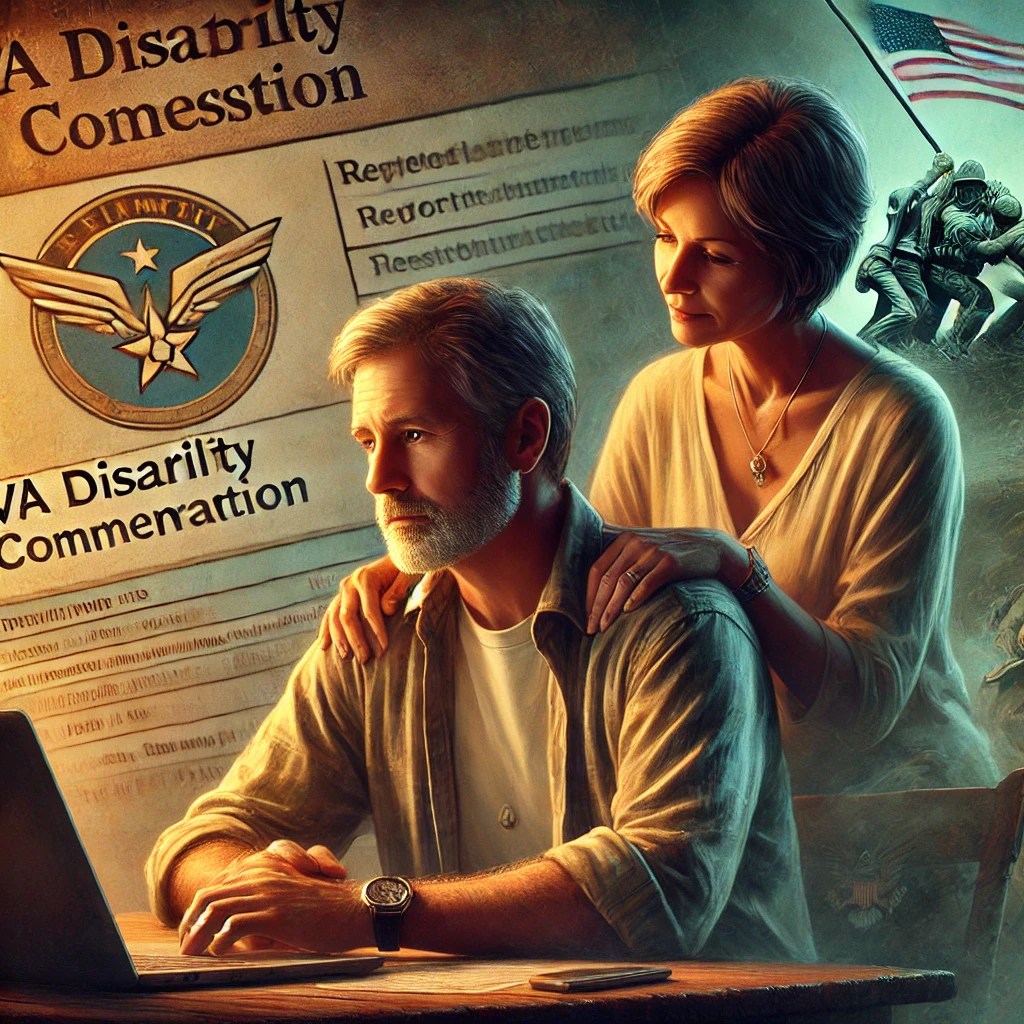
After working with a gentleman for about six months—almost exactly the amount of time since my wife passed—we received notification that the VA had granted him a 60% disability rating.
For him, this was a giant win.
He served two tours in the Marine Corps and is a Desert Shield/Desert Storm veteran. One period of his service unfortunately ended with a bad conduct discharge after some things happened while he was young and going through a divorce. But he also had an honorable period of service, and that mattered.
He had tried three times before to receive VA disability compensation. He had worked with VSOs, but from what I could see, nobody had really looked deeply enough at his entire military history or separated the different periods of his service to determine what conditions could legitimately be connected to his honorable service.
He was referred to me by a retired Navy captain who had known him since they were Junior ROTC kids. Now, decades later, this Marine had served his country, lived with the consequences of that service, battled cancer and other medical problems, and still had never received the benefits he had earned.
So we went to work.
I used the same process I use with everyone: slow down, build the timeline, look at where they served, what they did, what happened to them, what they were exposed to, and what conditions followed them home. Then claim what the evidence supports.
Yesterday, he got his answer: 60%.
That means meaningful tax-free monthly compensation and access to additional VA benefits that can make a real difference in his life.
And I have to tell you, this one felt particularly good.
The last six months have also been some of the hardest months of my own life. I am learning how to live after losing my wife. I don’t think you ever really “recover” from something like that. You learn how to carry it. You find reasons to get up, reasons to keep moving, and hopefully reasons to continue being useful to somebody else.
Yesterday was one of those reasons.
Helping this Marine finally receive recognition for conditions connected to his service reminded me why I continue doing this work.
I hope someone reading this who has been putting off filing a VA disability claim—or who filed before and gave up—will reconsider.
I often describe VA disability compensation simply as workers’ compensation for service members. If military service injured you, made you sick, or caused a condition that continues affecting you today, there is no shame in asking the government to honor that obligation.
You don’t have to exaggerate anything.
You don’t have to claim something that isn’t true.
You just have to do the work, document your story, and advocate for yourself.
Sometimes you may need someone beside you to help you do it.
Yesterday reminded me how thankful I am that, at this point in my own life, I get to be that person for somebody else.

Teach a Veteran to Fish
Recently, I had the privilege of helping another veteran who had retired from federal service after leaving the military before 2011. Like so many others, he was facing family challenges and decided it was finally time to look at his VA disability rating.
But he was afraid.
Not because he thought he wasn’t entitled to his benefits. He was afraid that if he opened the door again, the VA might reduce his rating. So for years, he simply left it alone.
A mutual friend from college introduced us, and we talked veteran to veteran.
I asked him a few simple questions: How old are you? What is your current rating? What conditions were originally service connected?
Then I asked him something he had never really considered.
“What if the VA simply missed something?”
The VA handles millions of claims. Like any large organization, mistakes happen. Sometimes conditions are overlooked. Sometimes veterans don’t claim everything because, when they leave the service, they’re focused only on what hurts the most at that moment.
In his case, we reviewed his VA decision letter together and found a condition that should have been claimed. He submitted the claim himself.
Within two weeks, his rating increased from 60% to 80%.
That gave him confidence.
Next, I asked him to do something I ask nearly every veteran to do: build a timeline of his military career and write down every injury, illness, exposure, and significant event he could remember.
As we worked through his history, we discussed secondary conditions—medical problems that develop because of already service-connected disabilities. He realized he had been receiving treatment for several of them for years without ever connecting them to his original service-connected condition.
Again, he filed the claims himself.
His rating increased from 80% to 90%.
At that point, I told him what I tell everyone.
“I’ve taught you the process. You know how to advocate for yourself now.”
Several months later, he called.
The VA had completed additional examinations, approved more secondary conditions, and he had reached a 100% disability rating.
Like so many veterans, he earned every bit of it.
No one wants the injuries, the chronic pain, or the emotional scars that come with military service. But when those sacrifices affect a veteran for the rest of their life, our nation made a promise to care for them.
Unfortunately, many veterans never even look.
They’ve heard stories about fraud or abuse. They worry they’ll be judged. They don’t want to seem like they’re asking for a handout.
The reality is that the overwhelming majority of veterans simply want to be treated fairly.
My philosophy has always been simple.
I don’t want to hand someone a fish.
I want to teach them how to fish.
I mentor veterans so they understand the process, learn how to gather evidence, write their own statements, and become their own best advocates. Then I ask them to do one thing:
Help the next veteran.
Imagine the impact if every veteran helped just one more.
Today, it’s estimated that roughly six million veterans who left the military before the widespread use of digital VA claims have never even had their disabilities fully evaluated. Many don’t realize that decades after service is often when conditions become significantly worse. Bad backs become arthritis. Knee injuries deteriorate. Ankles fail. Hearing loss progresses. Mental health conditions become more apparent with time.
Those veterans deserve to know they still have options.
Less than one percent of Americans have been willing to raise their right hand and volunteer to serve this nation, knowing that service could cost them their health—or even their life.
Seeking the benefits they earned isn’t taking advantage of the system.
It’s simply allowing a grateful nation to keep its promise.

The Torch Has Been Passed
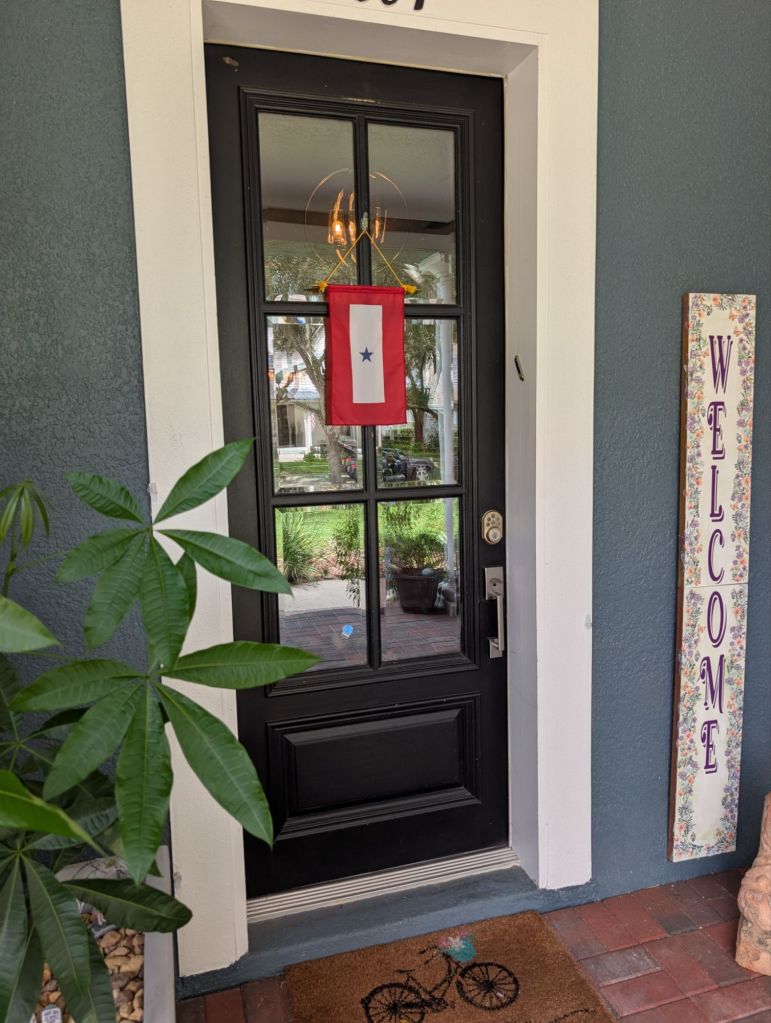
I did not think this day could come. Even after my son raised his right hand, a part of me never truly believed I would one day watch him become an active duty service member.
I recently hung a Blue Star Service Flag in my window. It is a daily reminder that the next generation continues to answer our nation’s call, accepting personal risk for a higher calling.
As a young boy, I knew I was meant to serve. Throughout my Army career, I rarely thought about the danger. The mission always came first. It wasn’t until I was saying goodbye to my own children before deployments that I began to understand where the real burden was carried.
Today, I see that burden through different eyes.
I used to reassure my family by saying it was more dangerous driving to the base in Atlanta than serving in the area of operations or on a forward operating base. At the time, I believed it. It was easy to say because I was the one going.
It is different when it is your son.
Modern warfare is different with these drones. But Information is still limited, uncertainty is constant, and the waiting can be relentless. Yet one truth has never changed: the hardest part of military service is often carried by the families who remain behind.
I have always been proud to serve my country.
Today, I am equally proud—and humbled—to be the father of someone who has chosen to do the same.
The torch has been passed. My prayers now travel with him, his wife, and every family waiting faithfully at home.
When the Ramps Found Their Next Home
Yesterday was a good day.
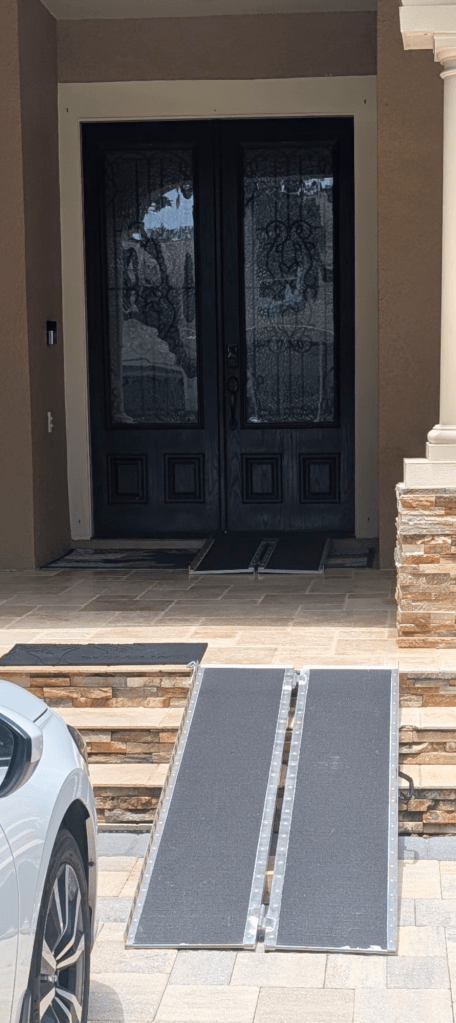
My neighbor is a Vietnam veteran. Neuropathy has slowly been taking its toll on his legs and lower back, and lately he’s been falling more often. While talking with his daughter, who cares for him, she mentioned they wished they had a safer way to get down the front steps.
“Hold on a second,” I said.
I walked across to my garage and brought back the two ramps for Sherri. Within minutes, we had them secured to their front steps. Just like that, they had a safer way for him to get in and out of his home.
It made me think.
It took us nearly a year to realize how much we truly needed those ramps. When you’re caring for someone with an incurable illness, watching them slowly lose their mobility, your mind is consumed by the next appointment, the next medication, the next crisis. Something as seemingly simple as installing a ramp somehow becomes another impossible decision. Which ramp? What angle? How do you secure it? Will it be safe? None of it feels simple when you’re living under constant pressure.
Yesterday, those hard-earned lessons allowed me to help someone else before it was too late. My neighbor gets to use the ramps while he can still walk with assistance, preserving a little more independence and, hopefully, preventing another fall.
I know Sherri loved this.
Even though she’s no longer here, her kindness continues to reach people she’ll never meet. Those ramps once carried her safely home. Now they’re helping a veteran like her father do the same.
Maybe that’s one of the quiet gifts of love. It doesn’t end when a life ends. It simply finds another person who needs it.
Yesterday wasn’t just about a couple of aluminum ramps.
It was another reminder that Sherri is still making the world a little better—through the people she changed, the lessons she taught, and the love she left behind.
Embracing Passion Over Paychecks: A Personal Reflection on Life’s Journey
Over the last few months, I’ve found myself stepping into a role I hadn’t fully anticipated. As the VP for federal sales for a small group of companies that have been serving in transportation, warehousing, and logistics for over a century, I’ve been reflecting on what this decision has meant for me. In sharing these reflections, I hope to offer some insights to others, whether in their professional or personal lives—because, in truth, I no longer see a difference between the two.
It’s worth mentioning that calling this a “decision” seems almost inaccurate. It wasn’t something I fell into by accident, nor was it a clear-cut plan. Instead, I see it as the culmination of a philosophy I’ve only recently embraced: follow your passion, not the money. I’ve come across numerous interviews and stories from people who seem truly content with their lives. A common thread ties them together—don’t chase the paycheck, chase what you love. “You reap what you sow,” after all. I think I’m finally living by that belief.
Looking back, I never imagined I’d be in this position. All I wanted was to help an old friend from 35 years ago with his business. I reached out to him regularly, offering help, driven by a desire to see him succeed. Eventually, he said, “Alright, Lou, I’ll go with you.” I didn’t do it for money; in fact, I would have done it for free. Helping the business grow—and more importantly, helping the people within it—was fulfilling in a way I hadn’t expected.
Of course, most of us need money to survive. But the question that lingered for me was: how much do we really need? I realized that contentment isn’t as tightly tied to finances as I once believed. It was the sense of accomplishment—knowing that something my friend had struggled with for years was finally within reach. We succeeded in months, and from that moment, I was asked to do more. I did, and I loved every minute of it.
For someone who hasn’t been a big risk-taker, the move to working entirely on commission was a leap of faith. I had to trust in myself, in my ability to succeed, and in the joy I found in the work. It felt new, refreshing—even exhilarating. It reminded me of my younger years when I served as an officer and truly loved what I was doing for my country. That feeling of purpose and fulfillment has returned.
I sometimes wonder why I didn’t take this path sooner. But at the same time, I’m grateful that I found it now. I’m not sure where this journey will lead, but what I do know is that embracing this new direction has left me feeling more at peace—with my decisions, with myself, and with my life.
In the end, that’s all we can hope for: to find joy in the work we do and contentment in the life we live. I’m grateful for the path I’m on, and I hope others find their own passions, too—because once you do, everything else seems to fall into place.