Blog Archives
Teach a Veteran to Fish
Recently, I had the privilege of helping another veteran who had retired from federal service after leaving the military before 2011. Like so many others, he was facing family challenges and decided it was finally time to look at his VA disability rating.
But he was afraid.
Not because he thought he wasn’t entitled to his benefits. He was afraid that if he opened the door again, the VA might reduce his rating. So for years, he simply left it alone.
A mutual friend from college introduced us, and we talked veteran to veteran.
I asked him a few simple questions: How old are you? What is your current rating? What conditions were originally service connected?
Then I asked him something he had never really considered.
“What if the VA simply missed something?”
The VA handles millions of claims. Like any large organization, mistakes happen. Sometimes conditions are overlooked. Sometimes veterans don’t claim everything because, when they leave the service, they’re focused only on what hurts the most at that moment.
In his case, we reviewed his VA decision letter together and found a condition that should have been claimed. He submitted the claim himself.
Within two weeks, his rating increased from 60% to 80%.
That gave him confidence.
Next, I asked him to do something I ask nearly every veteran to do: build a timeline of his military career and write down every injury, illness, exposure, and significant event he could remember.
As we worked through his history, we discussed secondary conditions—medical problems that develop because of already service-connected disabilities. He realized he had been receiving treatment for several of them for years without ever connecting them to his original service-connected condition.
Again, he filed the claims himself.
His rating increased from 80% to 90%.
At that point, I told him what I tell everyone.
“I’ve taught you the process. You know how to advocate for yourself now.”
Several months later, he called.
The VA had completed additional examinations, approved more secondary conditions, and he had reached a 100% disability rating.
Like so many veterans, he earned every bit of it.
No one wants the injuries, the chronic pain, or the emotional scars that come with military service. But when those sacrifices affect a veteran for the rest of their life, our nation made a promise to care for them.
Unfortunately, many veterans never even look.
They’ve heard stories about fraud or abuse. They worry they’ll be judged. They don’t want to seem like they’re asking for a handout.
The reality is that the overwhelming majority of veterans simply want to be treated fairly.
My philosophy has always been simple.
I don’t want to hand someone a fish.
I want to teach them how to fish.
I mentor veterans so they understand the process, learn how to gather evidence, write their own statements, and become their own best advocates. Then I ask them to do one thing:
Help the next veteran.
Imagine the impact if every veteran helped just one more.
Today, it’s estimated that roughly six million veterans who left the military before the widespread use of digital VA claims have never even had their disabilities fully evaluated. Many don’t realize that decades after service is often when conditions become significantly worse. Bad backs become arthritis. Knee injuries deteriorate. Ankles fail. Hearing loss progresses. Mental health conditions become more apparent with time.
Those veterans deserve to know they still have options.
Less than one percent of Americans have been willing to raise their right hand and volunteer to serve this nation, knowing that service could cost them their health—or even their life.
Seeking the benefits they earned isn’t taking advantage of the system.
It’s simply allowing a grateful nation to keep its promise.

The Torch Has Been Passed
I did not think this day could come. Even after my son raised his right hand, a part of me never truly believed I would one day watch him become an active duty service member.
I recently hung a Blue Star Service Flag in my window. It is a daily reminder that the next generation continues to answer our nation’s call, accepting personal risk for a higher calling.
As a young boy, I knew I was meant to serve. Throughout my Army career, I rarely thought about the danger. The mission always came first. It wasn’t until I was saying goodbye to my own children before deployments that I began to understand where the real burden was carried.
Today, I see that burden through different eyes.
I used to reassure my family by saying it was more dangerous driving to the base in Atlanta than serving in the area of operations or on a forward operating base. At the time, I believed it. It was easy to say because I was the one going.
It is different when it is your son.
Modern warfare is different with these drones. But Information is still limited, uncertainty is constant, and the waiting can be relentless. Yet one truth has never changed: the hardest part of military service is often carried by the families who remain behind.
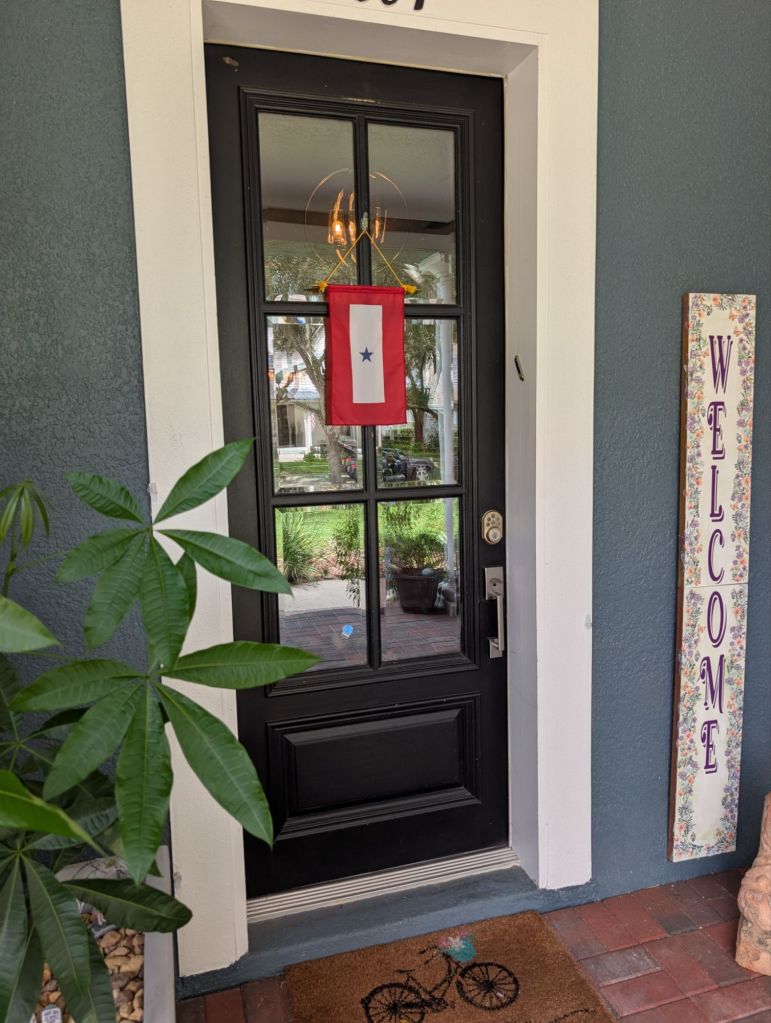
I have always been proud to serve my country.
Today, I am equally proud—and humbled—to be the father of someone who has chosen to do the same.
The torch has been passed. My prayers now travel with him, his wife, and every family waiting faithfully at home.

Don’t Leave a Service Member Behind: Empowering Veterans to Navigate VA Disability Benefits
Most of my veteran clients come to me the old-fashioned way: through referrals and word of mouth.
I am not currently accredited by the Department of Veterans Affairs, although I began that process nearly three years ago. About a year ago, the VA contacted me to ask if I was still interested. I told them absolutely. Since then, I have been waiting to hear back.
In the meantime, veterans continue to need help.
Recently, a veteran over the age of 50 was referred to me. He was rated at 60% disability but was afraid to file any additional claims because he had heard a common myth: “If I ask for more, the VA will take away what I already have.”
After reviewing his file, we discovered that a bilateral condition had never been properly claimed. The issue wasn’t that he was asking for something new—the original rating simply wasn’t correct.
Within two weeks, his rating increased from 60% to 80%.
We then identified several secondary conditions that were directly related to his service-connected disabilities. Within two months, his rating increased again to 90%.
But the most important part of this story is not the rating increase.
Throughout the process, I taught him how the VA disability system works. I explained evidence requirements, secondary conditions, effective dates, and how to build a strong claim.
Armed with that knowledge, he continued the process himself.
Today, he has achieved the correct rating of 100%.
That is success.
Not because I helped him. Because he learned how to help himself.
The Numbers Tell the Story
There are approximately 6 million veterans who have never been evaluated for VA disability compensation. Many left military service before programs such as the Benefits Delivery at Discharge (BDD) process became common.
At the same time, there are only about 2,000 accredited Veterans Service Officers (VSOs) across the country.
Let’s do the math.
Assume:
- A compensation claim review takes an average of 135 days (midpoint between 120 and 150 days).
- A VSO works 40 hours per week.
- A VSO works 50 weeks per year.
Even if every VSO could somehow manage one complete compensation review every 135 days, the system could only process about 5,400 veterans per year nationwide.
At that rate, it would take more than 1,100 years to review 6 million veterans.
Even if we assume far greater efficiency, the reality remains the same:
There are far more veterans needing assistance than there are professionals available to help them.
The Solution: Veteran Helping Veteran
We cannot solve this challenge by relying solely on VSOs, attorneys, claims agents, or consultants.
We must empower veterans.
Every veteran who learns how the system works should help another veteran.
Every veteran who successfully navigates the process should teach someone else.
Every veteran who receives benefits they earned should encourage a fellow service member to get evaluated.
The goal is not dependence.
The goal is education.
The goal is confidence.
The goal is ensuring that every veteran understands the benefits they earned through their service.
The veteran in this story did exactly that. He overcame fear, learned the process, achieved the correct rating, and is now in a position to help others.
That is how we create a force multiplier.
One veteran helping another.
Then another.
Then another.
Because at the end of the day, we all swore an oath to leave no one behind.
That principle should not end when military service does.
Don’t leave a service member behind. Help them get the benefits they earned. Teach them how the process works. Empower them to help the next veteran.