Blog Archives

Why VA Claim Mentor?
I spent over 20 years serving in the Army, but understanding my own VA disability claim was another journey altogether.
I filed my initial claim when I left the military in 2011. Then I waited 13 years to revisit it. A big part of that delay was guilt. Like many veterans, I thought I should just keep moving forward and manage what I was dealing with.
A retired Command Sergeant Major helped change that. While I was outside the room, emotionally overwhelmed, my wife, Sherri, told him about my conditions and how they affected my life. His encouragement helped me move forward. In 2024, I filed a supplemental claim, and my rating increased from 90% to 100%.
That experience became part of the foundation for VA Claim Mentor.
As I helped other veterans understand the process, I kept hearing the same questions: Where do I start? What records do I need? How do I explain what happened during my service and how it affects me today?
I took those conversations, my own experience, and the lessons learned through one-on-one mentorship and built a self-paced course. Bringing it to launch meant turning that knowledge into practical lessons and worksheets veterans could use at their own speed.
VA Claim Mentor is for veterans who want to prepare their own claim and understand what they are submitting. It provides education, not representation, and is not affiliated with the VA or federal government. It cannot promise a rating. It can teach you the process and how to advocate for yourself probably the most important part of this journey.
My goal is simple: help veterans file because they deserve it.
Making life easier—one veteran at a time.
Learn more at VA Claim Mentor
Teach a Veteran to Fish
Recently, I had the privilege of helping another veteran who had retired from federal service after leaving the military before 2011. Like so many others, he was facing family challenges and decided it was finally time to look at his VA disability rating.
But he was afraid.
Not because he thought he wasn’t entitled to his benefits. He was afraid that if he opened the door again, the VA might reduce his rating. So for years, he simply left it alone.
A mutual friend from college introduced us, and we talked veteran to veteran.
I asked him a few simple questions: How old are you? What is your current rating? What conditions were originally service connected?
Then I asked him something he had never really considered.
“What if the VA simply missed something?”
The VA handles millions of claims. Like any large organization, mistakes happen. Sometimes conditions are overlooked. Sometimes veterans don’t claim everything because, when they leave the service, they’re focused only on what hurts the most at that moment.
In his case, we reviewed his VA decision letter together and found a condition that should have been claimed. He submitted the claim himself.
Within two weeks, his rating increased from 60% to 80%.
That gave him confidence.
Next, I asked him to do something I ask nearly every veteran to do: build a timeline of his military career and write down every injury, illness, exposure, and significant event he could remember.
As we worked through his history, we discussed secondary conditions—medical problems that develop because of already service-connected disabilities. He realized he had been receiving treatment for several of them for years without ever connecting them to his original service-connected condition.
Again, he filed the claims himself.
His rating increased from 80% to 90%.
At that point, I told him what I tell everyone.
“I’ve taught you the process. You know how to advocate for yourself now.”
Several months later, he called.
The VA had completed additional examinations, approved more secondary conditions, and he had reached a 100% disability rating.
Like so many veterans, he earned every bit of it.
No one wants the injuries, the chronic pain, or the emotional scars that come with military service. But when those sacrifices affect a veteran for the rest of their life, our nation made a promise to care for them.
Unfortunately, many veterans never even look.
They’ve heard stories about fraud or abuse. They worry they’ll be judged. They don’t want to seem like they’re asking for a handout.
The reality is that the overwhelming majority of veterans simply want to be treated fairly.
My philosophy has always been simple.
I don’t want to hand someone a fish.
I want to teach them how to fish.
I mentor veterans so they understand the process, learn how to gather evidence, write their own statements, and become their own best advocates. Then I ask them to do one thing:
Help the next veteran.
Imagine the impact if every veteran helped just one more.
Today, it’s estimated that roughly six million veterans who left the military before the widespread use of digital VA claims have never even had their disabilities fully evaluated. Many don’t realize that decades after service is often when conditions become significantly worse. Bad backs become arthritis. Knee injuries deteriorate. Ankles fail. Hearing loss progresses. Mental health conditions become more apparent with time.
Those veterans deserve to know they still have options.
Less than one percent of Americans have been willing to raise their right hand and volunteer to serve this nation, knowing that service could cost them their health—or even their life.
Seeking the benefits they earned isn’t taking advantage of the system.
It’s simply allowing a grateful nation to keep its promise.
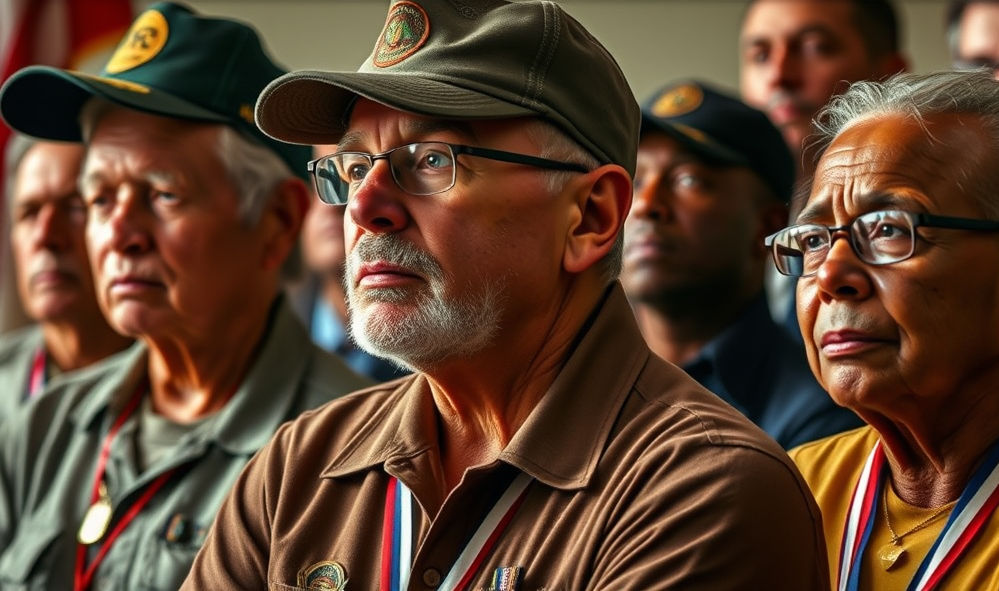

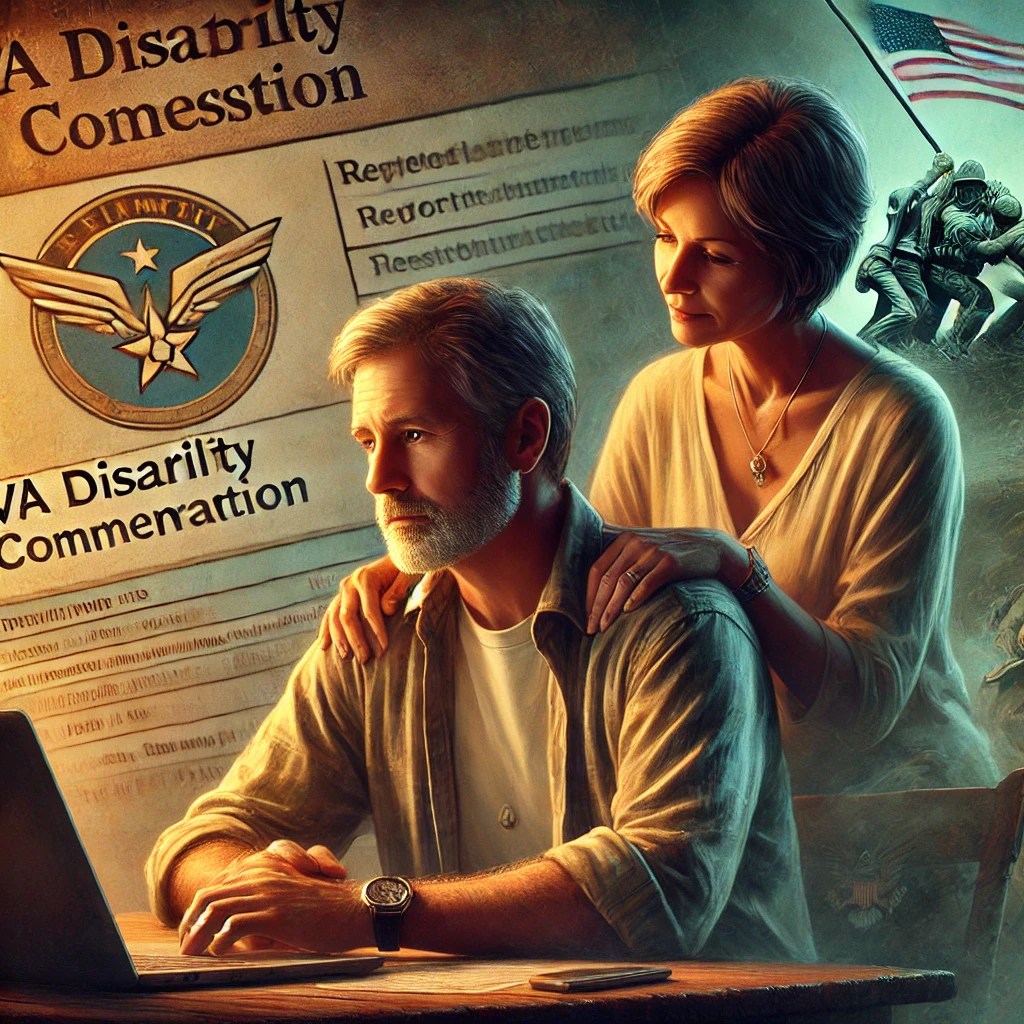

Don’t Leave a Service Member Behind: Empowering Veterans to Navigate VA Disability Benefits
Most of my veteran clients come to me the old-fashioned way: through referrals and word of mouth.
I am not currently accredited by the Department of Veterans Affairs, although I began that process nearly three years ago. About a year ago, the VA contacted me to ask if I was still interested. I told them absolutely. Since then, I have been waiting to hear back.
In the meantime, veterans continue to need help.
Recently, a veteran over the age of 50 was referred to me. He was rated at 60% disability but was afraid to file any additional claims because he had heard a common myth: “If I ask for more, the VA will take away what I already have.”
After reviewing his file, we discovered that a bilateral condition had never been properly claimed. The issue wasn’t that he was asking for something new—the original rating simply wasn’t correct.
Within two weeks, his rating increased from 60% to 80%.
We then identified several secondary conditions that were directly related to his service-connected disabilities. Within two months, his rating increased again to 90%.
But the most important part of this story is not the rating increase.
Throughout the process, I taught him how the VA disability system works. I explained evidence requirements, secondary conditions, effective dates, and how to build a strong claim.
Armed with that knowledge, he continued the process himself.
Today, he has achieved the correct rating of 100%.
That is success.
Not because I helped him. Because he learned how to help himself.
The Numbers Tell the Story
There are approximately 6 million veterans who have never been evaluated for VA disability compensation. Many left military service before programs such as the Benefits Delivery at Discharge (BDD) process became common.
At the same time, there are only about 2,000 accredited Veterans Service Officers (VSOs) across the country.
Let’s do the math.
Assume:
- A compensation claim review takes an average of 135 days (midpoint between 120 and 150 days).
- A VSO works 40 hours per week.
- A VSO works 50 weeks per year.
Even if every VSO could somehow manage one complete compensation review every 135 days, the system could only process about 5,400 veterans per year nationwide.
At that rate, it would take more than 1,100 years to review 6 million veterans.
Even if we assume far greater efficiency, the reality remains the same:
There are far more veterans needing assistance than there are professionals available to help them.
The Solution: Veteran Helping Veteran
We cannot solve this challenge by relying solely on VSOs, attorneys, claims agents, or consultants.
We must empower veterans.
Every veteran who learns how the system works should help another veteran.
Every veteran who successfully navigates the process should teach someone else.
Every veteran who receives benefits they earned should encourage a fellow service member to get evaluated.
The goal is not dependence.
The goal is education.
The goal is confidence.
The goal is ensuring that every veteran understands the benefits they earned through their service.
The veteran in this story did exactly that. He overcame fear, learned the process, achieved the correct rating, and is now in a position to help others.
That is how we create a force multiplier.
One veteran helping another.
Then another.
Then another.
Because at the end of the day, we all swore an oath to leave no one behind.
That principle should not end when military service does.
Don’t leave a service member behind. Help them get the benefits they earned. Teach them how the process works. Empower them to help the next veteran.

Winning Proposals for Veteran-Owned Businesses
I just submitted my very first proposal to the State of Florida—and I have to admit, I didn’t think I stood a chance.
This wasn’t some minor RFP. Florida is recompeting its Management Consulting Services Consolidated Schedule, and I chose to compete in Service Category 4: Executive Leadership Development and Customized Training—one of nine powerful categories, all dominated by big-name firms with deep pockets and armies of employees.
But here I am. A veteran, a founder, a team of one, pushing through multiple websites, platforms, registrations, certifications, documents, file formats, and yes—those relentless character count limits—just to be considered viable. To even get a seat at the table.
And I made it.
It was not easy. The process was time-consuming, mentally exhausting, and filled with moments of doubt. But it was also one of the best learning experiences I’ve had as a business owner.
And here’s what I want other small businesses—especially my fellow Veteran-Owned Small Businesses (VOSBs) and Service-Disabled Veteran-Owned Small Businesses (SDVOSBs)—to know:
If you don’t try, you can’t win.
The State of Florida spent over $82 million on management consulting services last year alone. That’s not just a number—it’s an opportunity. One that we, as small, capable, values-driven businesses, can pursue. If you have the right NAICS codes, the right mindset, and the willingness to navigate the process, there’s a real path forward.
Yes, the back-office requirements are real. But compared to the federal government, the state-level procurement process is far more accessible. You don’t need a team of ten compliance officers. You just need to be intentional, organized, and committed to understanding the rules of the game.
I don’t know if I’ll win this one. But I do know this:
- I now understand how the process works.
- I can replicate and refine my submission.
- I’ve proven to myself—and maybe to others—that I belong at the table.
- And I’m ready to bring in some of the most mission-driven leaders I know to serve with excellence.
To anyone else out there feeling like a one-person army going up against giants: keep going.
The journey matters. The learning is real. And your impact—when your moment comes—will be undeniable.


FOR IMMEDIATE RELEASE
Statesville, NC – MWK Ventures LLC., a professional services and logistics management firm, is proud to announce its official designation as a Service-Disabled Veteran-Owned Small Business (SDVOSB) by the Small Business Administration (SBA). This significant achievement underscores the firm’s ongoing commitment to excellence and its dedication to supporting the veteran community, and is now eligible for preferential access to federal contracts, allowing the firm to contribute more substantially to the public sector.
Mr. Mark Kleinhenz, President and CEO of MWK Ventures LLC, emphasized the importance of the designation: “Becoming an SDVOSB is not just about the growth potential it affords our company. It’s a testament to our dedication to providing opportunities for veterans and ensuring their exceptional skills and experiences are recognized in the business world. It also demonstrates we are operating in accordance with Federal and State laws helping others identify honorable providers of goods and services.”
MWK Ventures, LLC would like to thank Lou Schwartz for his invaluable assistance in securing this designation. His expertise and dedication have been instrumental in achieving this milestone.
For further information about hollandlogistics.com Holland Logistics, a Service-Disabled Veteran-Owned Small Business, is a leading global fourth-party logistics (4PL) provider that aims to keep our faith first and strives to provide award-winning ethical customer service and solutions. Based in Statesville, North Carolina, we provide complete supply chain management services and a true partnership that allows you to focus on growing your core business.
For more on Lou Schwartz’s services, please visit loujswz.com or contact him directly at lou@loujswz.com or 706-332-6005.
Mark Kleinhenz
President & CEO
MWK Ventures, LLC and Holland Logistics
2227 Salisbury Hwy, Statesville, NC 28677
[Website](https://www.hollandlogistics.com/ )
SAM.gov UIC: WSZZCPZUWNU4 CAGE: 9VU38


