Blog Archives
Service Should Start Close to Home
I have been thinking a lot about what it means to give back without making it about yourself.
One of the things I have always admired about the ideals of our founding fathers is the belief that citizenship carries responsibility. You contribute. You serve. You try to leave your community a little better than you found it.
That is something I want reflected in my little company as well.
I am fortunate that the business has created some profit, and rather than simply talking about community, veterans, service, or helping others, I decided I wanted to actually do something with a portion of it.
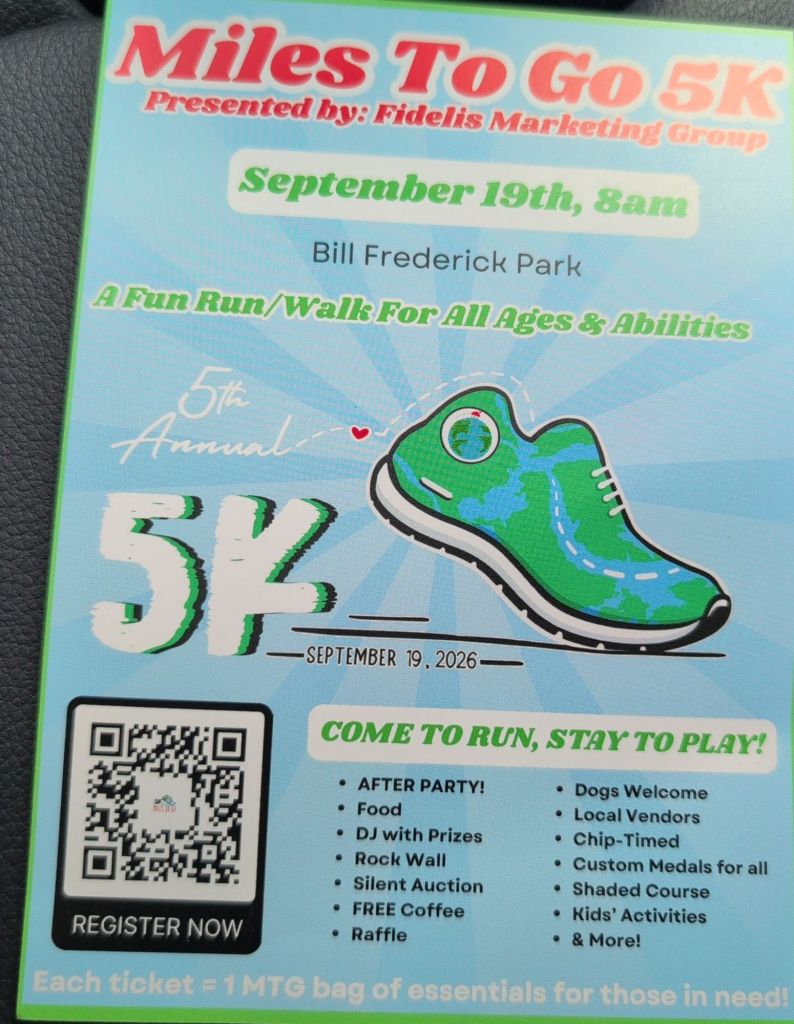
I selected a local nonprofit, Miles to Go, that helps people experiencing homelessness in the Orlando community. Homelessness is difficult enough under any circumstance, but homeless veterans in particular are something I have always cared about.
At the same time, health and fitness have long been an important part of my life. So when I saw an opportunity to support a 5K that benefits Miles to Go, it felt like a natural fit.
I anonymously paid for several people to participate.
I am not sharing that because I think it is some grand gesture. It is not. I am sharing it because I think businesses, even very small ones, have an opportunity to decide what they stand for through their actions.
We hear people say all the time that we should help veterans, support our communities, care for people in need, and improve our health. Those are good words. But somewhere along the way, the words have to become actions.
As the old saying goes, put your money where your mouth is.
For me, this is also about honoring the people and experiences that have shaped my life. It is about my late wife, my family, my military service, the people who have supported me, and the values I continue to hold dear.
Service does not always have to be large, public, or complicated.
Sometimes it is simply deciding that when you have a little extra, you share a little of it.
My company is small. Its contribution is small.
But if that contribution helps someone take another step forward, then it mattered.
And for me, that is enough.
Teach a Veteran to Fish
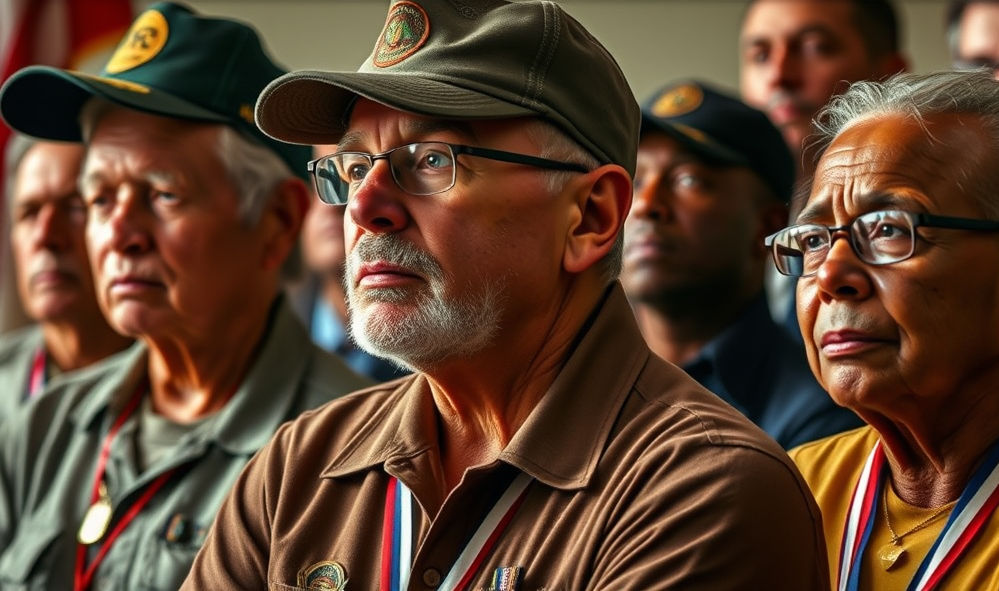
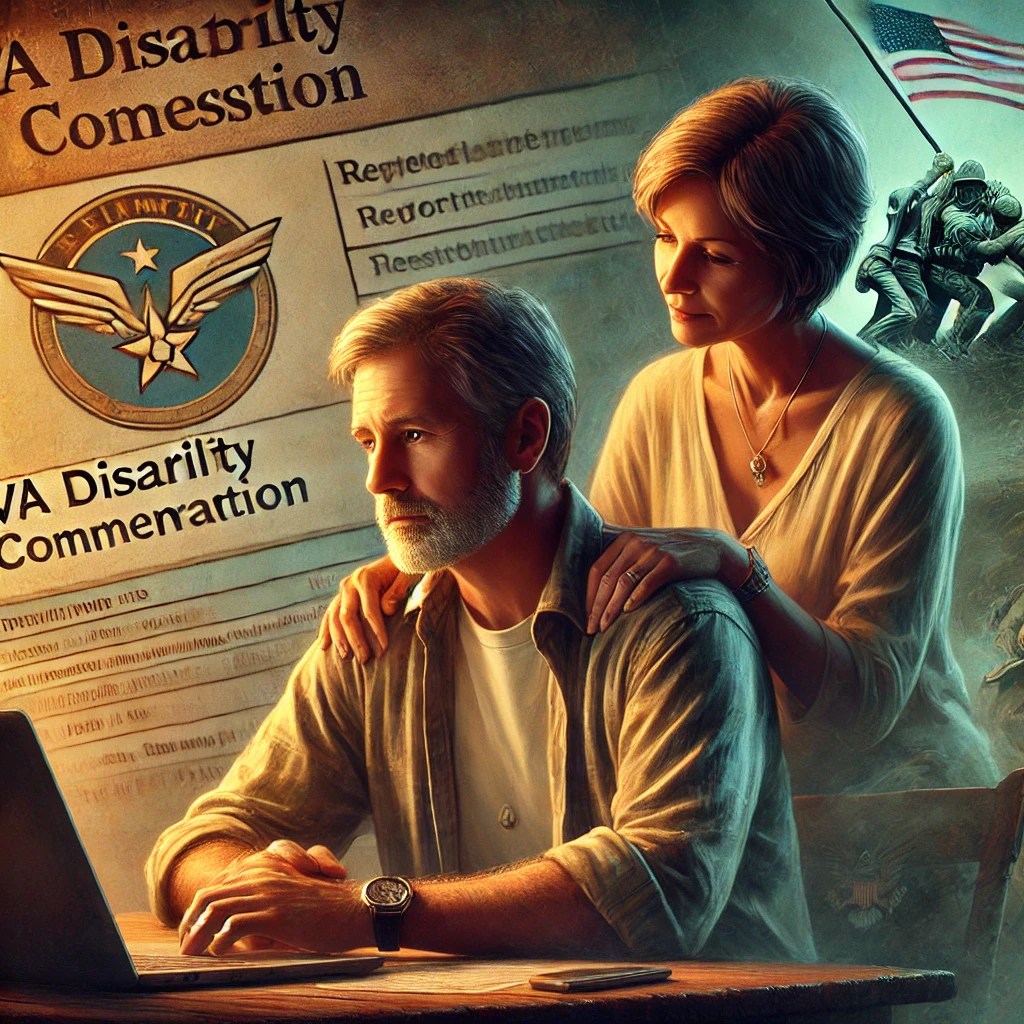
Recently, I had the privilege of helping another veteran who had retired from federal service after leaving the military before 2011. Like so many others, he was facing family challenges and decided it was finally time to look at his VA disability rating.
But he was afraid.
Not because he thought he wasn’t entitled to his benefits. He was afraid that if he opened the door again, the VA might reduce his rating. So for years, he simply left it alone.
A mutual friend from college introduced us, and we talked veteran to veteran.
I asked him a few simple questions: How old are you? What is your current rating? What conditions were originally service connected?
Then I asked him something he had never really considered.
“What if the VA simply missed something?”
The VA handles millions of claims. Like any large organization, mistakes happen. Sometimes conditions are overlooked. Sometimes veterans don’t claim everything because, when they leave the service, they’re focused only on what hurts the most at that moment.
In his case, we reviewed his VA decision letter together and found a condition that should have been claimed. He submitted the claim himself.
Within two weeks, his rating increased from 60% to 80%.
That gave him confidence.
Next, I asked him to do something I ask nearly every veteran to do: build a timeline of his military career and write down every injury, illness, exposure, and significant event he could remember.
As we worked through his history, we discussed secondary conditions—medical problems that develop because of already service-connected disabilities. He realized he had been receiving treatment for several of them for years without ever connecting them to his original service-connected condition.
Again, he filed the claims himself.
His rating increased from 80% to 90%.
At that point, I told him what I tell everyone.
“I’ve taught you the process. You know how to advocate for yourself now.”
Several months later, he called.
The VA had completed additional examinations, approved more secondary conditions, and he had reached a 100% disability rating.
Like so many veterans, he earned every bit of it.
No one wants the injuries, the chronic pain, or the emotional scars that come with military service. But when those sacrifices affect a veteran for the rest of their life, our nation made a promise to care for them.
Unfortunately, many veterans never even look.
They’ve heard stories about fraud or abuse. They worry they’ll be judged. They don’t want to seem like they’re asking for a handout.
The reality is that the overwhelming majority of veterans simply want to be treated fairly.
My philosophy has always been simple.
I don’t want to hand someone a fish.
I want to teach them how to fish.
I mentor veterans so they understand the process, learn how to gather evidence, write their own statements, and become their own best advocates. Then I ask them to do one thing:
Help the next veteran.
Imagine the impact if every veteran helped just one more.
Today, it’s estimated that roughly six million veterans who left the military before the widespread use of digital VA claims have never even had their disabilities fully evaluated. Many don’t realize that decades after service is often when conditions become significantly worse. Bad backs become arthritis. Knee injuries deteriorate. Ankles fail. Hearing loss progresses. Mental health conditions become more apparent with time.
Those veterans deserve to know they still have options.
Less than one percent of Americans have been willing to raise their right hand and volunteer to serve this nation, knowing that service could cost them their health—or even their life.
Seeking the benefits they earned isn’t taking advantage of the system.
It’s simply allowing a grateful nation to keep its promise.
When the Ramps Found Their Next Home
Yesterday was a good day.
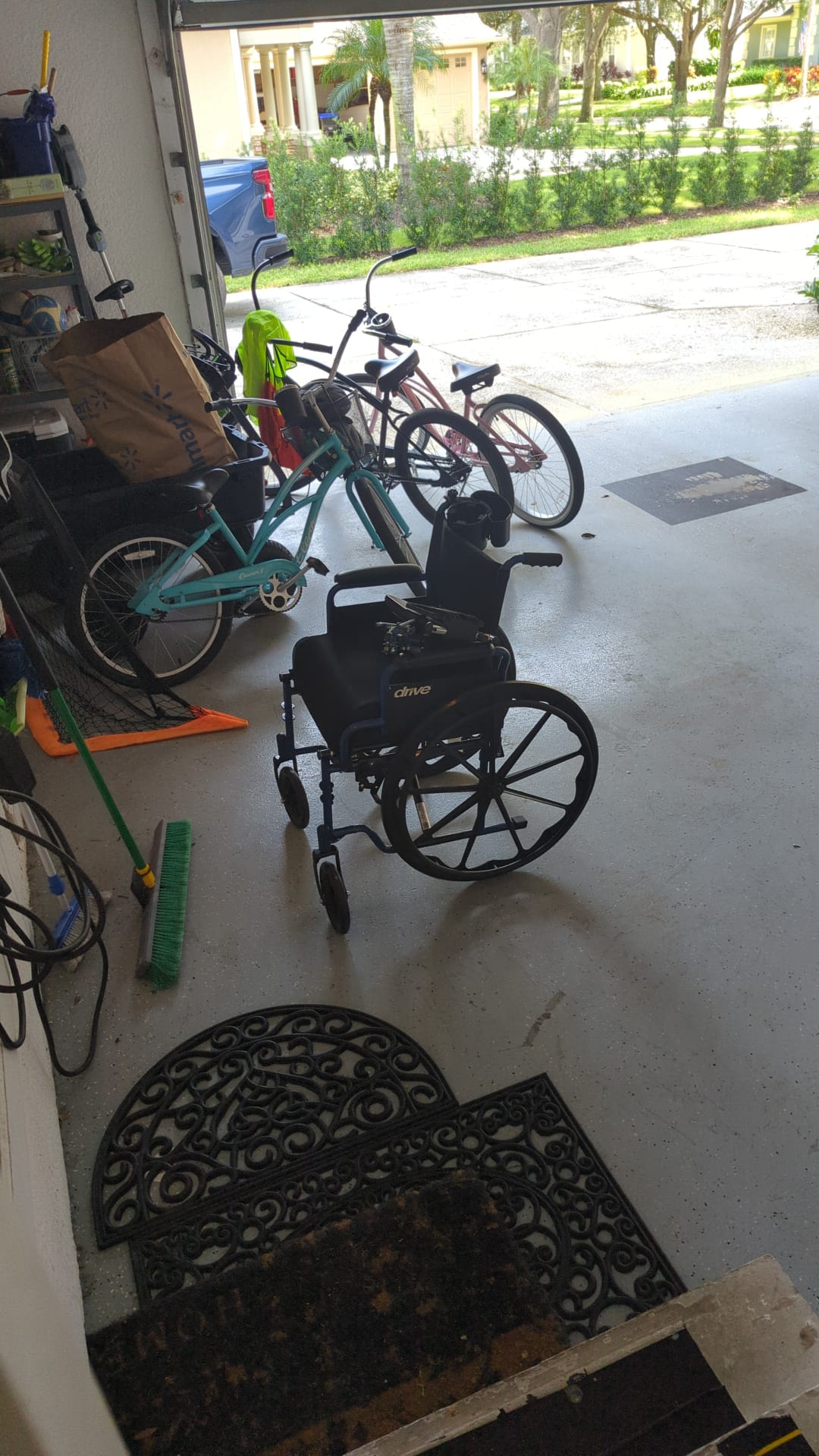
My neighbor is a Vietnam veteran. Neuropathy has slowly been taking its toll on his legs and lower back, and lately he’s been falling more often. While talking with his daughter, who cares for him, she mentioned they wished they had a safer way to get down the front steps.
“Hold on a second,” I said.
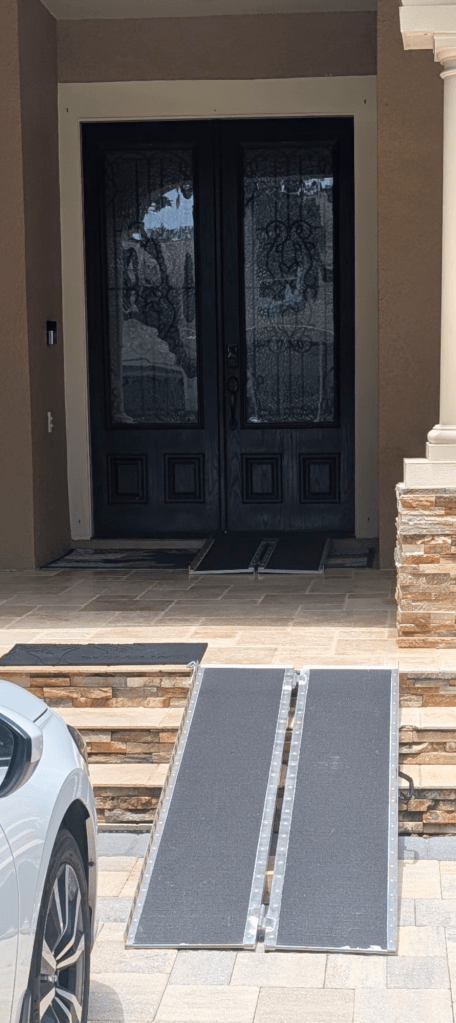
I walked across to my garage and brought back the two ramps for Sherri. Within minutes, we had them secured to their front steps. Just like that, they had a safer way for him to get in and out of his home.
It made me think.
It took us nearly a year to realize how much we truly needed those ramps. When you’re caring for someone with an incurable illness, watching them slowly lose their mobility, your mind is consumed by the next appointment, the next medication, the next crisis. Something as seemingly simple as installing a ramp somehow becomes another impossible decision. Which ramp? What angle? How do you secure it? Will it be safe? None of it feels simple when you’re living under constant pressure.
Yesterday, those hard-earned lessons allowed me to help someone else before it was too late. My neighbor gets to use the ramps while he can still walk with assistance, preserving a little more independence and, hopefully, preventing another fall.
I know Sherri loved this.
Even though she’s no longer here, her kindness continues to reach people she’ll never meet. Those ramps once carried her safely home. Now they’re helping a veteran like her father do the same.
Maybe that’s one of the quiet gifts of love. It doesn’t end when a life ends. It simply finds another person who needs it.
Yesterday wasn’t just about a couple of aluminum ramps.
It was another reminder that Sherri is still making the world a little better—through the people she changed, the lessons she taught, and the love she left behind.
Divine Intervention in the Everyday: Lessons in Caregiving, Love, and Community
I never imagined I’d need to use a handicap space. When I received my 100% VA disability rating, I made a silent promise: I’d never park in those spaces. I felt strong and capable, able to walk to and from the store without issue. Florida even offers free license plates for veterans like me, allowing us to park closer to ease movement, but I couldn’t foresee a time when I wouldn’t be able to make it in and out of Publix on my own two feet.
But life has a way of humbling us and revealing new perspectives. I recently found myself borrowing a wheelchair from our neighbors for my wife. She is fighting cancer again, and chemotherapy has made her legs ache with a pain. She is much like my father—strong-willed and independent, reluctant to ask for help or accept it. It’s one of the things I love most about her, this tenacity and resolve to live life fully on her terms. Yet, there are moments when emotion trumps logic, and she insists on walking, only to end up soaking her aching joints in a bathtub at 3 a.m.
Today, as I wheeled her around, I saw things differently. For the first time, I saw the purpose of those license plates I had so casually dismissed before. In a way, I felt the hand of God gently guiding me to see a deeper truth—that we all need help, and we will all be caregivers at some point in our lives. Rosemary Carter and Elizabeth Dole taught me this lesson, but life has reinforced it repeatedly.
I remember my father’s journey. A proud man, old school in every way, he despised the thought of using a wheelchair. For two hard years, he resisted help as he made his journey home, never once wanting to appear weak or dependent. I see so much of him in my wife now. She, too, is not accustomed to accepting help, yet her strength lies not just in her independence but in the love and resilience she shows every day, even through gritted teeth and stubborn defiance.
Our neighbors, older friends who have always been there for us, offered their wheelchair without a second thought. It’s moments like this that remind me of the power of community, of being a good neighbor. We help each other, not because we have to, but because it is a reflection of love, of being there when needed, without question or hesitation.
Sometimes, the carefully curated Instagram smiles need to be set aside so we can face reality. Life is not always picture-perfect; it is messy, challenging, and often painful. But it is also filled with grace, with moments of divine intervention that remind us of our purpose and our place in the world.
Today, my license plate makes sense. I see God’s plan unfold in the most unexpected ways. I am here, not just as a veteran with a rating but as a husband, a caregiver, a neighbor, and a servant of love. My wife’s determination to live life fully, even when it means being a little grumpy about the wheelchair, is a testament to the spirit we all share—the spirit to keep moving forward, to love fiercely, and to serve selflessly.
So, I embrace this role, this chance to support her in her journey, however she demands it. And in doing so, I see that God is indeed at work, weaving all these threads—divine intervention, caregiving, love, selfless service, and community—into a beautiful tapestry that is my life.