Blog Archives

Why VA Claim Mentor?
I spent over 20 years serving in the Army, but understanding my own VA disability claim was another journey altogether.
I filed my initial claim when I left the military in 2011. Then I waited 13 years to revisit it. A big part of that delay was guilt. Like many veterans, I thought I should just keep moving forward and manage what I was dealing with.
A retired Command Sergeant Major helped change that. While I was outside the room, emotionally overwhelmed, my wife, Sherri, told him about my conditions and how they affected my life. His encouragement helped me move forward. In 2024, I filed a supplemental claim, and my rating increased from 90% to 100%.
That experience became part of the foundation for VA Claim Mentor.
As I helped other veterans understand the process, I kept hearing the same questions: Where do I start? What records do I need? How do I explain what happened during my service and how it affects me today?
I took those conversations, my own experience, and the lessons learned through one-on-one mentorship and built a self-paced course. Bringing it to launch meant turning that knowledge into practical lessons and worksheets veterans could use at their own speed.
VA Claim Mentor is for veterans who want to prepare their own claim and understand what they are submitting. It provides education, not representation, and is not affiliated with the VA or federal government. It cannot promise a rating. It can teach you the process and how to advocate for yourself probably the most important part of this journey.
My goal is simple: help veterans file because they deserve it.
Making life easier—one veteran at a time.
Learn more at VA Claim Mentor

Racing to Help Others
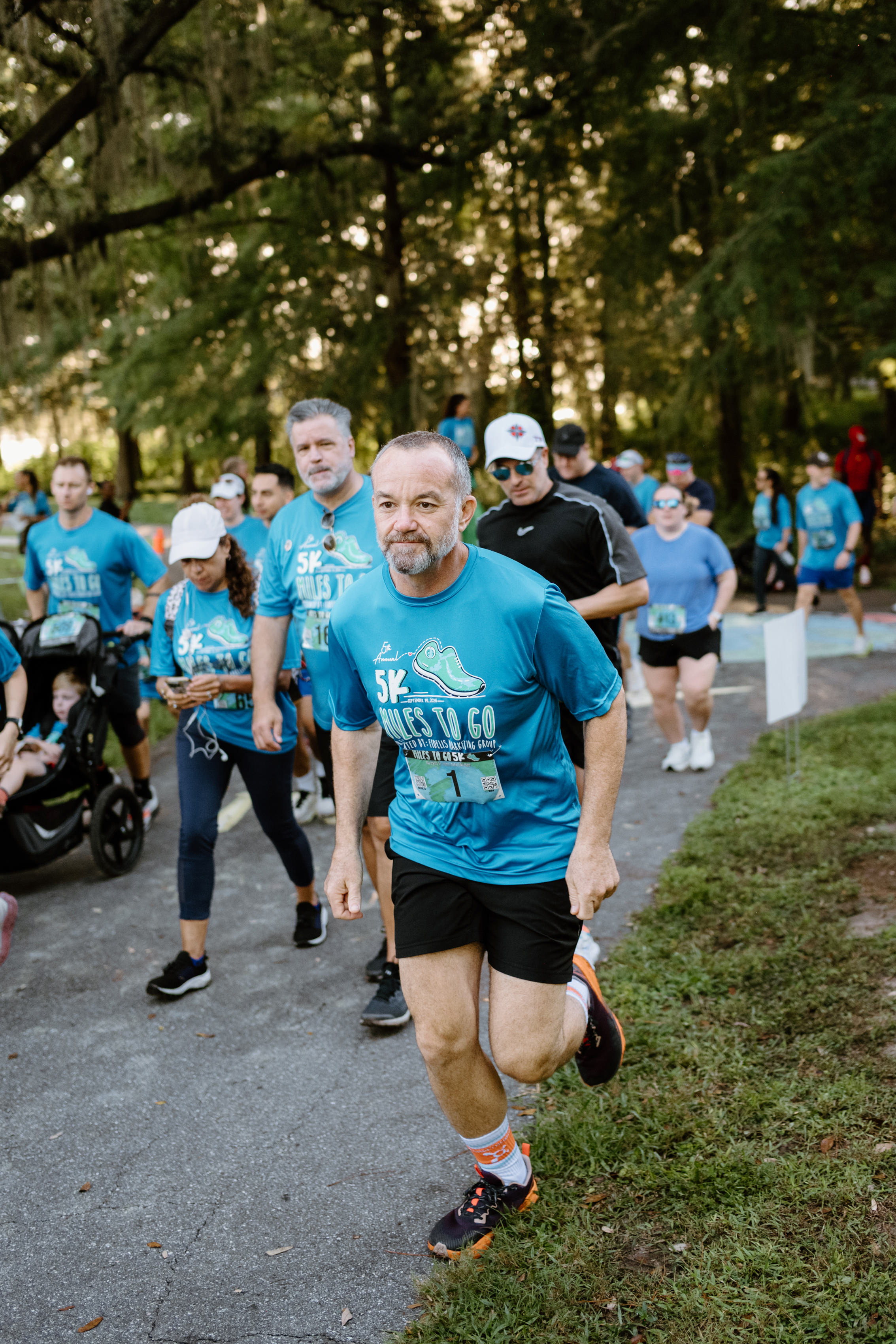
This was LOUJSWZ Inc.’s first promotion supporting Miles to Go, a local nonprofit helping people experiencing homelessness throughout Orange County.
What a great feeling it was to give back—not only by supporting such a worthwhile organization, but also by helping others participate in the race and contribute to an important cause. Seeing our community come together reminded me that even a small company can make a meaningful difference.
I am especially grateful to my clients. The work we do together provides the resources that allow LOUJSWZ Inc. to support organizations like Miles to Go. By trusting us to help improve their lives and businesses, our clients also help us give back and lift others toward a better place.
This race represented more than crossing a finish line. It was about community, gratitude, and putting our values into action.
Thank you to Miles to Go, every participant and volunteer, and especially our clients for helping make this possible. This may have been our first promotion supporting a charitable organization, but it will not be our last.
At LOUJSWZ Inc., success means more when it helps someone else succeed.
Uncovering Disability Benefits for 11.25 Million Veterans
VA estimates there are approximately 17.6 million living veterans, while about 6.34 million receive service-connected disability compensation. That leaves roughly 11.25 million veterans—about 64% of the veteran population—not currently receiving disability compensation.
The modern DoD-VA Integrated Disability Evaluation System, or IDES, did not begin until 2007 and was later expanded worldwide. IDES primarily serves service members referred for possible medical separation or retirement; it is not a universal disability evaluation for every service member leaving the military. Millions of veterans separated before this integrated system existed, and many others left service without ever entering IDES.
VA has also documented claims filed 10 to 20 years after discharge, and some veterans have waited roughly 30 years before ultimately receiving service-connected benefits. The evidence does not show that most veterans wait 30 years, but it clearly shows that long delays are real.
Meanwhile, VA has obligated approximately $13.84 billion toward electronic health record modernization, with an independent lifecycle estimate cited by GAO of approximately $49.8 billion. VA also continues to spend billions on construction and infrastructure.
Those investments have created vast amounts of electronic medical and service data. DoD and VA already possess service treatment records, deployment histories, occupational information, exposure records, diagnoses, surgeries, traumatic injuries, hearing loss, chronic illnesses, and VA medical histories.
The call to action is straightforward: use that data to identify veterans who may have been missed.
VA should systematically identify veterans who are not receiving disability compensation but whose existing records show strong indicators of potentially service-connected conditions. Those veterans should then be proactively contacted, offered an expedited evaluation, and assisted through the disability claims process.
Before additional billions are committed to technology overruns or unnecessary construction, Congress and VA should evaluate whether those dollars could produce greater value by directing resources toward eligible veterans and putting compensation directly into their households.
The question is no longer whether the government has the information.
It does. The question is whether VA will use it.
Of the 11.25 million veterans not currently receiving disability compensation, how many have documented service-related conditions that have never been fully evaluated?
Congress should require VA and DoD to answer that question—and act on the results.

Yesterday was a great day.
After working with a gentleman for about six months—almost exactly the amount of time since my wife passed—we received notification that the VA had granted him a 60% disability rating.
For him, this was a giant win.
He served two tours in the Marine Corps and is a Desert Shield/Desert Storm veteran. One period of his service unfortunately ended with a bad conduct discharge after some things happened while he was young and going through a divorce. But he also had an honorable period of service, and that mattered.
He had tried three times before to receive VA disability compensation. He had worked with VSOs, but from what I could see, nobody had really looked deeply enough at his entire military history or separated the different periods of his service to determine what conditions could legitimately be connected to his honorable service.
He was referred to me by a retired Navy captain who had known him since they were Junior ROTC kids. Now, decades later, this Marine had served his country, lived with the consequences of that service, battled cancer and other medical problems, and still had never received the benefits he had earned.
So we went to work.
I used the same process I use with everyone: slow down, build the timeline, look at where they served, what they did, what happened to them, what they were exposed to, and what conditions followed them home. Then claim what the evidence supports.
Yesterday, he got his answer: 60%.
That means meaningful tax-free monthly compensation and access to additional VA benefits that can make a real difference in his life.
And I have to tell you, this one felt particularly good.
The last six months have also been some of the hardest months of my own life. I am learning how to live after losing my wife. I don’t think you ever really “recover” from something like that. You learn how to carry it. You find reasons to get up, reasons to keep moving, and hopefully reasons to continue being useful to somebody else.
Yesterday was one of those reasons.
Helping this Marine finally receive recognition for conditions connected to his service reminded me why I continue doing this work.
I hope someone reading this who has been putting off filing a VA disability claim—or who filed before and gave up—will reconsider.
I often describe VA disability compensation simply as workers’ compensation for service members. If military service injured you, made you sick, or caused a condition that continues affecting you today, there is no shame in asking the government to honor that obligation.
You don’t have to exaggerate anything.
You don’t have to claim something that isn’t true.
You just have to do the work, document your story, and advocate for yourself.
Sometimes you may need someone beside you to help you do it.
Yesterday reminded me how thankful I am that, at this point in my own life, I get to be that person for somebody else.
Danny’s Success Strategies Achieves Veteran-Owned Certification
LOUJSWZ INC proudly congratulates DANNY’S SUCCESS STRATEGIES LLC on officially attaining both Veteran-Owned Small Business (VOSB) and Service-Disabled Veteran-Owned Small Business (SDVOSB) certification through the U.S. Small Business Administration (SBA) and the General Services Administration (GSA).
This achievement represents far more than a designation. It validates the company’s ownership, governance, operational integrity, and eligibility to participate in federal programs specifically designed to increase opportunities for veteran entrepreneurs who have served and sacrificed for our nation.
Across the United States, there are millions of veteran-owned businesses, yet only a relatively small percentage complete and maintain the formal federal verification and certification process required for official SDVOSB recognition. Because of this, attaining certification is a meaningful accomplishment that demonstrates professionalism, accountability, and readiness to support government and commercial customers alike.
For DANNY’S SUCCESS STRATEGIES LLC, this certification creates significant opportunities, including:
- Eligibility to compete for federal SDVOSB set-aside contracts
- Increased visibility within federal procurement systems
- Enhanced credibility with prime contractors and teaming partners
- Greater access to supplier diversity programs
- Recognition as a verified veteran-led organization committed to service and excellence
The benefits also extend directly to customers and partners. Organizations that work with certified SDVOSBs gain access to highly motivated, mission-focused businesses that often bring leadership, discipline, adaptability, and operational resilience developed through military service. Federal agencies and large corporations additionally benefit by meeting important small business and supplier diversity objectives while supporting the veteran community.
At a broader level, every successful SDVOSB certification strengthens America’s commitment to those who served. Veteran-owned businesses continue to play a vital role in the U.S. economy by creating jobs, supporting local communities, and bringing values-based leadership into both the public and private sectors.
LOUJSWZ INC is honored to have assisted in supporting this effort and remains committed to helping other veteran entrepreneurs navigate the often complex SBA and GSA certification processes. From organizational documentation reviews and eligibility guidance to SAM.gov alignment and strategic positioning, LOUJSWZ INC helps businesses better understand the importance of official federal certifications and how to leverage them for long-term growth and opportunity.
We congratulate DANNY’S SUCCESS STRATEGIES LLC on this important milestone and look forward to their continued success serving customers with the professionalism, integrity, and leadership that define the veteran business community.


The Missing Millions: Why So Many Veterans Still Lack Disability Ratings
In the United States today, a significant portion of the veteran population remains without a service-connected disability rating—even though many receive ongoing care from the Department of Veterans Affairs (VA). This gap affects millions and stems from long-standing structural issues and common misunderstandings.
How Many Veterans Are Unrated?
Recent federal data shows:
17.8 million veterans currently live in the U.S.
Only 5.2 million (about 30%) have a service-connected disability rating.
That leaves roughly 12.5 million veterans without a rating, including an estimated 6 million who separated before disability assessments became part of the mandatory out-processing process.
Before the mid-1990s and early 2000s reforms, the DoD did not require a disability evaluation as part of separation or retirement. Millions of veterans left service with no assessment and never filed later simply because the process was unclear or unknown.
Two VA Systems — and They Don’t Communicate
A critical fact many veterans do not know:
VA Healthcare and VA Disability Compensation are completely separate systems.
Receiving VA medical care does not create or update a disability rating.
Diagnoses, imaging, or treatment inside VA healthcare records are not reviewed for disability compensation unless a veteran files a claim.
No condition—primary or secondary—moves into the disability system automatically.
Many veterans assume that being treated for chronic pain, orthopedic injuries, sleep issues, or mental health conditions means their disability file is being updated. It isn’t. Only a formal claim triggers review.
The Impact on Veterans
Millions of veterans who never filed a claim at all.
Veterans with worsening conditions who never requested rating increases.
VA healthcare patients with serious diagnoses that were never evaluated for service-connection.
Missed compensation, lost benefits, and reduced access to programs tied to rating thresholds.
A single misconception—“VA healthcare updates my disability rating”—can cost a veteran years of deserved benefits.
What Every Veteran Should Do Now
To ensure disability benefits reflect current health conditions, veterans should:
1. Review their conditions regularly
Check for new diagnoses, worsening symptoms, or secondary conditions.
2. File new or supplemental claims
Use VA.gov, mail, or accredited submission channels to request evaluation.
3. Understand the system
VA healthcare records do not update disability ratings. A claim must be submitted.
4. Track secondary conditions
Issues like sleep apnea, depression, migraines, radiculopathy, GERD, or joint degeneration often stem from service-connected primaries.
Veterans who separated before mandatory disability evaluations around 2010 are especially vulnerable because many were never informed of the modern process.
Closing the Gap
With only ~30% of veterans holding a disability rating—and millions eligible but unrated—awareness is essential. Understanding that VA healthcare and VA disability compensation operate independently is the first step toward ensuring every veteran receives the benefits they earned through service.
Need Help Understanding Your Claim Path?
If you or a veteran you know is unsure about eligibility, secondary conditions, or how to properly file, guidance is available. Filing a claim is not automatic—but it can be straightforward when you understand the rules and requirements.

Understanding LinkedIn Connections: A Reflection on Bias
As a lifelong learner and someone who prides himself on asking tough questions—of others and especially of myself—I recently posed one I hadn’t considered before: What do my LinkedIn connections say about me?
At first glance, the question might seem simple—just a casual curiosity. But the more I thought about it, the more I realized it held a mirror to my worldview, my network, and even my decision-making process. After all, our professional circles say something about how we seek advice, what we value, and—whether we admit it or not—how we perceive credibility and leadership.
So, I did what I’ve done my whole life investigated.
What I Found: A Familiar Reflection
The results were humbling, if not entirely surprising. My network largely looks like me: white, male, and with a military or law enforcement background. Not wrong, not intentional—but also not reflective of the broader society I serve or want to understand better.
This is the core of unconscious bias—it isn’t malicious or even deliberate, but it quietly shapes how we see the world and, in turn, how we act in it.
What I’m Doing About It: Intentional Inclusion
I believe in action, not just awareness. That’s why I’ve made a change to my daily habits. Every day, until I hit LinkedIn’s weekly connection limit, I intentionally send connection requests only to women—diverse in background, career, and experience.
I don’t overthink it. I see the picture and I click “Connect.”
No agenda beyond expanding my view of the world. My hope is that by increasing the diversity of my network, I’ll increase the diversity of thought I’m exposed to—and in doing so, improve the quality of the decisions I make, the advice I take, and the work I do.
Why It Matters
LOUJSWZ INC is committed to helping people grow—businesses, veterans, individuals—through integrity, process improvement, and purpose-driven consulting. But growth has to start with self-awareness.
This isn’t a story about checking a box. It’s about building a network that challenges me, reflects the real world, and ultimately makes me better at what I do—because I see more of the people I serve.
I still have a long way to go. But that’s the point of growth—it’s never over.
#UnconsciousBias #InclusiveLeadership #GrowthMindset #LOUJSWZ #VeteranOwned #LeadershipEvolution

Winning Proposals for Veteran-Owned Businesses
I just submitted my very first proposal to the State of Florida—and I have to admit, I didn’t think I stood a chance.
This wasn’t some minor RFP. Florida is recompeting its Management Consulting Services Consolidated Schedule, and I chose to compete in Service Category 4: Executive Leadership Development and Customized Training—one of nine powerful categories, all dominated by big-name firms with deep pockets and armies of employees.
But here I am. A veteran, a founder, a team of one, pushing through multiple websites, platforms, registrations, certifications, documents, file formats, and yes—those relentless character count limits—just to be considered viable. To even get a seat at the table.
And I made it.
It was not easy. The process was time-consuming, mentally exhausting, and filled with moments of doubt. But it was also one of the best learning experiences I’ve had as a business owner.
And here’s what I want other small businesses—especially my fellow Veteran-Owned Small Businesses (VOSBs) and Service-Disabled Veteran-Owned Small Businesses (SDVOSBs)—to know:
If you don’t try, you can’t win.
The State of Florida spent over $82 million on management consulting services last year alone. That’s not just a number—it’s an opportunity. One that we, as small, capable, values-driven businesses, can pursue. If you have the right NAICS codes, the right mindset, and the willingness to navigate the process, there’s a real path forward.
Yes, the back-office requirements are real. But compared to the federal government, the state-level procurement process is far more accessible. You don’t need a team of ten compliance officers. You just need to be intentional, organized, and committed to understanding the rules of the game.
I don’t know if I’ll win this one. But I do know this:
- I now understand how the process works.
- I can replicate and refine my submission.
- I’ve proven to myself—and maybe to others—that I belong at the table.
- And I’m ready to bring in some of the most mission-driven leaders I know to serve with excellence.
To anyone else out there feeling like a one-person army going up against giants: keep going.
The journey matters. The learning is real. And your impact—when your moment comes—will be undeniable.


Navigating Self-Employment: Lessons from an Entrepreneur’s Journey
Starting your own business is a bit like setting off in a dinghy down the Mississippi—exciting, unpredictable, and, at times, terrifying. My wife and I took that plunge when we decided to work as independent contractors. That meant companies would pay us, but we had to figure out everything else—health insurance, taxes, payroll, and all those benefits that working for an established company provides. It was a kick in the pants, a push away from the directions our parents had given us, into the unknown.
As with most things in life, I turned to my friends for advice. “What business structure should I choose?” I asked. The overwhelming response: an S-Corp. It was supposedly the best fit for two independent contractors making (hopefully) over $80,000 a year. Simple enough. So, I did what any modern entrepreneur would do—I searched for help on Thumbtack. I hired another veteran, Connie, to handle the formation of our S-Corp. Anyone willing to take a call on April 16th—tax day—has to be organized. For $180, she set up: our EIN, corporate documents, election of a small business, and state Department of Revenue filings. One phone call in, and I had already surrendered a bit of my independence. No more TurboTax; now, I had a recurring expense for professional tax filing.
I asked Connie, “Do you take the federal and state taxes out of the payments from the companies I work with?” Of course not—why make it that easy? Instead, she referred me to a payroll service. So, after setting up a business bank account with a credit union, I added payroll administration to my growing list of responsibilities. Another necessary ally in the battle of self-employment.
Next came insurance—because nothing says “I’m a business owner” like signing up for multiple policies. We got umbrella insurance, professional liability, general liability, and even medical and dental coverage for our one employee (me, for now). Each policy brought its own admin portal, its own customer service lines, and, of course, another recurring expense. But hey, they’re all tax deductions, right?
Since my wife was both the co-owner and sole employee, she couldn’t have a business-provided HSA. That was one thing she had to set up separately, which was a small relief—I had enough programs to manage. Instead, I found myself stepping into a different role: webmaster. It was a throwback to my younger years and a chance to write, something I’ve always enjoyed.
Fast forward two years. The business we started has completely transformed. The contracts ended, the payroll services were canceled, and all the insurance policies were dropped. My wife, battling health challenges, could no longer work, which led to some incredibly lean months. I had to reinvent myself. Instead of project and capture management, I focused on something more meaningful: helping veterans get federal small business credentials and assisting them with disability claims.
It was a tough pivot. To make ends meet, I worked part-time at three different large retailers while also working on commission-only deals. The financial anxiety was relentless, but so was my drive to provide for my family and uphold my responsibilities. Slowly, through persistence and the kindness of others, things started to turn around. Former clients and friends began reaching out, and I found my footing as a fractional professional service provider in sales and operations.
After more than a year of working for commission only, I’m finally seeing the fruits of that labor. The journey has been anything but easy, and I’ve had moments where I wondered if it was all worth it. But as they say, “A soldier ain’t happy if he ain’t bitchin’.” So, I guess that means I’m happy. I’m happy.

A Veteran’s Journey: Overcoming Fears and Finding Support
Helping veterans get the VA benefits they deserve can be challenging, especially when they feel uncertain or worried about the process. Recently, a close friend of mine, a Purple Heart awardee, experienced a life-changing outcome by appealing his VA disability rating.
After retiring more than a decade ago, my friend was stuck at an 80% disability rating. For years, he expressed the same concerns I hear from so many veterans:
- “I don’t want to game the system.”
- “I only served a few years; I don’t deserve more.”
- “There’s nothing seriously wrong with me.”
- “I hate dealing with anything related to the government.”
But after speaking with him many many times and seeing the success of other veterans I’ve helped (5), he finally decided to take the next step. Here’s what he did:
Key Steps That Made the Difference:
- Getting the Right Help:
I suggested he visit his State VHA Representative. It was a crucial step that made sure his appeal was handled correctly and with all the necessary documentation. - Using What Was Already There:
Since he already had a disability rating, most of the needed information was already on file. He only needed to add a few things that were missed earlier, which made his appeal smoother and quicker. - Knowing Where and How to File:
The outcome of an appeal can often depend on where and how you submit it. Making sure all the paperwork was accurate and complete helped speed up the process. - Pushing Past the Emotional Hurdles:
Many veterans feel anxious about appealing, thinking it’s somehow dishonorable or that they’re asking for too much. But these benefits are not a handout—they’re earned through service and sacrifice.
The Result:
In just under six weeks, his disability rating went from 80% to 100%. This change means more financial security for his family and gives his wife the chance to consider retirement. They both chose careers focused on helping others rather than financial rewards, so this increase makes a big difference in their lives.
If you’re a veteran, don’t let fears or misconceptions hold you back. Get the support you need, and remember—you’ve earned these benefits through your service. Your well-being matters, and there are people ready to help you every step of the way.
“Being challenged in life is inevitable, being defeated is optional.” – Roger Crawford


