Blog Archives
Is This What Healing Feels Like?
Lately, I’ve been asking myself questions that don’t seem to have answers for.
Does everything eventually become routine?
Does everything that is new eventually become old?
They call it the “daily grind” for a reason, don’t they?
When does something lose its luster?
And perhaps the harder question…when do we?
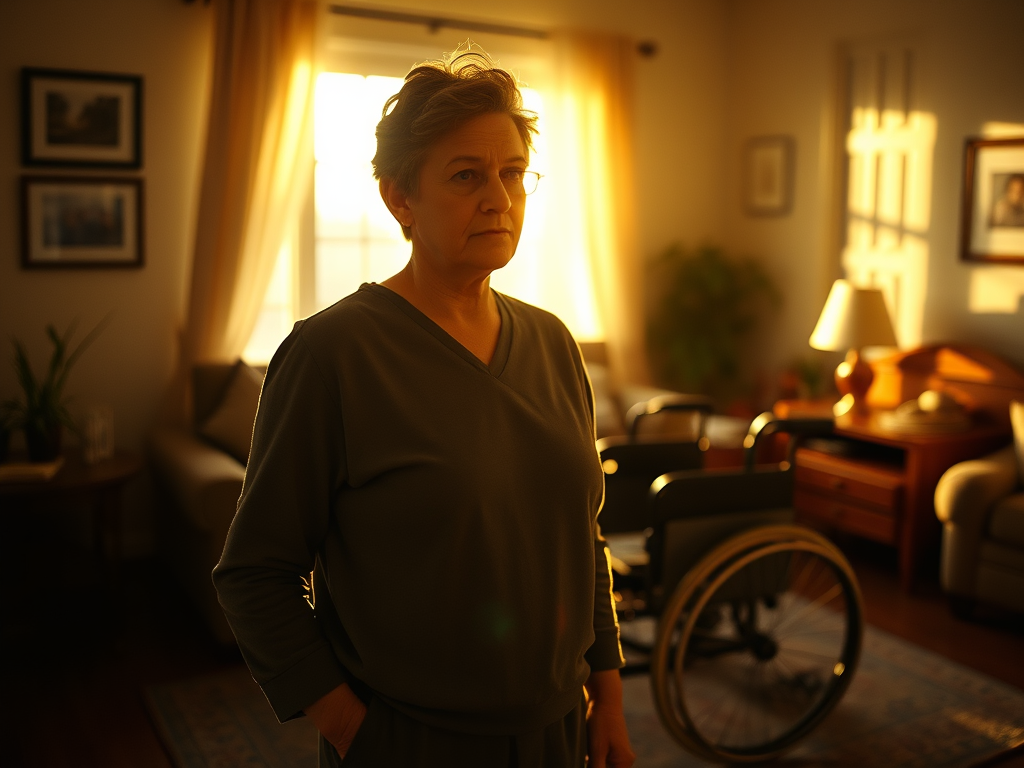
The past year has changed me in ways I never expected. Losing my wife after watching her fight with every ounce of strength she had, trying to raise my daughter, helping fellow veterans navigate a system that often overwhelms them, trying to build a business with purpose—it has all been meaningful. Yet, at times, it has also been exhausting.
People sometimes tell me how strong I am.
The truth is, strength isn’t the absence of questions. Sometimes it’s simply continuing to put one foot in front of the other while carrying them.
Why do I struggle to feel purpose on some days when I know my work changes lives?
Why does my soul sometimes feel quiet instead of alive?
It isn’t that I lack free will. Every day I choose to move forward.
It isn’t that I cannot love. If anything, loving deeply has become both my greatest gift and my greatest source of pain.
So what is it?
Is my tank full—but filled with sand instead of water? Have years of responsibility, military service, loss, caregiving, and simply surviving filled every available space until joy has difficulty finding room?
Or is it something simpler? Is my brain still healing from grief? Are the chemicals that shape emotion simply trying to find their balance again?
I honestly don’t know.
What I do know is this: purpose doesn’t seem to be something we find once and keep forever. It fades. It changes. It asks us to search for it again and again.
When I help a veteran receive benefits they earned decades ago, I see purpose.
When I teach someone how to navigate the VA system so they can eventually do it themselves, I see purpose.
When my daughter smiles, I see purpose.
But even purpose doesn’t erase grief. It simply gives grief somewhere meaningful to stand.
Maybe that is what healing really is.
Not waking up one morning and feeling whole again.
Not forgetting the people we’ve lost.
Not pretending life is the same.
Maybe healing is learning that even when life loses some of its shine, it still has value. That even when our soul feels quiet, it is still there. That even when we don’t have all the answers, we can still choose kindness, service, and love.
I don’t know if everything eventually becomes ordinary.
I do know that the people we help, the lives we touch, and the love we give never truly lose their value.
Perhaps that’s enough for today.
Tomorrow, I’ll ask the questions again.
And I’ll keep walking anyway.

A Button, a Lesson 45 Years in the Making
Today I sewed a button back onto my favorite shirt and repaired a split seam in a pillow.
Neither job took very long, but when I finished, I realized I had just used a skill I learned more than 45 years ago as a Boy Scout.
My Scoutmaster, William Lee Kitchel, was a remarkable man. He was a Navy veteran of the Second World War who served aboard a battleship and was wounded during a kamikaze attack. Later, he served again, this time in the Air Force during the Korean War. He was demanding, disciplined, and believed that young men learned responsibility by doing things themselves.
Every Scout in our troop sewed on his own merit badges and patches. There were no shortcuts and no “Mom will do it.” When I earned my first three merit badges, I was handed a needle, thread, and instructions to sew them on myself.
Like so many families, my mother kept a Danish butter cookie tin that contained everything except cookies. Inside were needles, thread, buttons, pins, and years of accumulated sewing supplies. She gave me a needle, some thread, and a T-pin, and I went to work. My first attempts looked terrible, but Mr. Kitchel expected us to do it correctly. He accepted no excuses and suffered no fools. Over time, I became quite good at sewing. He even taught us traditional Seminole patchwork sewing, a skill I never imagined would stay with me for life.
Back then, I thought I was simply learning how to put patches on a Scout uniform.
Today I realized he was teaching something much larger.
The woman who quietly fixed buttons, repaired torn clothes, and mended the little things around our home—my wife, Sherri—is gone now. Today, there was no one to hand my favorite shirt to. So I threaded the needle myself, replaced the missing button, and repaired the pillow.
That shirt is my favorite because of a photograph. It shows Sherri sitting on my lap during one of our vacations, smiling with the biggest, brightest smile. It was probably one of our first selfies. Every time I see that picture, it reminds me of her joy, and it makes me smile too.
As I finished sewing today, I realized that William Lee Kitchel had taught me something without either of us knowing it. He wasn’t just teaching a Boy Scout to sew. He was teaching self-reliance, patience, pride in doing a job well, and the confidence to care for the things—and the people—that matter.
Some lessons don’t reveal their true value until decades later.
Thank you, Mr. Kitchel, for giving me a skill that has lasted a lifetime, and for teaching me something far greater than sewing.

Serendipity
There are moments in life that feel accidental at first glance, but later settle into your heart as something much deeper. Moments where friendship, love, timing, grief, and grace all quietly intersect in a way that cannot simply be explained away as coincidence.
This past week, I took my first trip in four years without the overwhelming dread or guilt of leaving my wife behind. That alone felt strange to me. For years, every decision, every outing, every mile traveled carried the weight of caregiving and concern. Even moments that should have been joyful often carried an undercurrent of worry.
But this trip was different.
I traveled to Charleston to attend the graduation of the son of one of my classmates from our alma mater. It was a wonderful celebration filled with memories, laughter, and the strange realization that time continues to move forward whether we are ready for it or not. I stayed with another longtime classmate who still works at the school, and for a few days, I was surrounded by nearly forty years of friendship and shared history.
The morning after the celebration, I woke early and sat having coffee with my friend’s wife, someone I have also known for nearly four decades. We spoke quietly in that way people do in the early morning, before the world fully wakes up.
She shared how they had recently moved her parents from Maine to live near them in an independent living facility. Her father suffers from Alzheimer’s, and her mother from dementia. We talked about the difficult reality families face when navigating those diseases.
One of the strange truths about Alzheimer’s is that, as horrible as it is, there is often a somewhat defined progression. Dementia, however, can be incredibly broad and unpredictable. Symptoms vary wildly. Behaviors change suddenly. Good days and difficult days arrive without warning. For families who have never walked through it before, it can be exhausting, confusing, heartbreaking, and frustrating all at once.
Even after only a couple of months, I could already see the emotional toll it was taking on her.
She explained how her mother had insisted on hip surgery because she believed it would improve her quality of life, but instead, it had left her nearly immobile.
And immediately, my mind went to Sherri’s scooter.
For months, it had been sitting quietly in Sherri’s office gathering dust. A bright pink mobility scooter that no one else could ever possibly mistake for their own.
Of course it was pink.
Sherri insisted on pink.
Not just any pink scooter either. I had to drive more than one hundred miles to find one because she refused to settle for anything less than the exact shade she wanted to match her love of Lilly Pulitzer colors and style. Then she decorated it herself. She made a Lilly Pulitzer-style cover for the back seat, and because she was so tiny, we even added a piece of pink foam so her feet could comfortably reach the pedal.
That scooter was unmistakably hers.
As my friend’s wife spoke, I realized that the scooter sitting unused in Orlando could suddenly become something meaningful again.
I told her, “I have something that can help.”
It is amazing how easy it is nowadays to move something across the country. There truly is an app for everything. Within a short period of time, I found a kind gentleman willing to transport the scooter from Orlando to Charleston the very next day.
And just like that, Sherri’s little pink scooter was headed north to help another family carrying a burden of love and caregiving.
I sat there afterward thinking about how strange and beautiful life can sometimes be.
What are the odds that I would finally take my first trip away?
What are the odds that this conversation would happen over early morning coffee?
What are the odds that a scooter sitting unused for months would suddenly become exactly what another family needed?
Some people call that coincidence.
I do not.
I believe there are moments of divine intervention woven quietly into our lives. Moments where love continues moving long after someone is gone. Moments where friendship creates opportunities for compassion. Moments where grief transforms into purpose.
Serendipity is a funny thing. It often arrives carrying both sorrow and joy at the same time.
What touched me most was realizing that even now, Sherri is still helping people.
Even now, her kindness, personality, style, stubbornness, humor, and love are still moving through the world in tangible ways. A pink scooter decorated by her own hands is now going to reduce the burden on another daughter caring for her parents.
And honestly, I think that would make Sherri smile.
Life can be unbelievably difficult. Illness, loss, aging, caregiving, and grief all remind us how fragile we really are. But friendship, love, and compassion remind us that none of us were ever meant to carry those burdens alone.
Sometimes the greatest acts of grace are not the massive miracles.
Sometimes they are simply a cup of coffee, an old friendship, a heartfelt conversation, and a pink scooter finding its next purpose exactly when it is needed most.

Life Changes in an Instant: A Caregiver’s Journey
We’ve all heard the phrase: “In the blink of an eye, everything can change.” It’s easy to brush off—it’s a quote we’ve heard in books, seen in movies, or used when something minor goes sideways. I’ve heard it a million times. But living it—really living it—is different.
As a two-time caregiver, I’ve come to truly understand the depth of that phrase. This second time around has given me what we used to call in the military situational awareness. That’s the moment when you stop reacting emotionally and begin assessing reality: the inputs, the outputs, and what you can do—even if it’s just mitigating the damage.
A few months ago, my wife hadn’t walked in six months. Chemo had ravaged her body. She was pale, fragile, eyes sunken. I’d seen that look before in others, but this was my wife.
Then one morning, I walked into our little home gym and found her wheelchair stuck in the doorway. I looked across the room and there she was, standing—cleaning out a closet.
“How did you get over there?” I asked, stunned.
“I walked,” she said.
Using the treadmill and bench to balance herself, she’d made her way across the room. That was the first time in half a year. I yelled for our son—his mom had walked. Within a week she was moving around the house. Within a month, she was logging 5,000 steps a day, laughing with friends, going to parties. Her oncologist called it miraculous.
Life returned. Our home was lighter. The walker and wheelchair went back in the garage. We stopped arguing. We were happy again—almost like the storm had passed without us noticing.
Then her knee started to ache. Badly. We pulled the walker back out. Then the wheelchair. And when I had to reinstall the ramp on our front steps… that’s when it hit me.
We were back at the bottom.
Tensions flared again. My daughter and I, already frayed, started arguing like before. Caregiving is constant—it never turns off. It demands your whole being. You feel like if you step away for even a moment, everything might fall apart.
But this time… I told myself it would be different.
My wife, thankfully, was approved for Social Security Disability in a single day. Say what you will about government programs—but after 40 years of paying taxes, that moment mattered. It gave us some breathing room. I no longer needed to work part time just to get by. Now, I could be present. For her. For our daughter. And for myself.
That meant waking early. Drinking my coffee in peace. Saying my mantras. Walking the dogs. Going to fitness class. Writing. Reflecting.
We were gifted three months of light. Three months of freedom. And even if that season never returns, I will always cherish it.
Because I know how quickly it can all change.
Situational awareness isn’t just for combat zones. It’s for living rooms. For hospital beds. For quiet corners where you cry alone. It’s knowing when to breathe, when to speak, and when to let go of trying to control what can’t be controlled.
It’s about grace.
It’s about gratitude.
And it’s about recognizing—in the blink of an eye—that even the smallest step forward is a miracle worth holding onto.