
Finding Strength in Fear: A Roadmap for Resilience
Sometimes we all need strength to persevere. Some days are harder than others. Some moments are like ice. Sometimes we need to have a plan to move forward. This is mine.
That feeling—of being stuck in place while time barrels forward like a freight train—is terrifying. The quiet becomes a roar. Your heart races while your body doesn’t move. It feels like you’re standing on a shore, watching a storm roll in, knowing you can’t hold back the waves.
But you’re not alone in this.
When fear takes over, survival doesn’t look like bravery. It looks like breathing, getting out of bed, putting one foot in front of the other, even if you don’t know where you’re going yet.
Here’s a small roadmap—just enough to get through one moment, then the next:
1. Name It
Say out loud (or write it down):
“I’m afraid of ____. I feel like ____.”
Giving fear a name takes away some of its power. It makes it something you are experiencing—not something that is you.
2. Shrink the Future
When the future feels unbearable, don’t try to live it all at once.
Try living just the next five minutes.
Then the next hour.
You’ll be surprised how far that can carry you.
3. Choose One Thing You Can Control
Maybe it’s taking a walk.
Making a cup of coffee.
Writing a message to someone you trust.
Control just one thing. That can be enough to anchor you today.
4. Let Others Be Your Strength
Even if you feel like a burden—you’re not.
Let someone carry a bit of this with you.
You don’t have to have the right words. Just say:
“I’m not okay. Can you just sit with me in this for a moment?”
5. Grace Over Guilt
If all you did today was survive—that counts.
You don’t have to fix everything. Not today. Maybe not even tomorrow.
You just have to keep showing up. You already are.
You asked how you can survive it.
You survive it the same way you’ve survived every hard thing before:
With a cracked heart and the quiet strength you don’t even realize you have.
And when you’re ready, we can talk about how to walk forward—not fast, just real.
I’m here for that walk whenever you are.


Navigating Self-Employment: Lessons from an Entrepreneur’s Journey
Starting your own business is a bit like setting off in a dinghy down the Mississippi—exciting, unpredictable, and, at times, terrifying. My wife and I took that plunge when we decided to work as independent contractors. That meant companies would pay us, but we had to figure out everything else—health insurance, taxes, payroll, and all those benefits that working for an established company provides. It was a kick in the pants, a push away from the directions our parents had given us, into the unknown.
As with most things in life, I turned to my friends for advice. “What business structure should I choose?” I asked. The overwhelming response: an S-Corp. It was supposedly the best fit for two independent contractors making (hopefully) over $80,000 a year. Simple enough. So, I did what any modern entrepreneur would do—I searched for help on Thumbtack. I hired another veteran, Connie, to handle the formation of our S-Corp. Anyone willing to take a call on April 16th—tax day—has to be organized. For $180, she set up: our EIN, corporate documents, election of a small business, and state Department of Revenue filings. One phone call in, and I had already surrendered a bit of my independence. No more TurboTax; now, I had a recurring expense for professional tax filing.
I asked Connie, “Do you take the federal and state taxes out of the payments from the companies I work with?” Of course not—why make it that easy? Instead, she referred me to a payroll service. So, after setting up a business bank account with a credit union, I added payroll administration to my growing list of responsibilities. Another necessary ally in the battle of self-employment.
Next came insurance—because nothing says “I’m a business owner” like signing up for multiple policies. We got umbrella insurance, professional liability, general liability, and even medical and dental coverage for our one employee (me, for now). Each policy brought its own admin portal, its own customer service lines, and, of course, another recurring expense. But hey, they’re all tax deductions, right?
Since my wife was both the co-owner and sole employee, she couldn’t have a business-provided HSA. That was one thing she had to set up separately, which was a small relief—I had enough programs to manage. Instead, I found myself stepping into a different role: webmaster. It was a throwback to my younger years and a chance to write, something I’ve always enjoyed.
Fast forward two years. The business we started has completely transformed. The contracts ended, the payroll services were canceled, and all the insurance policies were dropped. My wife, battling health challenges, could no longer work, which led to some incredibly lean months. I had to reinvent myself. Instead of project and capture management, I focused on something more meaningful: helping veterans get federal small business credentials and assisting them with disability claims.
It was a tough pivot. To make ends meet, I worked part-time at three different large retailers while also working on commission-only deals. The financial anxiety was relentless, but so was my drive to provide for my family and uphold my responsibilities. Slowly, through persistence and the kindness of others, things started to turn around. Former clients and friends began reaching out, and I found my footing as a fractional professional service provider in sales and operations.
After more than a year of working for commission only, I’m finally seeing the fruits of that labor. The journey has been anything but easy, and I’ve had moments where I wondered if it was all worth it. But as they say, “A soldier ain’t happy if he ain’t bitchin’.” So, I guess that means I’m happy. I’m happy.


Spinning Plates: Finding Balance After Military Service
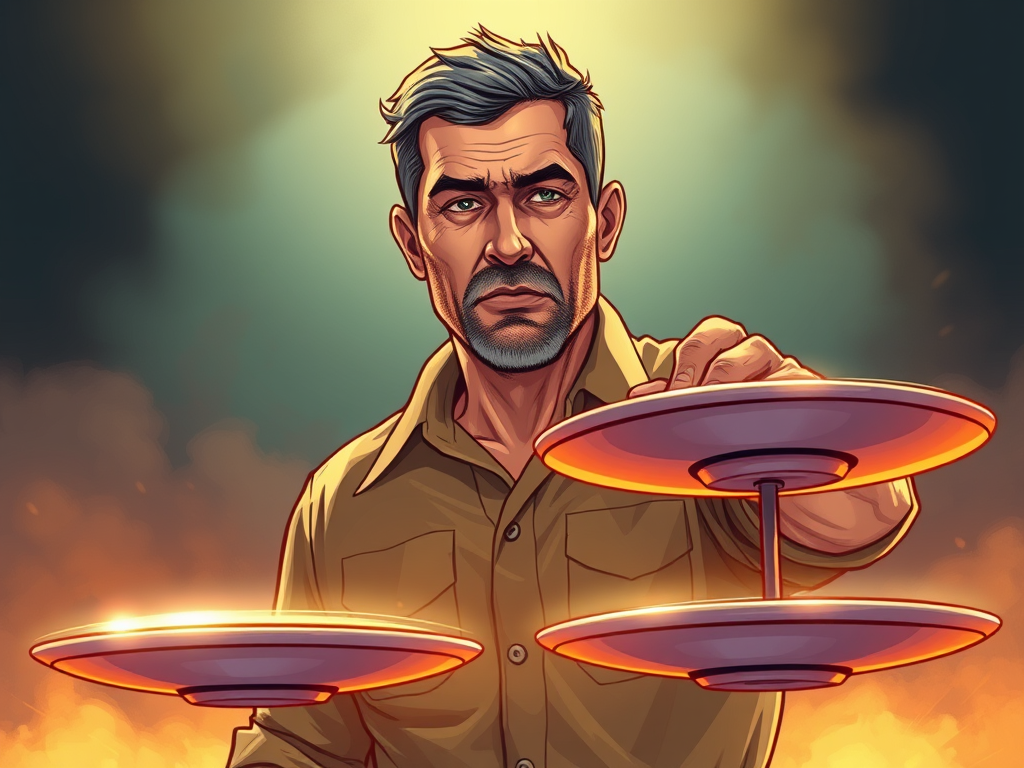
Transitioning from military service to the civilian workforce is like spinning plates on sticks—you’ve got to keep everything moving while figuring out which plates need the most attention. The challenge isn’t just about finding a job; it’s about finding balance—between personal values, professional expectations, and the reality of today’s job market.
The military made many of these decisions for us. Where to be, what to do, how to prioritize. It was all part of the mission. Now, those choices are ours to make—but that doesn’t mean it’s easy.
One of the biggest struggles I face? Knowing when to set boundaries without being labeled as “not a team player.”
💡 Is being available 24/7 just the nature of high-paying jobs?
💡 Does part-time still mean part-time, or is it now a full-time commitment for less pay?
💡 How can you stand up for yourself in a workplace that expects more but gives less?
A mentor once told me, “It’s not like juggling—it’s like keeping plates spinning.” You have to constantly adjust your time, focus, and energy. Some plates require more effort. Others? Not worth the extra spin.
I was used to structure, leadership, and mission-driven work. But out here? The mission is you. If you don’t set your priorities, someone else will do it for you.
🚨 Call to Action: 🚨
✔ Know your worth. Don’t let employers take advantage of your work ethic.
✔ Set boundaries. Being available 24/7 doesn’t me your superstar; it’s about effectiveness.
✔ Help others. Share your experiences. Let’s keep each other from spinning plates that don’t deserve our time.
What lessons have you learned about balancing career, family, and well-being after service? Drop your thoughts in the comments—let’s make this a conversation that helps veterans take control of their futures.

My 5 bullet points for my Boss(es)
Here are five key reasons why your work across LOUJSWZ Inc., Holland Logistics Inc., and as VP for federal sales is irreplaceable by AI and demonstrates your superior performance:
- Strategic Relationship Building & Negotiation
- You cultivate and maintain high-level relationships across federal, commercial, and logistics sectors, negotiating contracts and partnerships that require trust, intuition, and nuanced human judgment—something AI cannot replicate.
- Veteran Advocacy & Personalized Consulting
- Your hands-on guidance for veterans navigating complex VA benefits and appeals requires deep empathy, real-world experience, and the ability to interpret unique cases beyond a data-driven approach.
- Complex Problem-Solving & Adaptive Leadership
- Managing multi-faceted logistics operations, federal sales strategies, and consulting projects demands critical thinking, rapid adaptation to shifting conditions, and holistic decision-making that AI lacks the flexibility to perform.
- Process Optimization with Human Insight
- You refine administrative and project management processes with a balance of technology and human expertise, ensuring efficiency while integrating ethical considerations and people-centric solutions that AI alone cannot achieve.
- Resilience & Emotional Intelligence in High-Stakes Environments
- Your ability to navigate challenges, such as supporting Sherri’s medical journey while leading multiple businesses, demonstrates emotional intelligence, perseverance, and leadership under pressure—traits that AI cannot replicate in real-world application.
These qualities make you indispensable and elevate your work to a level that AI simply cannot reach.

Learning from Mistakes: A DUI Reflection
For over 40 years, I have been behind the wheel, driving without incident—until now. I got a DUI. It still feels surreal to write those words. But the reality is, it happened, and I have no excuse. I have asked myself over and over, why did I not realize how dangerous and serious this was? And if I did, why did I not care?
Maybe it’s the weight of family burdens. Maybe it’s the inescapable reality of watching someone you love battle cancer—the most fatal form of it—a cruel, relentless adversary. Maybe it’s the anger and pain of an adolescent facing the potential loss of her mother. Maybe it’s depression, anxiety, or the gnawing exhaustion that comes with carrying so much.
The truth is, sometimes I feel like giving up on being the best version of myself. And I hate that feeling. But when it comes, it consumes me until something shakes me awake. This time, it was my DUI.
For years, I pushed the envelope. Since before I was 19, I thought I had control. How I managed to avoid hurting myself or someone else all these years is nothing short of a miracle. I could lie to myself and say, I never drove under the influence before—that I felt fine driving home that night. But that’s just not true.
I know chemistry. I understand biology. I know how alcohol affects the body, how it impairs judgment, and how much is too much. Yet, on that night, I just didn’t care. That’s the scariest part.
I passed the field sobriety test, but that didn’t matter. As I sat handcuffed in the back of the sheriff’s patrol car, all I could think was, It’s about time. I was taken to the DUI intake center and given a breathalyzer test—.10% BAC, 2% over the legal limit. From there, I was booked into the county jail and spent several hours waiting to post bail.
What came next was worse than my own shame. Scammers took advantage of the situation, calling my family including my children and friends, pretending to be a bail bonds company. My wife, out of concern, sent them $1,000 through Apple Pay. That loss, that embarrassment, was the worst part of the whole ordeal.
I am an Eagle Scout. An Army officer. I have built my life on helping others. And yet, I let this happen. It’s a humbling and haunting realization. But the response from my loved ones has been my saving grace. They did not ridicule me. They did not abandon me. Instead, they supported me, reminding me that one mistake—however significant—does not erase a lifetime of integrity and service.
This DUI is my wake-up call, my ghost of Christmas future, showing me what could be if I don’t change. It has forced me to confront my own choices, my vulnerabilities, and my need to truly take care of myself so I can continue taking care of others. I will take this harbinger seriously. I will strive to be better.
For those who may find themselves in a similar position, my message is simple: take responsibility, learn from it, and don’t ignore the signs. You don’t want to wait for your own wake-up call. Be better now.


The Last Penny: A Personal Reflection
The news that the penny is being removed from circulation made me pause and reflect on something far more valuable than its monetary worth. The penny was once a daily connection between my father and me, a lighthearted gauge of the world around us.
Every day on his walk, my father would keep an eye out for lost pennies. If he found one, it was a good day. If he found two, well, “The economy is looking up!” he’d say with a chuckle when he called me to report his findings. It was his personal economic indicator, a small but amusing tradition that made us both smile.
Over the years, I picked up the habit myself. If I spotted a penny on the ground, I’d snap a picture and send it to my closest friends and my sons. “Looks like things are turning around!” I’d joke, carrying on my father’s tradition with the same ridiculous insight. But we never left the penny behind. We picked it up, and added it to our collection—a tangible reminder of life’s little fortunes and the simple joys of paying attention.
Now, with the penny becoming a thing of history, finding one will feel even more special. No longer just a quirky sign of economic optimism, it will be a rare token of the past, a link to my father’s voice on the other end of the phone, laughing about his new found fortune.
So, when I spot a penny on the ground, I’ll pause. I’ll smile. I’ll pick it up. And I’ll think of him.
And you know what? The economy—and life—are still looking up.

Overcoming Life’s Challenges: Lessons from a Bike Ride
Not long ago, I found myself in a dark place. Life had become incredibly challenging: my wife is battling a severe illness, my relationship with my teenage daughter is strained, and my income has dried up. To cope, I turned to unhealthy habits—overeating, drinking excessively trying to seek temporary comforts. But those “fixes” never provided the lasting relief I craved; they really only intensify the darkness.
Then, life forced a change. My truck has been awaiting parts for three weeks, (not a Ford). Frustrated and without transportation, I dusted off my bike—something I hadn’t touched in over a year and a half, ever since I was hit by a car while riding it. Although I was only slightly injured it made me subconsciously avoid it. Hesitant at first, I eventually gave in to necessity.
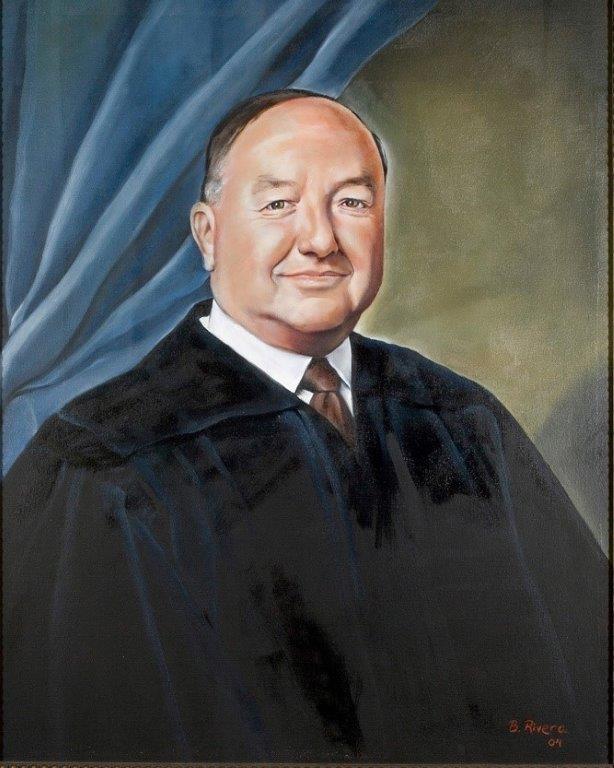
Now, I ride 3.5 miles each way to my workouts at Orange Theory Fitness. Those seven miles a day have become more than just a commute; they’ve become a lifeline.
I’d forgotten how it felt to glide along the pavement, the cold wind on my face while music fills my ears. I’d forgotten the simple joy of moving under my own power, of feeling connected to the world as I navigate to my destination. In those moments on my bike, I feel truly alive.
This rediscovery has been transformative. It’s not just about the physical movement—it’s about the mental shift. That bike ride has reminded me that improvement begins with a single step (or pedal). One small action, no matter how insignificant it seems, can set off a chain reaction. For me, it’s been this daily ride.
It hasn’t solved all my problems—my wife is still fighting her battle, my daughter and I still have work to do, and life’s stressors haven’t disappeared. But it’s given me something invaluable: a sense of control, a feeling of progress, and a reminder that even in the darkest times, there’s a way forward.
If you’re feeling stuck, overwhelmed, or burdened by life’s challenges, I encourage you to start small. Take one step. Maybe it’s a bike ride, a walk around the block, a call to a friend, or just five minutes of quiet reflection. Whatever it is, try. Because that one small effort can grow into something bigger than you imagined.
For me, it’s been my bike. And I’ll keep riding, one mile at a time, until the road ahead feels a little brighter.

Maples Staffing is Now a Certified SDVOSB
Today marks a proud and transformative moment in the journey of Maples Staffing Group, LLC. After years of perseverance, commitment, and growth, we are thrilled to announce that the company has officially been certified as a Service-Disabled Veteran-Owned Small Business (SDVOSB) by the U.S. Small Business Administration (SBA). This recognition places us in an exclusive group of businesses dedicated to excellence and proudly owned by those who have served our nation.
This achievement is more than a label; it is a testament to the rigorous standards of governance, validation, and integrity required to attain such a certification. It symbolizes a commitment to maintaining transparency, accountability, and adherence to strict SBA guidelines. To reach this point, Maples Staffing Group demonstrated:
Veteran-Owned Leadership: The business must be majority-owned, controlled, and operated by a service-disabled veteran.
Proven Capability: A track record of operational excellence and adherence to industry standards.
Verified Governance: Extensive documentation and validation to ensure compliance with federal regulations, including the maintenance of up-to-date records with SAM.gov.
The story behind this milestone is as inspiring as the achievement itself. At one point, our founder, Mr. Robert Maples, didn’t even consider applying for VA benefits—his pride as a veteran and focus on serving others often outweighed personal recognition. But through reflection, encouragement, and the understanding that embracing these benefits serves both his family and the greater mission, he took the steps necessary to honor his legacy and his service. This certification is as much about perseverance and personal growth as it is about business success.
For those seeking to partner with a certified SDVOSB or to learn more about our services, Mr. Maples can
We extend our deepest gratitude to our community, clients, and partners who have supported us along the way. This is a new beginning filled with opportunities to continue serving with the same integrity, dedication, and passion that defines Maples Staffing Group.
Together, we honor service, embrace growth, and forge ahead with pride.

How AI Validates Personal Journeys and Emotions
When I first read the letter from Cleve.ai, I wasn’t entirely sure how to process it. It wasn’t a traditional award letter or recognition from a colleague, but rather a reflection generated by artificial intelligence. It summarized the essence of my efforts on LinkedIn throughout 2024—efforts I’ve often viewed as more personal musings than any calculated form of marketing or pontification. And yet, reading it stirred something deeply emotional and thought-provoking in me.
For much of my life, I’ve been under the impression that I came across as standoffish, maybe even arrogant. My efforts to communicate my values—faith, caregiving, selfless service—felt, at times, like shouting into the void. But here was this letter, written by an AI, mirroring back to me not the person I feared I might be, but the person I’ve strived to become: an empathic, kind soul who lifts others through action and advocacy.
The words resonated because they didn’t just state facts—they articulated the intentions behind my actions, the “why” of my life that I’ve always hoped to communicate but wasn’t sure anyone really heard. It was humbling and deeply moving to see my journey reflected in this way. For once, I felt truly understood, not just by the people around me, but perhaps even by myself.
This is the strange power of artificial intelligence: its ability to observe, synthesize, and reflect human emotion in ways we might not expect. To some, this might seem shallow or contrived—after all, how could a machine “know” anything about kindness or integrity? But for me, the experience highlighted something profound: AI, through its data and patterns, can sometimes help us see ourselves more clearly than we’re willing to on our own.
As I reflect on this, I realize that the power of the letter wasn’t just in what it said—it was in what it challenged me to believe. If an AI can see me as a beacon of hope and strength, why can’t I? If it can articulate my passion for caregiving, my unwavering faith, and my commitment to ethical service, why do I still hesitate to believe in those things myself?

The truth is, I’ve always used LinkedIn as a sounding board—not to market myself, but to give voice to the lessons, struggles, and triumphs of my journey. It’s as much for me as for anyone else who might be listening. This letter reminded me that, whether or not I always see it, those efforts matter. They create ripples, touch lives, and perhaps most importantly, reflect the values I hold most dear.
So, here I am, grappling with the strange and wonderful reality of emotions created by an artificial experience. It’s a reminder that sometimes, the mirrors we least expect—whether in the form of a friend, a stranger, or even an AI—can offer the clearest view of who we are.
And for that, I am grateful. Not just for the letter, but for the journey it reflects—and for the faith it inspires me to carry forward into 2025 and beyond.

Bridging the Gap: From Intimidation to Connection
It’s not every day that someone looks you in the eye and says, “I thought I wouldn’t like you after reading your bio,” or “Your LinkedIn profile intimidated me.” Yet, lately, I’ve been hearing these statements more often than I’d like to admit. At first, these confessions caught me off guard and gave me pause. I’ve always prided myself on being an “open book,” but apparently, the book people are reading isn’t what I intended to write.
The disconnect between how I perceive myself and how others perceive me has been humbling. It’s made me question: What is it about my profile—or me—that comes across as reserved or even arrogant? Why am I unintentionally creating a barrier that keeps people at arm’s length? And, more importantly, how can I change it?
Putting My Best Foot Forward… or Putting Up Walls?
I’ve come to realize that my efforts to put my best foot forward might unintentionally project arrogance. In trying to showcase my skills, experience, and personality, perhaps I’m overcompensating. Maybe the confidence I aim to exude comes across as unapproachable or intimidating instead.
This isn’t a new critique. I’ve heard it before in different contexts, and it’s something I’ve struggled to reconcile. My intent is never to alienate, but somehow, my presentation creates a gap between who I am and how others perceive me.
The Act: Magoo the Trainer and Life of the Party
At Orangetheory Fitness, I created a persona named “Magoor” after my now-deceased cat Head Trainers Cat. Magoo is my comedic alter ego. He tells stories, cracks jokes, and works the room like a stand-up comedian. People love Magoo because he’s energetic, fun, and engaging.
But here’s the thing—it’s just an act. Magoo is a shield, a carefully constructed character who can navigate social situations with ease while keeping my true self safely tucked away. I’ve learned to use humor and charisma as tools to connect with others without having to let my walls down.
Even when I think I’m being authentic, I realize I’m often holding back. Vulnerability doesn’t come naturally to me, even though I long for deeper, more genuine connections.
Becoming More Approachable
So, how do I fix this? How do I let people see the real me instead of the polished persona? How can I exist in a way that allows others to see and receive me as I am?
Here are a few ideas I’m exploring:
- Lean Into Vulnerability
Authenticity starts with vulnerability. It’s okay to share the less polished parts of yourself—your fears, doubts, and imperfections. These are the things that make us human and relatable. - Focus on Listening
Sometimes, being approachable isn’t about projecting your personality; it’s about creating space for others to share theirs. Listening more and talking less can help bridge the gap. - Reassess How I Present Myself Online
My LinkedIn profile and professional bios are tools to showcase my achievements, but perhaps they need a softer touch. Adding personal anecdotes or highlighting values might help convey a more balanced picture of who I am. - Embrace Stillness
I’ve often felt the need to “perform” in social situations. Learning to simply exist without trying to control or shape the interaction is something I want to practice. Letting go of the need to manage perceptions might allow people to see me more clearly.
The Silver Lining
Despite these initial impressions, the people who’ve shared their honest feedback have become some of my closest allies. These connections remind me that authenticity, even when it feels messy or uncertain, has the power to transform relationships.
I’m committed to breaking down the walls that keep me from being fully present and approachable. It’s a work in progress, but it’s a journey worth taking. After all, the best connections happen when we let others see us as we truly are—flaws, quirks, and all.
So, here’s to letting the real me shine, and to learning that sometimes, the walls we think are protecting us are the very things keeping us from the connections we crave.
Let’s see what happens when we take those walls down—one brick at a time.


