Category Archives: Situational

Lou Schwartz Joins DAV Patriot Boot Camp 2025
We are thrilled to announce that Lou Schwartz, founder and president of LOUJSWZ Inc., has been officially accepted into the DAV Patriot Boot Camp Spring 2025, a prestigious program dedicated to empowering military veterans, service members, and their families in entrepreneurship.
Hosted at the Disabled American Veterans (DAV) National Headquarters in Erlanger, Kentucky, this three-day immersive experience will bring together an elite group of veteran and spouse entrepreneurs from across the country for education, mentoring, and networking from May 14-16, 2025.
This incredible opportunity aligns perfectly with the mission and vision of LOUJSWZ Inc.:
- Mission: To improve processes and lives for small businesses, veterans, and individuals, making their journey easier and more fulfilling.
- Vision: To empower others through professional services, project coordination, consulting, and federal certifications, helping them navigate complex systems and succeed in their ventures.
Through this program, Lou will not only enhance his own entrepreneurial skills but also expand the reach of LOUJSWZ Inc.’s commitment to veteran advocacy, small business development, and servant leadership. The knowledge and connections gained will directly benefit the veterans, small business owners, and clients we serve, ensuring that LOUJSWZ Inc. continues to make life better and easier for those striving to achieve their goals.
Stay tuned as Lou returns with insights from this experience. He will bring back relationships and resources to further enrich the support we provide.
For more about our services and ongoing initiatives, visit loujswz.com or connect with us on LinkedIn
Together, we rise. Together, we serve.


Life Changes in an Instant: A Caregiver’s Journey
We’ve all heard the phrase: “In the blink of an eye, everything can change.” It’s easy to brush off—it’s a quote we’ve heard in books, seen in movies, or used when something minor goes sideways. I’ve heard it a million times. But living it—really living it—is different.
As a two-time caregiver, I’ve come to truly understand the depth of that phrase. This second time around has given me what we used to call in the military situational awareness. That’s the moment when you stop reacting emotionally and begin assessing reality: the inputs, the outputs, and what you can do—even if it’s just mitigating the damage.
A few months ago, my wife hadn’t walked in six months. Chemo had ravaged her body. She was pale, fragile, eyes sunken. I’d seen that look before in others, but this was my wife.
Then one morning, I walked into our little home gym and found her wheelchair stuck in the doorway. I looked across the room and there she was, standing—cleaning out a closet.
“How did you get over there?” I asked, stunned.
“I walked,” she said.
Using the treadmill and bench to balance herself, she’d made her way across the room. That was the first time in half a year. I yelled for our son—his mom had walked. Within a week she was moving around the house. Within a month, she was logging 5,000 steps a day, laughing with friends, going to parties. Her oncologist called it miraculous.
Life returned. Our home was lighter. The walker and wheelchair went back in the garage. We stopped arguing. We were happy again—almost like the storm had passed without us noticing.
Then her knee started to ache. Badly. We pulled the walker back out. Then the wheelchair. And when I had to reinstall the ramp on our front steps… that’s when it hit me.
We were back at the bottom.
Tensions flared again. My daughter and I, already frayed, started arguing like before. Caregiving is constant—it never turns off. It demands your whole being. You feel like if you step away for even a moment, everything might fall apart.
But this time… I told myself it would be different.
My wife, thankfully, was approved for Social Security Disability in a single day. Say what you will about government programs—but after 40 years of paying taxes, that moment mattered. It gave us some breathing room. I no longer needed to work part time just to get by. Now, I could be present. For her. For our daughter. And for myself.
That meant waking early. Drinking my coffee in peace. Saying my mantras. Walking the dogs. Going to fitness class. Writing. Reflecting.
We were gifted three months of light. Three months of freedom. And even if that season never returns, I will always cherish it.
Because I know how quickly it can all change.
Situational awareness isn’t just for combat zones. It’s for living rooms. For hospital beds. For quiet corners where you cry alone. It’s knowing when to breathe, when to speak, and when to let go of trying to control what can’t be controlled.
It’s about grace.
It’s about gratitude.
And it’s about recognizing—in the blink of an eye—that even the smallest step forward is a miracle worth holding onto.

Finding Strength in Fear: A Roadmap for Resilience
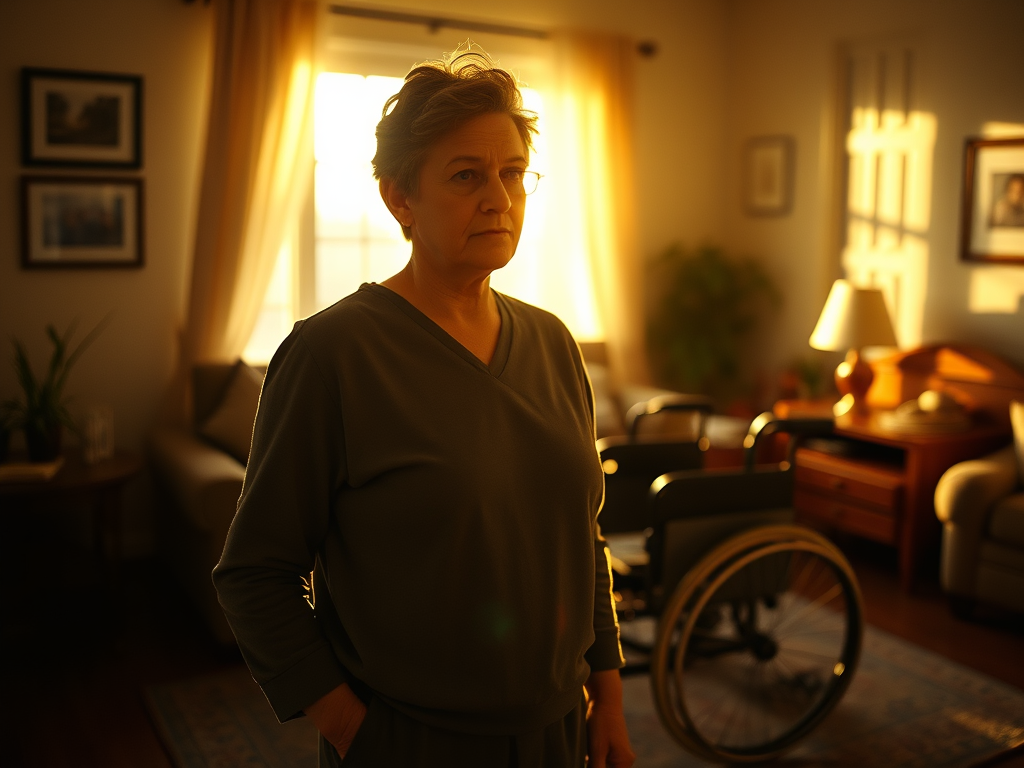
Sometimes we all need strength to persevere. Some days are harder than others. Some moments are like ice. Sometimes we need to have a plan to move forward. This is mine.
That feeling—of being stuck in place while time barrels forward like a freight train—is terrifying. The quiet becomes a roar. Your heart races while your body doesn’t move. It feels like you’re standing on a shore, watching a storm roll in, knowing you can’t hold back the waves.
But you’re not alone in this.
When fear takes over, survival doesn’t look like bravery. It looks like breathing, getting out of bed, putting one foot in front of the other, even if you don’t know where you’re going yet.
Here’s a small roadmap—just enough to get through one moment, then the next:
1. Name It
Say out loud (or write it down):
“I’m afraid of ____. I feel like ____.”
Giving fear a name takes away some of its power. It makes it something you are experiencing—not something that is you.
2. Shrink the Future
When the future feels unbearable, don’t try to live it all at once.
Try living just the next five minutes.
Then the next hour.
You’ll be surprised how far that can carry you.
3. Choose One Thing You Can Control
Maybe it’s taking a walk.
Making a cup of coffee.
Writing a message to someone you trust.
Control just one thing. That can be enough to anchor you today.
4. Let Others Be Your Strength
Even if you feel like a burden—you’re not.
Let someone carry a bit of this with you.
You don’t have to have the right words. Just say:
“I’m not okay. Can you just sit with me in this for a moment?”
5. Grace Over Guilt
If all you did today was survive—that counts.
You don’t have to fix everything. Not today. Maybe not even tomorrow.
You just have to keep showing up. You already are.
You asked how you can survive it.
You survive it the same way you’ve survived every hard thing before:
With a cracked heart and the quiet strength you don’t even realize you have.
And when you’re ready, we can talk about how to walk forward—not fast, just real.
I’m here for that walk whenever you are.


Navigating Self-Employment: Lessons from an Entrepreneur’s Journey
Starting your own business is a bit like setting off in a dinghy down the Mississippi—exciting, unpredictable, and, at times, terrifying. My wife and I took that plunge when we decided to work as independent contractors. That meant companies would pay us, but we had to figure out everything else—health insurance, taxes, payroll, and all those benefits that working for an established company provides. It was a kick in the pants, a push away from the directions our parents had given us, into the unknown.
As with most things in life, I turned to my friends for advice. “What business structure should I choose?” I asked. The overwhelming response: an S-Corp. It was supposedly the best fit for two independent contractors making (hopefully) over $80,000 a year. Simple enough. So, I did what any modern entrepreneur would do—I searched for help on Thumbtack. I hired another veteran, Connie, to handle the formation of our S-Corp. Anyone willing to take a call on April 16th—tax day—has to be organized. For $180, she set up: our EIN, corporate documents, election of a small business, and state Department of Revenue filings. One phone call in, and I had already surrendered a bit of my independence. No more TurboTax; now, I had a recurring expense for professional tax filing.
I asked Connie, “Do you take the federal and state taxes out of the payments from the companies I work with?” Of course not—why make it that easy? Instead, she referred me to a payroll service. So, after setting up a business bank account with a credit union, I added payroll administration to my growing list of responsibilities. Another necessary ally in the battle of self-employment.
Next came insurance—because nothing says “I’m a business owner” like signing up for multiple policies. We got umbrella insurance, professional liability, general liability, and even medical and dental coverage for our one employee (me, for now). Each policy brought its own admin portal, its own customer service lines, and, of course, another recurring expense. But hey, they’re all tax deductions, right?
Since my wife was both the co-owner and sole employee, she couldn’t have a business-provided HSA. That was one thing she had to set up separately, which was a small relief—I had enough programs to manage. Instead, I found myself stepping into a different role: webmaster. It was a throwback to my younger years and a chance to write, something I’ve always enjoyed.
Fast forward two years. The business we started has completely transformed. The contracts ended, the payroll services were canceled, and all the insurance policies were dropped. My wife, battling health challenges, could no longer work, which led to some incredibly lean months. I had to reinvent myself. Instead of project and capture management, I focused on something more meaningful: helping veterans get federal small business credentials and assisting them with disability claims.
It was a tough pivot. To make ends meet, I worked part-time at three different large retailers while also working on commission-only deals. The financial anxiety was relentless, but so was my drive to provide for my family and uphold my responsibilities. Slowly, through persistence and the kindness of others, things started to turn around. Former clients and friends began reaching out, and I found my footing as a fractional professional service provider in sales and operations.
After more than a year of working for commission only, I’m finally seeing the fruits of that labor. The journey has been anything but easy, and I’ve had moments where I wondered if it was all worth it. But as they say, “A soldier ain’t happy if he ain’t bitchin’.” So, I guess that means I’m happy. I’m happy.


Learning from Mistakes: A DUI Reflection
For over 40 years, I have been behind the wheel, driving without incident—until now. I got a DUI. It still feels surreal to write those words. But the reality is, it happened, and I have no excuse. I have asked myself over and over, why did I not realize how dangerous and serious this was? And if I did, why did I not care?
Maybe it’s the weight of family burdens. Maybe it’s the inescapable reality of watching someone you love battle cancer—the most fatal form of it—a cruel, relentless adversary. Maybe it’s the anger and pain of an adolescent facing the potential loss of her mother. Maybe it’s depression, anxiety, or the gnawing exhaustion that comes with carrying so much.
The truth is, sometimes I feel like giving up on being the best version of myself. And I hate that feeling. But when it comes, it consumes me until something shakes me awake. This time, it was my DUI.
For years, I pushed the envelope. Since before I was 19, I thought I had control. How I managed to avoid hurting myself or someone else all these years is nothing short of a miracle. I could lie to myself and say, I never drove under the influence before—that I felt fine driving home that night. But that’s just not true.
I know chemistry. I understand biology. I know how alcohol affects the body, how it impairs judgment, and how much is too much. Yet, on that night, I just didn’t care. That’s the scariest part.
I passed the field sobriety test, but that didn’t matter. As I sat handcuffed in the back of the sheriff’s patrol car, all I could think was, It’s about time. I was taken to the DUI intake center and given a breathalyzer test—.10% BAC, 2% over the legal limit. From there, I was booked into the county jail and spent several hours waiting to post bail.
What came next was worse than my own shame. Scammers took advantage of the situation, calling my family including my children and friends, pretending to be a bail bonds company. My wife, out of concern, sent them $1,000 through Apple Pay. That loss, that embarrassment, was the worst part of the whole ordeal.
I am an Eagle Scout. An Army officer. I have built my life on helping others. And yet, I let this happen. It’s a humbling and haunting realization. But the response from my loved ones has been my saving grace. They did not ridicule me. They did not abandon me. Instead, they supported me, reminding me that one mistake—however significant—does not erase a lifetime of integrity and service.
This DUI is my wake-up call, my ghost of Christmas future, showing me what could be if I don’t change. It has forced me to confront my own choices, my vulnerabilities, and my need to truly take care of myself so I can continue taking care of others. I will take this harbinger seriously. I will strive to be better.
For those who may find themselves in a similar position, my message is simple: take responsibility, learn from it, and don’t ignore the signs. You don’t want to wait for your own wake-up call. Be better now.


Overcoming Life’s Challenges: Lessons from a Bike Ride
Not long ago, I found myself in a dark place. Life had become incredibly challenging: my wife is battling a severe illness, my relationship with my teenage daughter is strained, and my income has dried up. To cope, I turned to unhealthy habits—overeating, drinking excessively trying to seek temporary comforts. But those “fixes” never provided the lasting relief I craved; they really only intensify the darkness.
Then, life forced a change. My truck has been awaiting parts for three weeks, (not a Ford). Frustrated and without transportation, I dusted off my bike—something I hadn’t touched in over a year and a half, ever since I was hit by a car while riding it. Although I was only slightly injured it made me subconsciously avoid it. Hesitant at first, I eventually gave in to necessity.
Now, I ride 3.5 miles each way to my workouts at Orange Theory Fitness. Those seven miles a day have become more than just a commute; they’ve become a lifeline.
I’d forgotten how it felt to glide along the pavement, the cold wind on my face while music fills my ears. I’d forgotten the simple joy of moving under my own power, of feeling connected to the world as I navigate to my destination. In those moments on my bike, I feel truly alive.
This rediscovery has been transformative. It’s not just about the physical movement—it’s about the mental shift. That bike ride has reminded me that improvement begins with a single step (or pedal). One small action, no matter how insignificant it seems, can set off a chain reaction. For me, it’s been this daily ride.
It hasn’t solved all my problems—my wife is still fighting her battle, my daughter and I still have work to do, and life’s stressors haven’t disappeared. But it’s given me something invaluable: a sense of control, a feeling of progress, and a reminder that even in the darkest times, there’s a way forward.
If you’re feeling stuck, overwhelmed, or burdened by life’s challenges, I encourage you to start small. Take one step. Maybe it’s a bike ride, a walk around the block, a call to a friend, or just five minutes of quiet reflection. Whatever it is, try. Because that one small effort can grow into something bigger than you imagined.
For me, it’s been my bike. And I’ll keep riding, one mile at a time, until the road ahead feels a little brighter.

Bridging the Gap: From Intimidation to Connection
It’s not every day that someone looks you in the eye and says, “I thought I wouldn’t like you after reading your bio,” or “Your LinkedIn profile intimidated me.” Yet, lately, I’ve been hearing these statements more often than I’d like to admit. At first, these confessions caught me off guard and gave me pause. I’ve always prided myself on being an “open book,” but apparently, the book people are reading isn’t what I intended to write.
The disconnect between how I perceive myself and how others perceive me has been humbling. It’s made me question: What is it about my profile—or me—that comes across as reserved or even arrogant? Why am I unintentionally creating a barrier that keeps people at arm’s length? And, more importantly, how can I change it?
Putting My Best Foot Forward… or Putting Up Walls?
I’ve come to realize that my efforts to put my best foot forward might unintentionally project arrogance. In trying to showcase my skills, experience, and personality, perhaps I’m overcompensating. Maybe the confidence I aim to exude comes across as unapproachable or intimidating instead.
This isn’t a new critique. I’ve heard it before in different contexts, and it’s something I’ve struggled to reconcile. My intent is never to alienate, but somehow, my presentation creates a gap between who I am and how others perceive me.
The Act: Magoo the Trainer and Life of the Party
At Orangetheory Fitness, I created a persona named “Magoor” after my now-deceased cat Head Trainers Cat. Magoo is my comedic alter ego. He tells stories, cracks jokes, and works the room like a stand-up comedian. People love Magoo because he’s energetic, fun, and engaging.
But here’s the thing—it’s just an act. Magoo is a shield, a carefully constructed character who can navigate social situations with ease while keeping my true self safely tucked away. I’ve learned to use humor and charisma as tools to connect with others without having to let my walls down.
Even when I think I’m being authentic, I realize I’m often holding back. Vulnerability doesn’t come naturally to me, even though I long for deeper, more genuine connections.
Becoming More Approachable
So, how do I fix this? How do I let people see the real me instead of the polished persona? How can I exist in a way that allows others to see and receive me as I am?
Here are a few ideas I’m exploring:
- Lean Into Vulnerability
Authenticity starts with vulnerability. It’s okay to share the less polished parts of yourself—your fears, doubts, and imperfections. These are the things that make us human and relatable. - Focus on Listening
Sometimes, being approachable isn’t about projecting your personality; it’s about creating space for others to share theirs. Listening more and talking less can help bridge the gap. - Reassess How I Present Myself Online
My LinkedIn profile and professional bios are tools to showcase my achievements, but perhaps they need a softer touch. Adding personal anecdotes or highlighting values might help convey a more balanced picture of who I am. - Embrace Stillness
I’ve often felt the need to “perform” in social situations. Learning to simply exist without trying to control or shape the interaction is something I want to practice. Letting go of the need to manage perceptions might allow people to see me more clearly.
The Silver Lining
Despite these initial impressions, the people who’ve shared their honest feedback have become some of my closest allies. These connections remind me that authenticity, even when it feels messy or uncertain, has the power to transform relationships.
I’m committed to breaking down the walls that keep me from being fully present and approachable. It’s a work in progress, but it’s a journey worth taking. After all, the best connections happen when we let others see us as we truly are—flaws, quirks, and all.
So, here’s to letting the real me shine, and to learning that sometimes, the walls we think are protecting us are the very things keeping us from the connections we crave.
Let’s see what happens when we take those walls down—one brick at a time.
Finding Silver Linings in Unexpected Places
Life is unpredictable, and sometimes, the most unlikely situations reveal hidden blessings. Recently, I found myself navigating one such experience when COVID paid me an uninvited visit, but looking back, I see it as a moment of grace rather than misfortune.
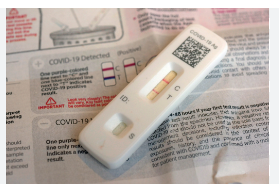
On my way back to the hospital to be by my wife Sherri’s side, I began feeling unusually nauseous and headachy—a combination I’d never quite experienced. Despite being vaccinated and boosted, I followed my instinct to take a COVID test from the government-supplied kit Sherri had thoughtfully kept on hand. As soon as the liquid hit the strip, it confirmed my suspicion: positive.
Thankfully, we quickly tested everyone in the house, and Sherri was tested in the hospital. To our relief, all came back negative. Knowing I had listened to my wife’s advice and taken the test before exposing her to any potential harm was an overwhelming relief, especially considering her delicate health. Sherri’s fight with cancer has already brought so many challenges, and the last thing I wanted was to bring her more suffering.
As a veteran, I’m fortunate to receive care through the VA. They directed me to a local urgent care where I received a prescription to help alleviate the symptoms, but as I headed home, I faced another realization: it wasn’t safe to stay there. With extended family who had relocated from California to be with us and Sherri hopefully coming home soon, there was no choice but to get a hotel and isolate—my son humorously dubbed it “COVID jail.”
Isolation is not something any caregiver welcomes. For months, my days have revolved around taking care of Sherri, supporting her as she smiles through excruciating pain and endures round after round of chemotherapy. Yet, as I sat alone in the quiet of my hotel room, I realized how thankful I am for our extended family who stepped up in a way we could never have expected. They moved their lives across the country to help Sherri through her battle, filling in gaps that even the best of friends couldn’t manage long-term. Their presence has been an incredible gift.
In those quiet hours, I found myself thinking of everything my wife and I have been through, of the strength it takes to provide care day in and day out, and of the incredible people who have supported us on this journey. The forced solitude gave me a chance to regroup and recharge—a luxury many caregivers don’t get.
This unexpected turn of events became a blessing, one that reminded me of the importance of family, community, and listening to that inner voice, especially when it comes to caring for the ones we love. Even when life seems difficult or bleak, we can still find silver linings if we take a moment to look.
The Strength Behind the Smile: A Tribute to My Wife
My wife is the kind of person who rarely flinches in the face of pain. When she gave birth, she didn’t shed a single tear. Once, she put an electric screwdriver bit through her thumb and only calmly said “ouch” as blood ran down her hand. To say she has a high pain tolerance is an understatement.
But for the past several days, I’ve seen her cry in agony. Her knee, swollen and unbearable, felt as if someone was relentlessly striking it with a ball-peen hammer. When her oncologist saw her on Monday morning, I could see the sorrow in his eyes—35 years of service, and he had never witnessed something like this. Her knee was so swollen that he immediately decided to admit her and called in an orthopedic surgeon to review her MRI. Despite everything from Tylenol to a Methadone drip, nothing could touch the pain.
The next morning, without anesthesia, the surgeon withdrew a yellowish fluid from her knee. It was the first relief she’d felt in days. A few hours later, the palliative care physician switched her to a morphine drip, and finally, her pain was brought down to a manageable level. Unfortunately, the damage was already done—the fluid had put so much pressure on her knee that it cut off the blood supply, causing part of the bone to die and partially fracture.
Now, my little warrior hops to the bathroom and back to her bed. Her third round of chemotherapy didn’t work, and tomorrow she’ll begin her fourth type through a second port after the first one became infected and had to be removed. It feels overwhelming, insurmountable at times, but she keeps smiling through the tears.
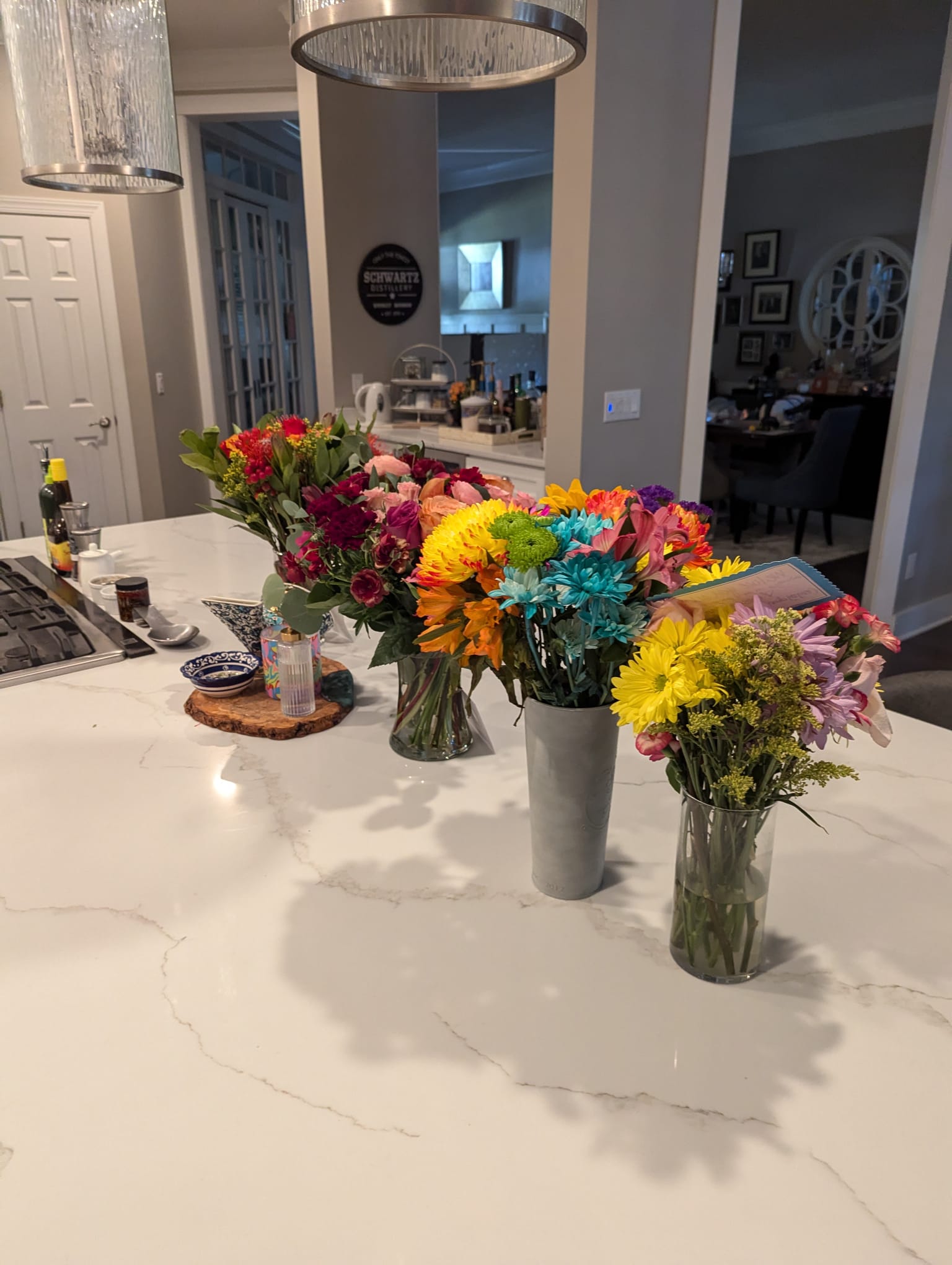
We are surrounded by love—family, friends, co-workers and even strangers send prayers, food, flowers, and help get her to appointments. No one is giving up on her. Even though she sometimes says she can’t go on, she does. We love her so much, and her strength and resilience continue to amaze us all.
She is a testament to the human spirit’s ability to endure, and no matter how impossible the battle may seem, we are all standing by her side. She fights, she smiles, and we love her more every single day.


Finding Strength in Service: A Caregiver’s Reflection
Being a full-time caregiver for my wife is the most important responsibility but it’s also one of the hardest roles I’ve ever had. Seeing someone you love suffer, day after day, is incredibly painful—especially when there’s little you can do to alleviate it.
Recently, I had an opportunity to step away for a day because of our extended support network to help my friend who had been devastated by Hurricane Helene. It left his property with 28 inches of seawater inside for a day before it reseeded. The building, which had been his father’s, housed precious treasures—hunting, fishing, and woodworking items that carried irreplaceable memories. Just months after losing his father, and after days of working tirelessly to clean up the mess, he was physically and emotionally drained.
I went out to help him—tearing down soaked drywall, hauling out ruined insulation, and salvaging what we could. For the first time in a long while, I was able to make an immediate impact. I wasn’t just sitting helplessly on the sidelines. I was doing something tangible, and it felt incredible. His family’s gratitude lifted me, but more than that, it reminded me of my own strength.
Caregiving is exhausting. Watching my wife day by day drains the soul. But helping my friend gave me back something I didn’t even realize I was losing: a renewed sense of purpose. Yes, being there for my wife is an act of love, but stepping into the storm-ravaged aftermath of Hurricane Helene reinvigorated me. It was as if this moment of service gave me back a piece of myself—a part I desperately needed to continue being strong for her.
Sometimes, finding strength in unexpected places is exactly what we need to carry on. I’m grateful to have been able to help my friend, but more than that, I’m thankful for how that day helped me be a better caregiver for my wife. After all, to give love and support, you have to make sure you’re not completely depleted yourself. Hurricane Helene may have wreaked havoc, but in a strange way, it also became a catalyst for renewal. It reminded me that even when the storm seems endless, there’s always a way to find hope and purpose again.


