Category Archives: Caregving,
“Holding On: A Caregiver’s Reflection on Love, Loss, and Living in the Now”
My wife came home today.
After nearly a month that felt like a lifetime—through the emergency room, the operating room, recovery, and finally a rehabilitation hospital—she is back, sitting at the kitchen table with our daughter and her sister. They’re talking about summer camp. It sounds so normal. It looks so beautiful. And yet, nothing about this is normal.
She has four broken bones—fragile from cancer that has metastasized into her bones. She cries now, often. More than I’ve ever seen in all the years we’ve been together. Her voice is quiet. Barely audible sometimes. She has only her hands now to guide her through the world, needing an automated wheelchair that still hasn’t arrived because insurance bureaucracy doesn’t move at the speed of human need.
I was ready to buy one. But she said, “No. We’ll wait.” And so we do. Because this is her journey. And while everything in me wants to fix it—to make it easier, faster, better—I know what she needs most is for me to walk beside her, not ahead.
This is not my first time walking this path. I’ve been here before. With my sister. With my father. But knowing the route doesn’t make it easier. It just makes the heartbreak familiar.
Yet she continues to defy the odds. She is part of the 3% who’ve made it this far. A walking miracle. A living lesson in endurance. So we stay grateful. We stay hopeful. We keep our chins up—not just for her, but for ourselves and everyone around us.
Caregiving is the quiet battlefield. You fight fatigue, frustration, and the aching helplessness of watching someone you love suffer. You become nurse, advocate, counselor, and spiritual anchor—all while trying to remember who you are.
But caregiving also sharpens your vision. You begin to see what matters.
It’s the sound of her voice, barely above a whisper, joining in a conversation at the table.
It’s the laughter that somehow still finds its way into our home.
It’s the love that survives even the most brutal storms.
We often think of time as a currency, but when you’re a caregiver, you realize it’s far more precious than money. It is sacred. It is fleeting. It is everything.
So if you’re reading this in the middle of your own storm, hold on. Don’t just wait for the clouds to pass—find the grace in the moments in between. Because even in the darkest stretches, there is light. Sometimes it’s a whisper. Sometimes it’s a smile. Sometimes it’s just sitting quietly at the kitchen table with the ones you love.
Hold onto that.
The Joy of Collecting: Finding Meaning in Everyday Treasures
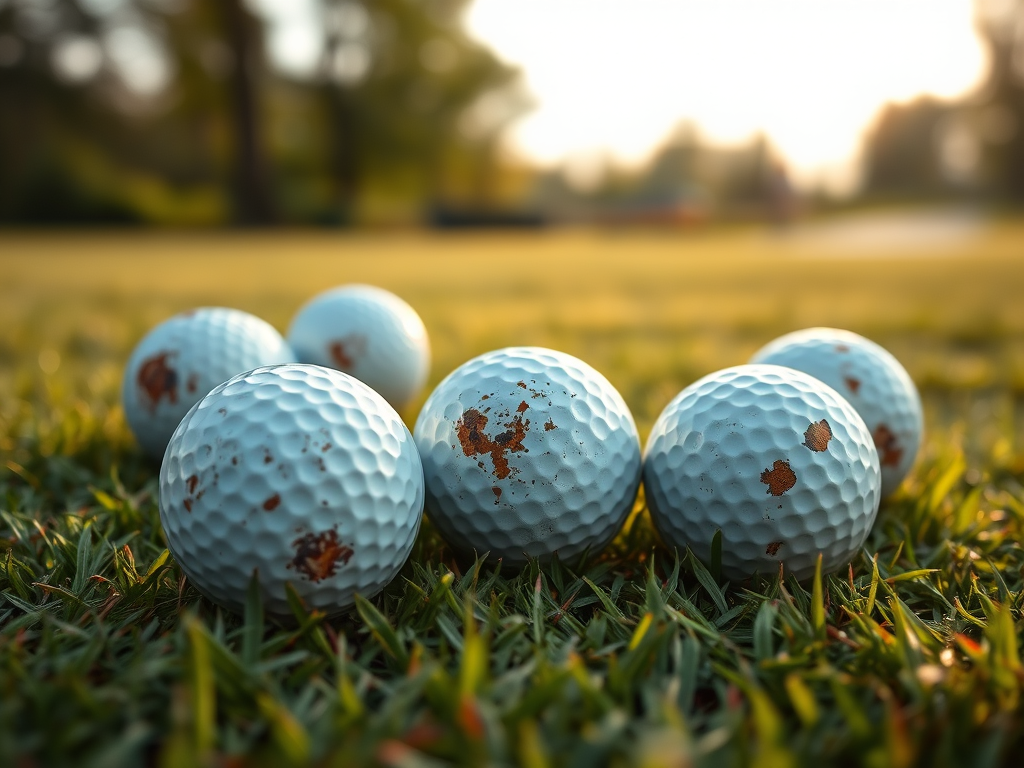
I’ve always collected things—medals, pennies, shark teeth, rocks, golf balls, even tire valve caps. Some of these were intentional, others accidental. But all of them, in their own way, represent little victories and moments of peace.
Just the other night, I went on a walk after dinner, a habit more about unwinding than fitness. I came back with five golf balls. Five. That might not seem like a lot to some people, but for someone who’s spent a lifetime collecting, five of anything in one outing is a haul. It got me thinking—not about golf balls, but about collecting, and more curiously, why I do it.
Let me start with this: I’ve begun using lost golf balls as my own personal economic indicator. A kind of SWAG (scientific wild-ass guess). I know it’s a stretch, but hear me out—if people are out playing golf in the middle of the week and losing $20 sleeves of balls without a second thought, then someone out there is doing alright. I’m no fan of trickle-down economics, but the existence of a well-funded slice of the population still swinging away gives me a small sense of hope that the world hasn’t completely unraveled. Still, that’s not why I walk. I walk to escape that kind of thinking.
This post isn’t about economics. It’s about collecting.
My father used to collect pennies he found on walks. Before that, as a boy, he collected stamps. I picked up the penny habit from him, and at one point, my collection was medals—military ones. Now? It’s golf balls, and teeth from long-dead sharks. And that’s the distinction I want to make. Stamps and medals feel like hobbies. You go out, you pay money, you build your collection. But to me, collecting has always been about the hunt—the unplanned, unscheduled discovery. The moment you spot something unexpected glinting in the grass or poking out from the sand. That’s collecting.
There’s real joy in that moment—when you pause, bend down, and confirm that yes, it’s a golf ball or a shark tooth or some little artifact the world left behind. It feels like you’ve won something. Like you’re seeing what others overlook. It might sound like a stretch, but in those moments I feel capable, even special.
Turns out, there’s science to back that up. Psychologists have long studied the drive to collect. Some say it’s tied to our ancestral instincts—early humans were gatherers, after all. Others say collecting brings order to chaos, structure to a fast-moving world. According to researchers, collecting can also provide a sense of control, personal identity, even legacy. But more than that, when we find something—especially something unexpected—our brain releases a hit of dopamine. The same reward chemical that fires when we eat good food, laugh, or fall in love. So yes, spotting a golf ball in the grass isn’t just coincidence—it’s chemically rewarding. No wonder I keep looking.
In those moments, I’m not thinking about work, or stress, or the headlines. I’m just walking. And collecting. And somehow, connecting to the people who came before me—my dad and his pennies, the long-lost owner of the golf ball, even the shark whose tooth found its way into my palm.
Collecting, for me, isn’t about things. It’s about finding meaning in the everyday. It’s about knowing that even in a world spinning out of control, there are still small, lost treasures waiting to be found.
The Life-Saving Power of Blood Donation
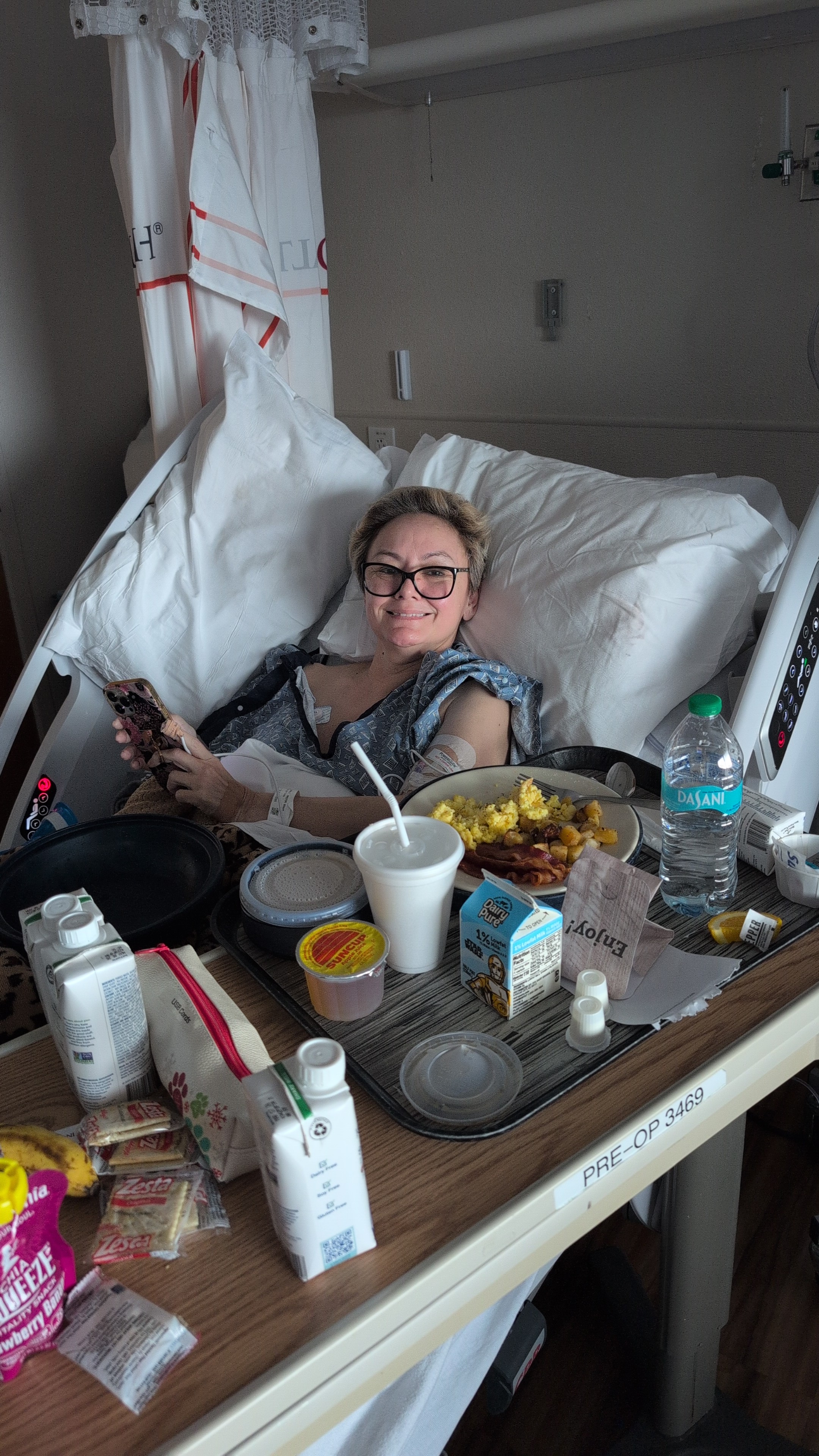


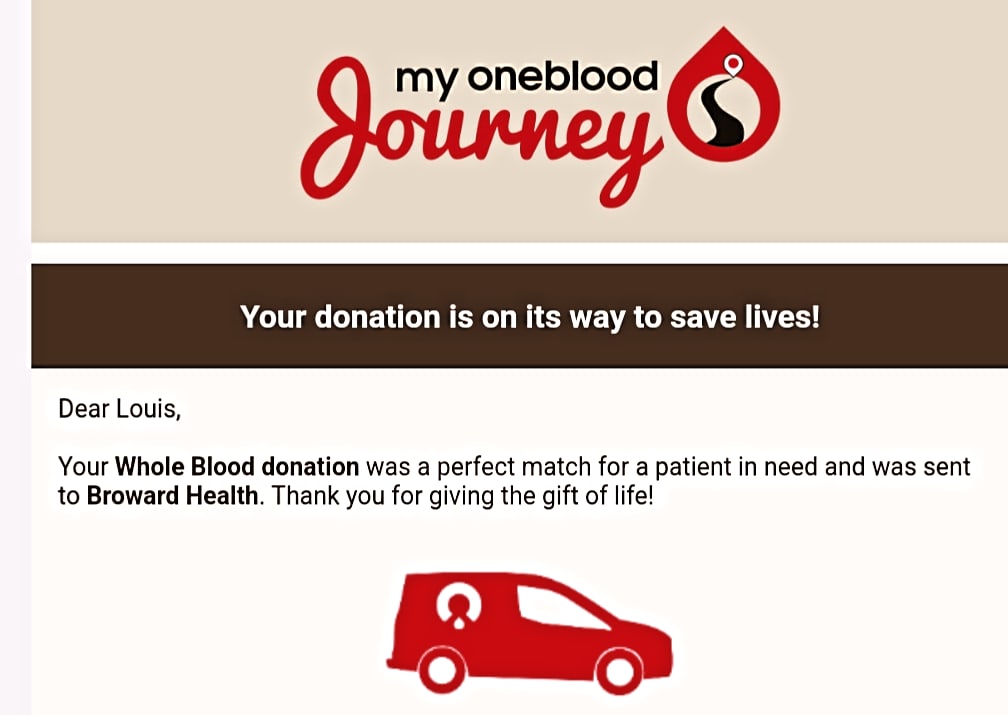


There are moments in life that transcend coincidence—moments that remind us of the deep interconnection between people, acts of service, and the enduring power of compassion. My wife and I recently experienced one of those moments firsthand.For years, we’ve both been regular blood donors. It was never about recognition or reward—it was simply the right thing to do. We believed in it. We knew that a single pint of blood could mean the difference between life and death for someone we might never meet. What we never imagined was how this quiet act of giving would one day come full circle in our own lives.Over 30 years ago, I required an emergency blood transfusion after surgery. I had been discharged from the hospital, only to collapse at home from undetected internal bleeding. As my strength faded and my consciousness waned, two pints of blood were administered, and within minutes, I felt myself come back to life. I will never forget that sensation—the sudden clarity, the renewed energy, the overwhelming gratitude for whoever had made that donation.Fast forward to the present: my wife is fighting cancer with a strength that humbles me every day. Recently, her care team determined she needed a blood transfusion. I told her what I had experienced—that maybe she, too, would feel the same miraculous lift. And she did. That night, she slept peacefully. Her color improved. Her energy returned. It was an almost immediate renewal of life.In that moment, all the years we spent donating blood felt like a sacred thread—woven into a story we could never have predicted. One act of generosity can become someone else’s lifeline. And sometimes, that “someone” is the person you love most in the world.Blood is more than a clinical fluid—it’s a vessel of hope, a symbol of our shared humanity. Donating blood is not just a medical gesture; it’s a profound act of connection. When we give, we’re not only offering a piece of ourselves—we’re becoming part of a legacy of compassion that could touch lives in ways we may never see.I encourage everyone reading this to consider becoming a donor. You may never know whose life you’ll save—but one day, that life might just be someone you love.
Embracing Change: Life Lessons from a Soldier’s Past
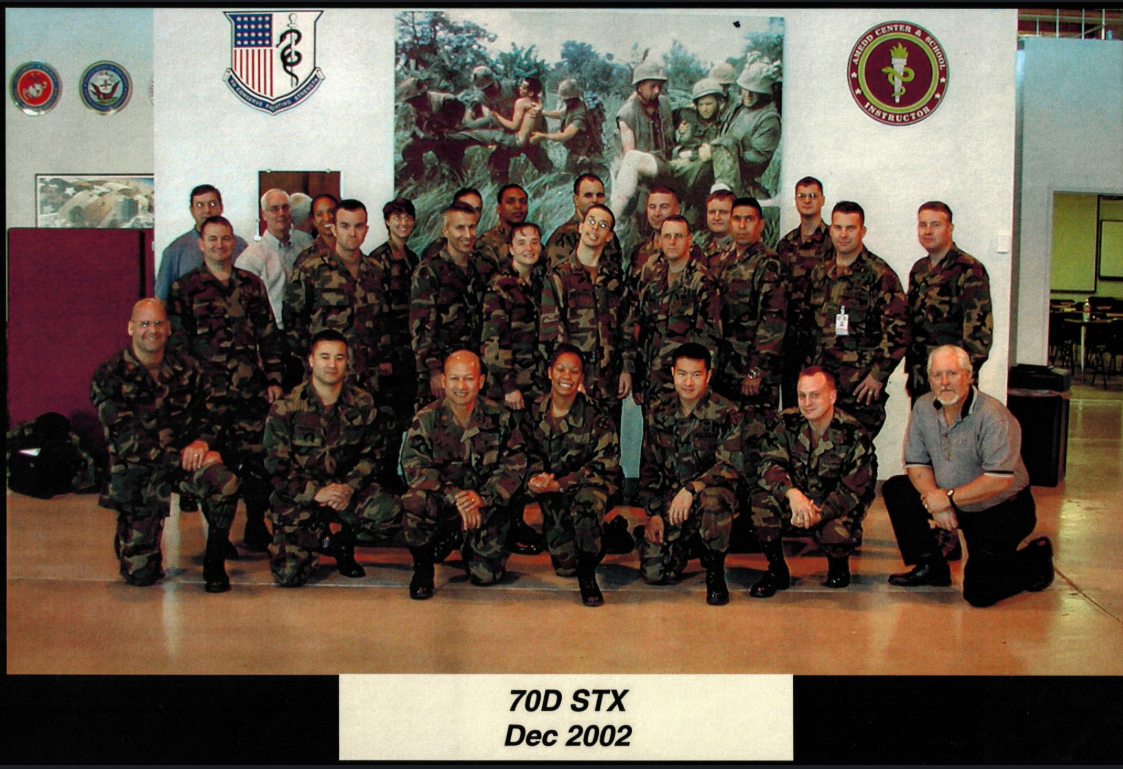
Earlier today, I was tagged in a photo on social media—a group shot taken in December 2002 during our 70D STX training, just months before the Iraq invasion. My first reaction was surprise, followed quickly by a flood of memories. No smartphones. MySpace was still the king of connection. I was in uniform, standing tall, trying to wear my best “war face.” I even had hair back then.
At that moment in time, my personal life was uncertain. I was recently divorced, unsure of where I’d live, and even more uncertain of what I’d be doing professionally. All I knew was that I wanted to stay close to my children, even as the Army had me moving in the opposite direction. Everything felt like it was shifting under my feet.
But looking back, I realize something: everything is always shifting. Like water, life never stays in the same place—it’s always in motion. Sometimes slow, sometimes raging, but always flowing. I used to crave control over every aspect of my personal and professional life. And I convinced myself that, at times, I had it. That illusion helped me sleep at night, helped me lead others, helped me believe I was making all the right moves.
Now, with 23 more years of living, learning, and letting go behind me, I’ve come to embrace a different truth: it’s okay not to control everything. In fact, that surrender has helped me grow. It’s made me more accepting of people, setbacks, and life’s curveballs. Some of the biggest disappointments in my life eventually rerouted me to something far better than I had planned.
Today, I’m working through some of the biggest challenges I’ve ever faced—accepting my wife’s ongoing battle with cancer and her limited mobility, navigating the rollercoaster of parenting a teenage daughter, and growing a business that’s rooted in purpose and resilience. I try to take it one day at a time. Like nurturing an oak sapling—you water it a little each day, give it sunlight, protect it during storms. And over time, without you even noticing, it becomes a mighty oak.
That photo reminded me who I was—and affirmed who I’m becoming. The young soldier I was then would be proud of the man I am now, not because everything turned out perfect, but because I kept showing up. I kept growing. I kept going.
I wonder if anyone in that picture can spot me. Look closely—I’m there, trying to be serious, probably thinking about the mission ahead. That version of me had no idea what was coming. But I’m grateful for him. And I’m even more grateful for who I’ve become.

Life Changes in an Instant: A Caregiver’s Journey
We’ve all heard the phrase: “In the blink of an eye, everything can change.” It’s easy to brush off—it’s a quote we’ve heard in books, seen in movies, or used when something minor goes sideways. I’ve heard it a million times. But living it—really living it—is different.
As a two-time caregiver, I’ve come to truly understand the depth of that phrase. This second time around has given me what we used to call in the military situational awareness. That’s the moment when you stop reacting emotionally and begin assessing reality: the inputs, the outputs, and what you can do—even if it’s just mitigating the damage.
A few months ago, my wife hadn’t walked in six months. Chemo had ravaged her body. She was pale, fragile, eyes sunken. I’d seen that look before in others, but this was my wife.
Then one morning, I walked into our little home gym and found her wheelchair stuck in the doorway. I looked across the room and there she was, standing—cleaning out a closet.
“How did you get over there?” I asked, stunned.
“I walked,” she said.
Using the treadmill and bench to balance herself, she’d made her way across the room. That was the first time in half a year. I yelled for our son—his mom had walked. Within a week she was moving around the house. Within a month, she was logging 5,000 steps a day, laughing with friends, going to parties. Her oncologist called it miraculous.
Life returned. Our home was lighter. The walker and wheelchair went back in the garage. We stopped arguing. We were happy again—almost like the storm had passed without us noticing.
Then her knee started to ache. Badly. We pulled the walker back out. Then the wheelchair. And when I had to reinstall the ramp on our front steps… that’s when it hit me.
We were back at the bottom.
Tensions flared again. My daughter and I, already frayed, started arguing like before. Caregiving is constant—it never turns off. It demands your whole being. You feel like if you step away for even a moment, everything might fall apart.
But this time… I told myself it would be different.
My wife, thankfully, was approved for Social Security Disability in a single day. Say what you will about government programs—but after 40 years of paying taxes, that moment mattered. It gave us some breathing room. I no longer needed to work part time just to get by. Now, I could be present. For her. For our daughter. And for myself.
That meant waking early. Drinking my coffee in peace. Saying my mantras. Walking the dogs. Going to fitness class. Writing. Reflecting.
We were gifted three months of light. Three months of freedom. And even if that season never returns, I will always cherish it.
Because I know how quickly it can all change.
Situational awareness isn’t just for combat zones. It’s for living rooms. For hospital beds. For quiet corners where you cry alone. It’s knowing when to breathe, when to speak, and when to let go of trying to control what can’t be controlled.
It’s about grace.
It’s about gratitude.
And it’s about recognizing—in the blink of an eye—that even the smallest step forward is a miracle worth holding onto.

Finding Strength in Fear: A Roadmap for Resilience
Sometimes we all need strength to persevere. Some days are harder than others. Some moments are like ice. Sometimes we need to have a plan to move forward. This is mine.
That feeling—of being stuck in place while time barrels forward like a freight train—is terrifying. The quiet becomes a roar. Your heart races while your body doesn’t move. It feels like you’re standing on a shore, watching a storm roll in, knowing you can’t hold back the waves.
But you’re not alone in this.
When fear takes over, survival doesn’t look like bravery. It looks like breathing, getting out of bed, putting one foot in front of the other, even if you don’t know where you’re going yet.
Here’s a small roadmap—just enough to get through one moment, then the next:
1. Name It
Say out loud (or write it down):
“I’m afraid of ____. I feel like ____.”
Giving fear a name takes away some of its power. It makes it something you are experiencing—not something that is you.
2. Shrink the Future
When the future feels unbearable, don’t try to live it all at once.
Try living just the next five minutes.
Then the next hour.
You’ll be surprised how far that can carry you.
3. Choose One Thing You Can Control
Maybe it’s taking a walk.
Making a cup of coffee.
Writing a message to someone you trust.
Control just one thing. That can be enough to anchor you today.
4. Let Others Be Your Strength
Even if you feel like a burden—you’re not.
Let someone carry a bit of this with you.
You don’t have to have the right words. Just say:
“I’m not okay. Can you just sit with me in this for a moment?”
5. Grace Over Guilt
If all you did today was survive—that counts.
You don’t have to fix everything. Not today. Maybe not even tomorrow.
You just have to keep showing up. You already are.
You asked how you can survive it.
You survive it the same way you’ve survived every hard thing before:
With a cracked heart and the quiet strength you don’t even realize you have.
And when you’re ready, we can talk about how to walk forward—not fast, just real.
I’m here for that walk whenever you are.


Learning from Mistakes: A DUI Reflection
For over 40 years, I have been behind the wheel, driving without incident—until now. I got a DUI. It still feels surreal to write those words. But the reality is, it happened, and I have no excuse. I have asked myself over and over, why did I not realize how dangerous and serious this was? And if I did, why did I not care?
Maybe it’s the weight of family burdens. Maybe it’s the inescapable reality of watching someone you love battle cancer—the most fatal form of it—a cruel, relentless adversary. Maybe it’s the anger and pain of an adolescent facing the potential loss of her mother. Maybe it’s depression, anxiety, or the gnawing exhaustion that comes with carrying so much.
The truth is, sometimes I feel like giving up on being the best version of myself. And I hate that feeling. But when it comes, it consumes me until something shakes me awake. This time, it was my DUI.
For years, I pushed the envelope. Since before I was 19, I thought I had control. How I managed to avoid hurting myself or someone else all these years is nothing short of a miracle. I could lie to myself and say, I never drove under the influence before—that I felt fine driving home that night. But that’s just not true.
I know chemistry. I understand biology. I know how alcohol affects the body, how it impairs judgment, and how much is too much. Yet, on that night, I just didn’t care. That’s the scariest part.
I passed the field sobriety test, but that didn’t matter. As I sat handcuffed in the back of the sheriff’s patrol car, all I could think was, It’s about time. I was taken to the DUI intake center and given a breathalyzer test—.10% BAC, 2% over the legal limit. From there, I was booked into the county jail and spent several hours waiting to post bail.
What came next was worse than my own shame. Scammers took advantage of the situation, calling my family including my children and friends, pretending to be a bail bonds company. My wife, out of concern, sent them $1,000 through Apple Pay. That loss, that embarrassment, was the worst part of the whole ordeal.
I am an Eagle Scout. An Army officer. I have built my life on helping others. And yet, I let this happen. It’s a humbling and haunting realization. But the response from my loved ones has been my saving grace. They did not ridicule me. They did not abandon me. Instead, they supported me, reminding me that one mistake—however significant—does not erase a lifetime of integrity and service.
This DUI is my wake-up call, my ghost of Christmas future, showing me what could be if I don’t change. It has forced me to confront my own choices, my vulnerabilities, and my need to truly take care of myself so I can continue taking care of others. I will take this harbinger seriously. I will strive to be better.
For those who may find themselves in a similar position, my message is simple: take responsibility, learn from it, and don’t ignore the signs. You don’t want to wait for your own wake-up call. Be better now.

Finding Silver Linings in Unexpected Places
Life is unpredictable, and sometimes, the most unlikely situations reveal hidden blessings. Recently, I found myself navigating one such experience when COVID paid me an uninvited visit, but looking back, I see it as a moment of grace rather than misfortune.
On my way back to the hospital to be by my wife Sherri’s side, I began feeling unusually nauseous and headachy—a combination I’d never quite experienced. Despite being vaccinated and boosted, I followed my instinct to take a COVID test from the government-supplied kit Sherri had thoughtfully kept on hand. As soon as the liquid hit the strip, it confirmed my suspicion: positive.
Thankfully, we quickly tested everyone in the house, and Sherri was tested in the hospital. To our relief, all came back negative. Knowing I had listened to my wife’s advice and taken the test before exposing her to any potential harm was an overwhelming relief, especially considering her delicate health. Sherri’s fight with cancer has already brought so many challenges, and the last thing I wanted was to bring her more suffering.
As a veteran, I’m fortunate to receive care through the VA. They directed me to a local urgent care where I received a prescription to help alleviate the symptoms, but as I headed home, I faced another realization: it wasn’t safe to stay there. With extended family who had relocated from California to be with us and Sherri hopefully coming home soon, there was no choice but to get a hotel and isolate—my son humorously dubbed it “COVID jail.”
Isolation is not something any caregiver welcomes. For months, my days have revolved around taking care of Sherri, supporting her as she smiles through excruciating pain and endures round after round of chemotherapy. Yet, as I sat alone in the quiet of my hotel room, I realized how thankful I am for our extended family who stepped up in a way we could never have expected. They moved their lives across the country to help Sherri through her battle, filling in gaps that even the best of friends couldn’t manage long-term. Their presence has been an incredible gift.
In those quiet hours, I found myself thinking of everything my wife and I have been through, of the strength it takes to provide care day in and day out, and of the incredible people who have supported us on this journey. The forced solitude gave me a chance to regroup and recharge—a luxury many caregivers don’t get.
This unexpected turn of events became a blessing, one that reminded me of the importance of family, community, and listening to that inner voice, especially when it comes to caring for the ones we love. Even when life seems difficult or bleak, we can still find silver linings if we take a moment to look.
The Strength Behind the Smile: A Tribute to My Wife
My wife is the kind of person who rarely flinches in the face of pain. When she gave birth, she didn’t shed a single tear. Once, she put an electric screwdriver bit through her thumb and only calmly said “ouch” as blood ran down her hand. To say she has a high pain tolerance is an understatement.
But for the past several days, I’ve seen her cry in agony. Her knee, swollen and unbearable, felt as if someone was relentlessly striking it with a ball-peen hammer. When her oncologist saw her on Monday morning, I could see the sorrow in his eyes—35 years of service, and he had never witnessed something like this. Her knee was so swollen that he immediately decided to admit her and called in an orthopedic surgeon to review her MRI. Despite everything from Tylenol to a Methadone drip, nothing could touch the pain.
The next morning, without anesthesia, the surgeon withdrew a yellowish fluid from her knee. It was the first relief she’d felt in days. A few hours later, the palliative care physician switched her to a morphine drip, and finally, her pain was brought down to a manageable level. Unfortunately, the damage was already done—the fluid had put so much pressure on her knee that it cut off the blood supply, causing part of the bone to die and partially fracture.
Now, my little warrior hops to the bathroom and back to her bed. Her third round of chemotherapy didn’t work, and tomorrow she’ll begin her fourth type through a second port after the first one became infected and had to be removed. It feels overwhelming, insurmountable at times, but she keeps smiling through the tears.
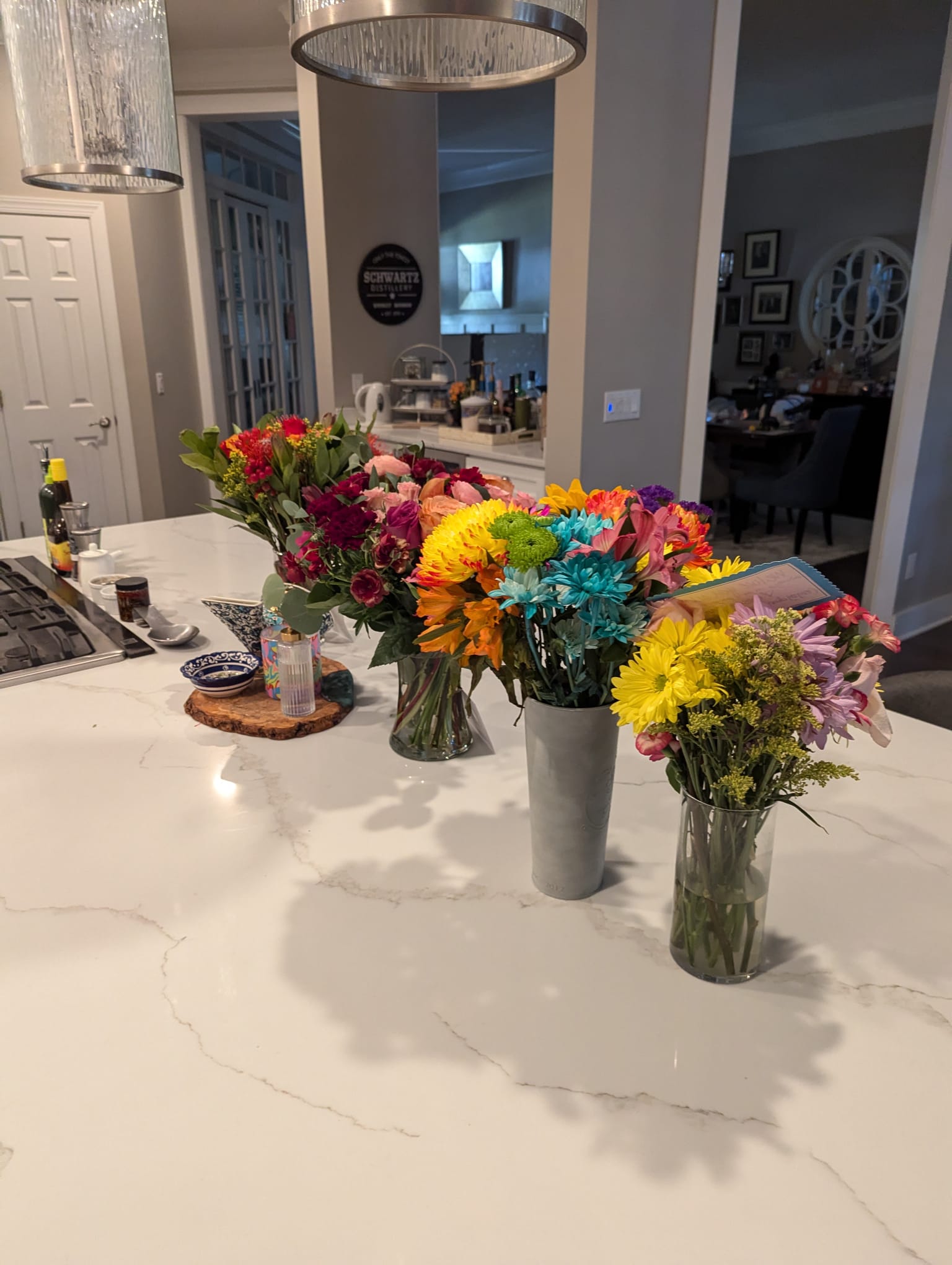
We are surrounded by love—family, friends, co-workers and even strangers send prayers, food, flowers, and help get her to appointments. No one is giving up on her. Even though she sometimes says she can’t go on, she does. We love her so much, and her strength and resilience continue to amaze us all.
She is a testament to the human spirit’s ability to endure, and no matter how impossible the battle may seem, we are all standing by her side. She fights, she smiles, and we love her more every single day.


Finding Strength in Service: A Caregiver’s Reflection
Being a full-time caregiver for my wife is the most important responsibility but it’s also one of the hardest roles I’ve ever had. Seeing someone you love suffer, day after day, is incredibly painful—especially when there’s little you can do to alleviate it.
Recently, I had an opportunity to step away for a day because of our extended support network to help my friend who had been devastated by Hurricane Helene. It left his property with 28 inches of seawater inside for a day before it reseeded. The building, which had been his father’s, housed precious treasures—hunting, fishing, and woodworking items that carried irreplaceable memories. Just months after losing his father, and after days of working tirelessly to clean up the mess, he was physically and emotionally drained.
I went out to help him—tearing down soaked drywall, hauling out ruined insulation, and salvaging what we could. For the first time in a long while, I was able to make an immediate impact. I wasn’t just sitting helplessly on the sidelines. I was doing something tangible, and it felt incredible. His family’s gratitude lifted me, but more than that, it reminded me of my own strength.
Caregiving is exhausting. Watching my wife day by day drains the soul. But helping my friend gave me back something I didn’t even realize I was losing: a renewed sense of purpose. Yes, being there for my wife is an act of love, but stepping into the storm-ravaged aftermath of Hurricane Helene reinvigorated me. It was as if this moment of service gave me back a piece of myself—a part I desperately needed to continue being strong for her.
Sometimes, finding strength in unexpected places is exactly what we need to carry on. I’m grateful to have been able to help my friend, but more than that, I’m thankful for how that day helped me be a better caregiver for my wife. After all, to give love and support, you have to make sure you’re not completely depleted yourself. Hurricane Helene may have wreaked havoc, but in a strange way, it also became a catalyst for renewal. It reminded me that even when the storm seems endless, there’s always a way to find hope and purpose again.


