Category Archives: VA Disability Claim Assistance

The Missing Millions: Why So Many Veterans Still Lack Disability Ratings
In the United States today, a significant portion of the veteran population remains without a service-connected disability rating—even though many receive ongoing care from the Department of Veterans Affairs (VA). This gap affects millions and stems from long-standing structural issues and common misunderstandings.
How Many Veterans Are Unrated?
Recent federal data shows:
17.8 million veterans currently live in the U.S.
Only 5.2 million (about 30%) have a service-connected disability rating.
That leaves roughly 12.5 million veterans without a rating, including an estimated 6 million who separated before disability assessments became part of the mandatory out-processing process.
Before the mid-1990s and early 2000s reforms, the DoD did not require a disability evaluation as part of separation or retirement. Millions of veterans left service with no assessment and never filed later simply because the process was unclear or unknown.
Two VA Systems — and They Don’t Communicate
A critical fact many veterans do not know:
VA Healthcare and VA Disability Compensation are completely separate systems.
Receiving VA medical care does not create or update a disability rating.
Diagnoses, imaging, or treatment inside VA healthcare records are not reviewed for disability compensation unless a veteran files a claim.
No condition—primary or secondary—moves into the disability system automatically.
Many veterans assume that being treated for chronic pain, orthopedic injuries, sleep issues, or mental health conditions means their disability file is being updated. It isn’t. Only a formal claim triggers review.
The Impact on Veterans
Millions of veterans who never filed a claim at all.
Veterans with worsening conditions who never requested rating increases.
VA healthcare patients with serious diagnoses that were never evaluated for service-connection.
Missed compensation, lost benefits, and reduced access to programs tied to rating thresholds.
A single misconception—“VA healthcare updates my disability rating”—can cost a veteran years of deserved benefits.
What Every Veteran Should Do Now
To ensure disability benefits reflect current health conditions, veterans should:
1. Review their conditions regularly
Check for new diagnoses, worsening symptoms, or secondary conditions.
2. File new or supplemental claims
Use VA.gov, mail, or accredited submission channels to request evaluation.
3. Understand the system
VA healthcare records do not update disability ratings. A claim must be submitted.
4. Track secondary conditions
Issues like sleep apnea, depression, migraines, radiculopathy, GERD, or joint degeneration often stem from service-connected primaries.
Veterans who separated before mandatory disability evaluations around 2010 are especially vulnerable because many were never informed of the modern process.
Closing the Gap
With only ~30% of veterans holding a disability rating—and millions eligible but unrated—awareness is essential. Understanding that VA healthcare and VA disability compensation operate independently is the first step toward ensuring every veteran receives the benefits they earned through service.
Need Help Understanding Your Claim Path?
If you or a veteran you know is unsure about eligibility, secondary conditions, or how to properly file, guidance is available. Filing a claim is not automatic—but it can be straightforward when you understand the rules and requirements.


A Journey to Acceptance: My Eye-Opening Experience with Medical Marijuana
I was born and raised in Miami, Florida — in the middle of chaos and change. The city I grew up in during the 70s and 80s was a powder keg of race riots, refugees, and drugs. Miami was overrun — and that’s putting it kindly. Cocaine, marijuana, and the war on drugs were everywhere.
I never touched any of it. Not once.
It was a badge of honor, a personal vow. My father was a judge, and I took pride in the discipline that kept me away from substances that, to me, represented weakness and failure. I saw alcohol as adult, social, and controlled. Marijuana? That was for the lost.
For most of my life, I never questioned that belief.
But life has a way of testing the walls we build around our certainty.
When my wife’s illness began to take over our nights, sleep became hard. She was in constant pain, and nothing — not the pills, not the prescriptions, not the endless “next options” — brought her relief without a cost. Then one night, she tried a simple gummy. She slept through the night.
That experience made me aware — painfully so — of my own hypocrisy. While she found healing through a plant I had long dismissed, I was numbing myself each night with alcohol — not to enjoy, but to stop feeling, to force sleep. I told myself it was normal, acceptable, even earned. But it wasn’t helping.
It wasn’t until I was helping a client — a veteran — through her VA disability claim that the truth caught up with me. She confided in me about her fear of admitting she used marijuana to manage anxiety and sleep. I told her what I believed: that she shouldn’t be ashamed, that seeking help isn’t weakness, and that medical care, when legal and responsible, is private and protected.
Then it hit me like a mirror.
How could I coach her toward honesty and healing while denying myself the same?
That same day, I called my wife’s physician, scheduled an appointment, and applied for my medical marijuana card. Since then, I take a gummy every night. I sleep. I think more clearly. I drink less. I feel present.
My view has changed completely — not because of politics or persuasion, but because of experience. What I once called weakness, I now see as wisdom. The real weakness was refusing to see past my own judgment.
In Florida, medical marijuana has been lawful since 2016. But for me, it only became personal when life humbled me enough to listen.
The more I experience life, the more I understand that nothing truly changes until we become aware. Awareness brings empathy, and empathy brings wisdom. And wisdom — I’ve learned — is not the privilege of youth, but the product of life lived honestly.


How to Add Evidence to Your VA Disability Claim
I have been getting the title of the this alot.
Yes, you can add evidence to a VA disability claim after it has been submitted, as long as the claim is still open (not yet decided). Great example, is you decide to have a provider complete the VAs DBQ as your medical evidence is limited and it was after you already pressed submit. Some claims take several months so you shouldn’t worry about not submitting it.
Here are your options depending on the stage of your claim:
✅ If the claim is still in progress (Pending / Under Review):
You can submit additional evidence directly via:
- VA.gov (log in → go to your claim → “Upload documents”) Only method I recommend
- Mail to: Department of Veterans Affairs
Claims Intake Center
PO Box 4444
Janesville, WI 53547-4444
(Use a VA Form 21-4138 or 20-10210 to explain what you’re submitting) - Fax: 844-531-7818 (for domestic) or 248-524-4260 (international)
- Mail to: Department of Veterans Affairs
Be sure to include:
- Your VA file number or SSN
- The specific claim it relates to
- A clear description of what the evidence is and why it’s relevant
If a decision has already been made: (you got your claim letter back from the VA)
You cannot just “add” evidence—you’ll need to take one of these steps:
| Scenario | Action | Form |
|---|---|---|
| You’re still within the 1-year appeal window | File a Supplemental Claim | VA Form 20-0995. do it online and your lay letters don’t have to be on the official form |
| You think a clear error was made | File a Higher-Level Review | VA Form 20-0996 do it online and your lay letters don’t have to be on the official form |
| You want a hearing with a judge (last last resort) | File a Board Appeal (18 months!) | VA Form 10182 do it online and your lay letters don’t have to be on the official form |
In all three cases, you can submit new evidence (except during Higher-Level Review, where no new evidence is allowed).
Hope this helps folks out there!

VA Disability Claims: Clear and Simple Support
Filing for disability compensation through the Department of Veterans Affairs (VA) can be a complex and frustrating process. I provide a straightforward service designed to make it easier for veterans to receive the benefits they have earned.
Here is how I work:
- Payment only if benefits are awarded. My fee is twenty percent of the initial back payment from the VA. If an appeal is needed, the same structure applies. After that, the veteran owes nothing further.
- Based on federal standards. Because the VA does not set rates for consulting, I align with the Social Security Administration’s guideline of twenty-five percent and reduce it by five percent. This keeps my fee at twenty percent, below a recognized federal benchmark.
- No long-term obligations. Veterans can stop working with me at any time after providing notice. There are no hidden commitments or recurring fees.
- Everything in writing. I use a simple written contract that explains all terms clearly, in plain language. Veterans know exactly what to expect before we begin.
- Who I work with. Most of the veterans I serve are those who have had bad experiences with Veterans Service Officers (VSOs) or firms, those who have grown frustrated with the VA, and those who may not believe they deserve this benefit from a grateful nation.
My goal is to provide a fair, transparent, and effective path through the VA process, with clear terms and no surprises.
If you are a veteran who would like help filing for VA disability benefits, contact me at lou@loujswz.com
or 706-332-6005.
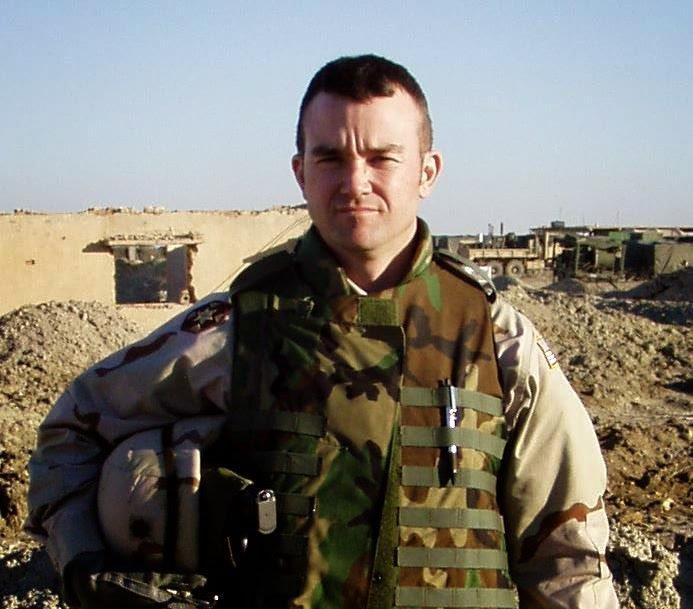
VA Claims Processing: Success or Hidden Challenges?
In the July 2025 newsletter, the Department of Veterans Affairs proudly announced that it had “processed” over 2 million disability claims—faster than ever before. At first glance, this milestone sounds like a tremendous success. But for veterans who have lived at the intersection of military service and medical hardship, there’s a deeper story behind the headlines.
As a veteran and someone who assists others in navigating the VA claims process, I’ve learned to read between the lines. The newsletter fails to disclose how many of those 2 million claims were denied—a critical omission that affects real lives. A high throughput of claim processing does not necessarily equate to high-quality or just outcomes for veterans.
At the same time, the VA linked to its public repository of Disability Benefits Questionnaires (DBQs) available here. These are detailed, medically technical forms that the VA encourages veterans to bring to their private providers to “expedite” claims—allegedly reducing costs and time associated with VA-conducted exams.
On the surface, this sounds like a win-win. But if you’ve filled out one of these forms or asked a doctor to complete one, you know that each DBQ is 12 to 16 pages long, highly technical, and time-consuming. It could take an experienced clinician over an hour—per form—with no reimbursement provided by the VA.
Let’s pause there: the government is asking veterans to pay out of pocket or call in favors from already overburdened civilian providers, many of whom are unfamiliar with VA language, legal thresholds, or the 38 CFR standards. These forms may reduce government costs, but they shift that burden onto the backs of those who served.
And what’s more concerning is this: Is this an unspoken gatekeeping tactic? Is the sheer complexity of DBQs and the absence of compensation for providers quietly slowing down or stalling new claims from older-era veterans—those who served between 1965 and 2015—who didn’t benefit from the digital medical records era?
As someone working daily with veterans—at the proverbial GEMBA or “point of the spear”—I’ve witnessed firsthand how the standard of approval appears to have shifted. In the first few months of this administration, P&E exams were paused for over three months. Now, adjudications seem stricter than ever. Subjective? Perhaps. But for many veterans, this feels like a regression, not progress.
Questions We Should Be Asking the VA:
- What percentage of the 2 million “processed” claims were denied, granted, or partially awarded?
- Why are providers not compensated for the time it takes to complete detailed DBQs?
- Has the standard of adjudication shifted from the traditional “at least as likely as not” (51%) burden of proof?
- Why are we not leveraging modern AI and automation tools to reduce claim burden for the veteran?
- How does the VA plan to assist older veterans—whose medical records are often incomplete or paper-based—in navigating these requirements?

AI Can’t Care – Why Human Trust Still Wins in a Tech-Driven World
In a world that feels increasingly automated, one thing is becoming clearer every day: people still crave connection. Especially when they’re hurting. Especially when they’re trying to navigate something as emotional and complex as the VA disability claims process.
At LOUJSWZ INC, we embrace technology. We use AI to make our work more efficient, more accurate. But AI is not our product. Our product is trust. And there isn’t a line of code out there that can replicate that.
I recently sat down with a fellow veteran who shared how rushed his transition was and how unsure he felt even after submitting his claim. He used the free services available to him—VFW, county VSO, mobile VA outreach—and still felt like something might have been missed. And you know what? He’s not alone. That “what did I forget?” feeling is far too common.
There are tools now that can read disability guides and recommend conditions. They’re fast. They’re free. But they don’t know how to look you in the eye and ask, “What really hurts?” They don’t hear the pause in your voice or notice the symptoms you forgot to say out loud. They don’t walk your journey. I do. I have lived it.
Porter’s Five Forces tells us that AI is shaking every industry—lowering barriers, increasing buyer power, and making substitutes more accessible. But it also tells us something else: the key to success in a competitive landscape is differentiation.
LOUJSWZ isn’t just another support service. We’re your battle buddy through bureaucracy. We know the system, yes—but more importantly, we know you. And we’re here to make sure you get what you’ve earned. No shortcuts. No automated empathy. Just people helping people, with the support of the best tools available—not the replacement of them.
Because at the end of the day, AI may shape strategy, but it’s still heart that shapes trust.

Thinking About Filing for VA Disability? Read This First.
If you’re reading this, someone probably told you, “You should file a VA claim.” Maybe they’ve been saying it for years. Maybe it’s the first time you’re thinking about it seriously. Either way, I’ve been where you are—wondering if it’s worth the time, energy, and vulnerability.
Let me tell you something I wish someone had told me sooner: it’s okay to ask for help. And it’s okay to want clarity before you step into the process. So let me walk you through the VA disability claims journey—step by step—with free resources I personally trust, and some rough timeframes to expect.
🛠️ Step 1: Determine If You Qualify
Timeframe: Immediate – 1 week
You need a current diagnosis, evidence that the condition was caused or worsened during military service, and a “nexus” connecting the two.
Free Resources:
- VA Benefits Eligibility Tool
- VA Lay Statement Guide
- HadIt.com Forums (veteran-run discussions, peer guidance)
- DAV.org Help with Claims
If you’re not sure, connect with a Veterans Service Officer (VSO). They work for you, not the government.
📄 Step 2: File Your Initial Claim (Intent to File First)
Timeframe: 1 hour to prepare + VA average: 125–150 days
Start by submitting an Intent to File. That locks in your effective date while you gather evidence. Then you file the full claim.
Free Resources:
- VA Intent to File Tool
- VA Form 21-526EZ (Application for Disability)
- Vets Guardian (for-profit but offers free consultations; good for complex cases)
🔍 Step 3: Evidence Gathering & Adjudication
Timeframe: 4 to 5 months average (can vary)
The VA reviews medical evidence, service treatment records, and may schedule a C&P exam (Compensation & Pension).
Free Resources:
- VA C&P Exam Guide
- Military Service Records Request (NPRC)
- Veterans Law Blog – C&P Exam Tips (private site but very educational)
🧾 Step 4: Decision & Rating Letter
Timeframe: Included in the 125–150 day total (Step 2)
The VA issues a decision: denied, granted, or partial. You’ll get a rating decision letter explaining why.
Free Resources:
🔁 Step 5: Appeal or Supplemental Claim (if denied or underrated)
Timeframe: Varies greatly – 4 to 18 months depending on option
You can:
- Request a Higher-Level Review (125–150 days)
- Submit a Supplemental Claim with new evidence (125–150 days)
- Appeal directly to the Board of Veterans Appeals (average: 12–18 months)
Free Resources:
- VA Appeals Process Overview
- NVLSP (National Veterans Legal Services Program) (Nonprofit legal help for appeals)
- Wounded Warrior Project – Benefits Services (free help from trained staff)
🔒 Step 6: Sustainment – Updates, Increases, Secondary Claims
Timeframe: Ongoing (review every 3–5 years or as conditions worsen)
Disabilities change over time. You can request increases, add secondary conditions (like depression caused by chronic pain), or file for TDIU if you can’t work.
Free Resources:
- VA Form 21-526EZ (Again – for increases)
- Hill & Ponton Guide to TDIU (for-profit legal group with helpful blog content)
- Veteran Appeals Resources – The American Legion
🎯 Final Thoughts
Starting a VA claim is a personal decision—one that can stir up emotion, old memories, and self-doubt. But you don’t have to do it alone. Reach out to a VSO, or me and get educated, and move at your own pace. There are people—like me—who once hesitated too. And we’re all better for finally taking that step.
You’ve served. You’ve earned this. And your well-being matters.
A Veteran’s Journey: Overcoming Fears and Finding Support
Helping veterans get the VA benefits they deserve can be challenging, especially when they feel uncertain or worried about the process. Recently, a close friend of mine, a Purple Heart awardee, experienced a life-changing outcome by appealing his VA disability rating.
After retiring more than a decade ago, my friend was stuck at an 80% disability rating. For years, he expressed the same concerns I hear from so many veterans:
- “I don’t want to game the system.”
- “I only served a few years; I don’t deserve more.”
- “There’s nothing seriously wrong with me.”
- “I hate dealing with anything related to the government.”
But after speaking with him many many times and seeing the success of other veterans I’ve helped (5), he finally decided to take the next step. Here’s what he did:
Key Steps That Made the Difference:
- Getting the Right Help:
I suggested he visit his State VHA Representative. It was a crucial step that made sure his appeal was handled correctly and with all the necessary documentation. - Using What Was Already There:
Since he already had a disability rating, most of the needed information was already on file. He only needed to add a few things that were missed earlier, which made his appeal smoother and quicker. - Knowing Where and How to File:
The outcome of an appeal can often depend on where and how you submit it. Making sure all the paperwork was accurate and complete helped speed up the process. - Pushing Past the Emotional Hurdles:
Many veterans feel anxious about appealing, thinking it’s somehow dishonorable or that they’re asking for too much. But these benefits are not a handout—they’re earned through service and sacrifice.
The Result:
In just under six weeks, his disability rating went from 80% to 100%. This change means more financial security for his family and gives his wife the chance to consider retirement. They both chose careers focused on helping others rather than financial rewards, so this increase makes a big difference in their lives.
If you’re a veteran, don’t let fears or misconceptions hold you back. Get the support you need, and remember—you’ve earned these benefits through your service. Your well-being matters, and there are people ready to help you every step of the way.
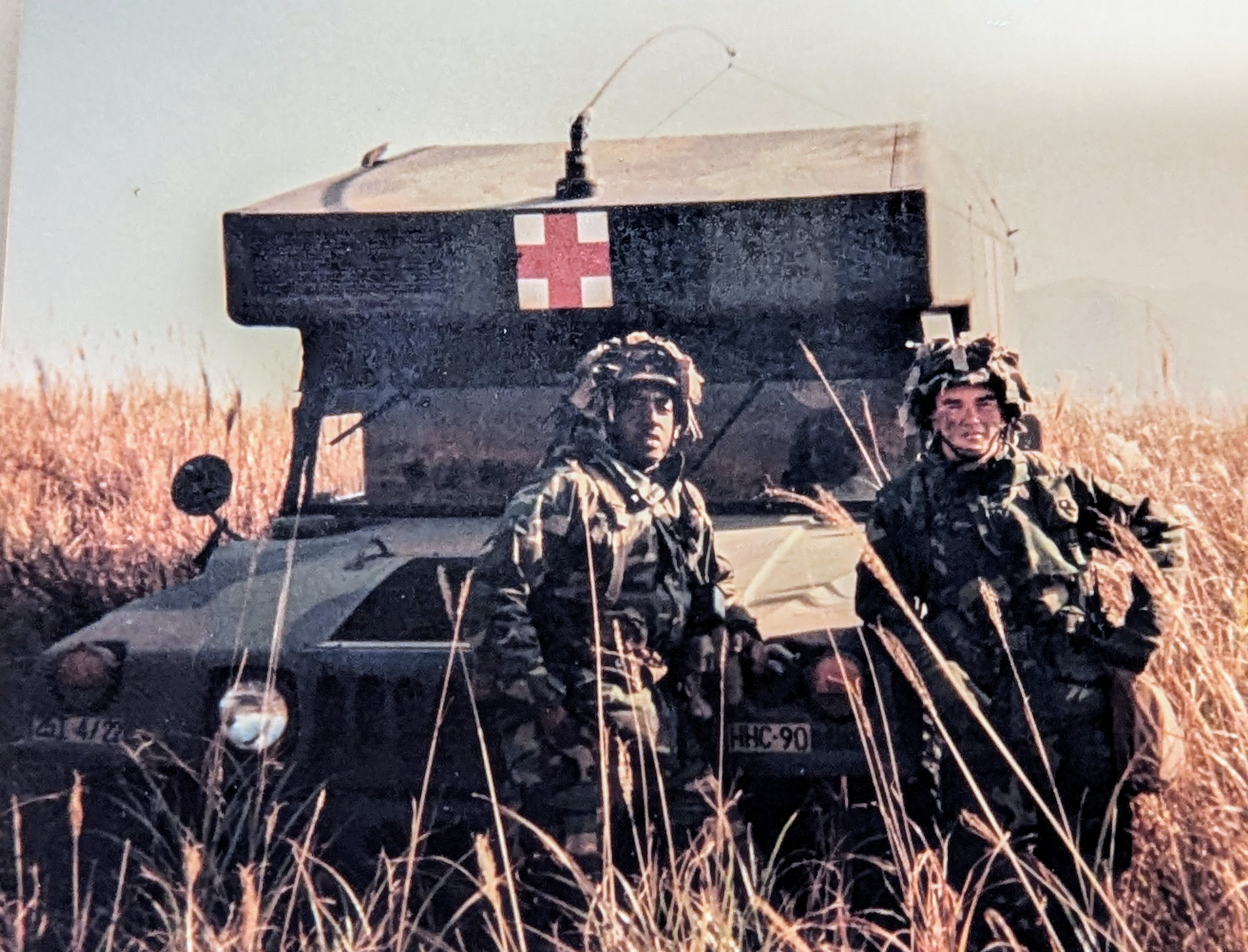
“Being challenged in life is inevitable, being defeated is optional.” – Roger Crawford
Breaking the Stigma: It’s Okay to Accept Support
For over a decade, I’ve urged a close friend—a fellow veteran I served with in the Second Infantry Division and other locations—to apply for VA disability compensation. After two combat deployments and eleven years of dedicated service, he left the military, embodying the kind of leadership that could have made him a great general. Yet, like many veterans, he viewed seeking benefits as somehow lacking honor or dignity.
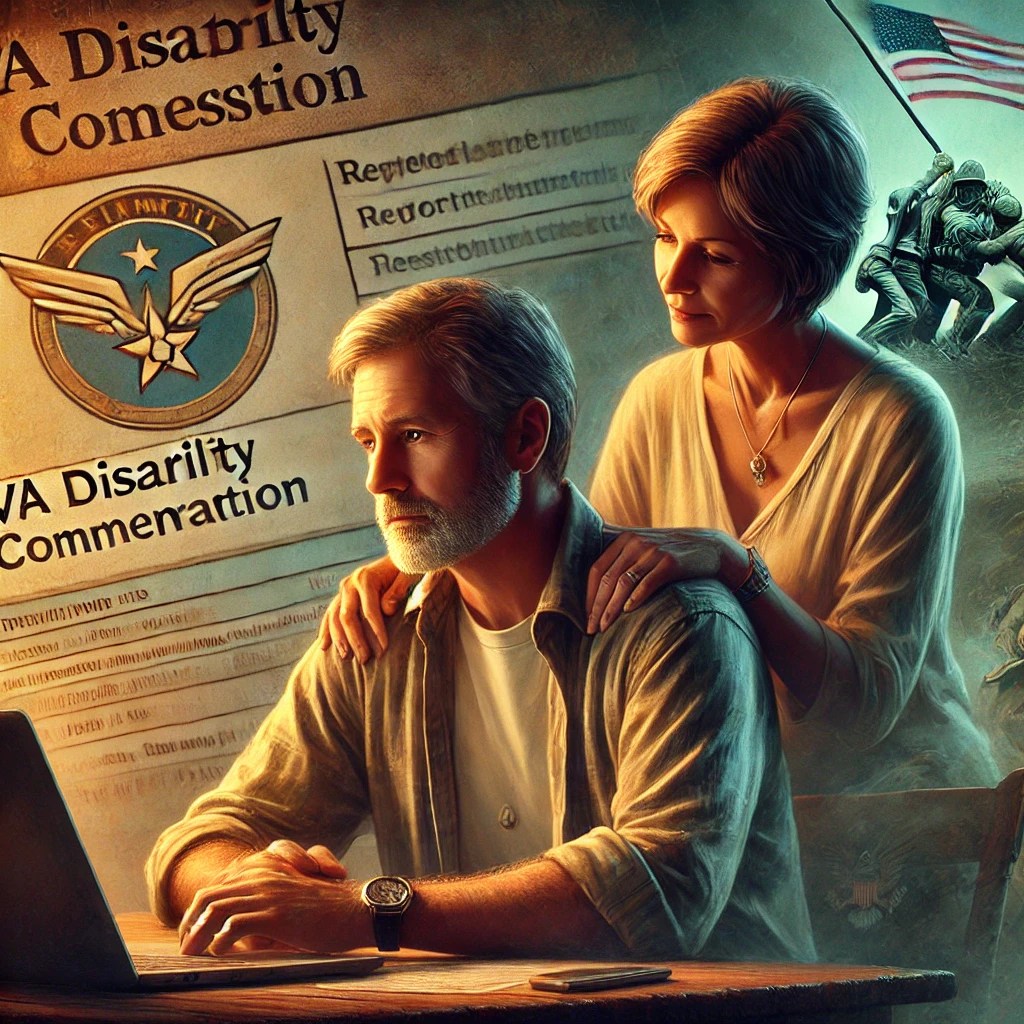
What finally clicked for him? Hearing his wife say, “Honey, you have these things.” It took a trusted loved one to remind him that it’s okay not to be okay.
Too often, veterans hesitate to accept help, recognition, or support, believing it diminishes their strength or pride. This mindset can lead to isolation, despair, and even veteran suicide. But the truth is, these benefits are a way for a grateful nation to say, “Thank you.” You don’t have to lie, embellish, or feel dishonorable.
I’ve now helped four veterans, spanning the Navy and Army, some out of service for over 20 years, navigate the VA disability compensation process. It’s a small act, but one I hope will encourage others to see the value in receiving the support they deserve.
If you’re a veteran—or know one—remember: it’s okay to receive this benefit. You’ve earned it. Accepting help is not a sign of weakness; it’s a testament to your strength and service. Let’s stand together and support each other, proving that it’s okay to not be okay.
Feel free to share this message, reach out, or offer a word of encouragement to those who might need it. We’re all in this together.

Assisting a Veteran: A Journey of Perseverance and Support
At LOUJSWZ, INC, we understand the unique challenges veterans face, especially when it comes to securing the benefits they rightfully deserve. Recently, we had the honor of assisting a fellow veteran who waited 22 years to file his disability claim. Here’s how we helped him through this crucial process.
Reconstructing the Service Timeline
Our journey began by reconstructing the veteran’s service timeline, linking medical events, documents and exposures in chronological order. This was more than just gathering dates and facts; it was about understanding his experiences. We gathered his military medical records and diagnoses from his service period, creating a comprehensive picture of his military journey.
The Submission Process
When the time came to submit the claim through the VA.gov site, our veteran was well-prepared. Thanks to the groundwork laid over through working together. The actual submission took less than three hours. This efficiency was a testament to the dedication and hard work put into the preparation phase. We also provided psychological support, helping him overcome feelings of pride, guilt, and ego that often prevent veterans from seeking the compensation they deserve.
Understanding the Bigger Picture
At LOUJSWZ, INC., we strive to work with veterans who should receive compensation, even if they believe otherwise. This particular veteran had only a few items to claim and might not receive a high percentage of disability. However, the true accomplishment was his newfound understanding that veterans should be taken care of, and this is one way a grateful nation expresses its gratitude.
A Message to All Veterans
We want to emphasize that seeking compensation is not about pride or ego; it’s about recognizing the sacrifices made and ensuring that veterans receive the care and support they deserve. At LOUJSWZ, INC., we’re here to assist in every step of the process, providing the guidance and support needed to navigate the often-complex journey of filing disability claims.
If you or a loved one is a veteran in need of assistance, don’t hesitate to reach out. We’re here to help, honor your service, and ensure you receive the benefits you deserve. Together, we can navigate the path to securing your rightful compensation, just as we did for our fellow veteran who waited 22 years to take this important step.


