Blog Archives
“Holding On: A Caregiver’s Reflection on Love, Loss, and Living in the Now”
My wife came home today.
After nearly a month that felt like a lifetime—through the emergency room, the operating room, recovery, and finally a rehabilitation hospital—she is back, sitting at the kitchen table with our daughter and her sister. They’re talking about summer camp. It sounds so normal. It looks so beautiful. And yet, nothing about this is normal.
She has four broken bones—fragile from cancer that has metastasized into her bones. She cries now, often. More than I’ve ever seen in all the years we’ve been together. Her voice is quiet. Barely audible sometimes. She has only her hands now to guide her through the world, needing an automated wheelchair that still hasn’t arrived because insurance bureaucracy doesn’t move at the speed of human need.
I was ready to buy one. But she said, “No. We’ll wait.” And so we do. Because this is her journey. And while everything in me wants to fix it—to make it easier, faster, better—I know what she needs most is for me to walk beside her, not ahead.
This is not my first time walking this path. I’ve been here before. With my sister. With my father. But knowing the route doesn’t make it easier. It just makes the heartbreak familiar.
Yet she continues to defy the odds. She is part of the 3% who’ve made it this far. A walking miracle. A living lesson in endurance. So we stay grateful. We stay hopeful. We keep our chins up—not just for her, but for ourselves and everyone around us.
Caregiving is the quiet battlefield. You fight fatigue, frustration, and the aching helplessness of watching someone you love suffer. You become nurse, advocate, counselor, and spiritual anchor—all while trying to remember who you are.
But caregiving also sharpens your vision. You begin to see what matters.
It’s the sound of her voice, barely above a whisper, joining in a conversation at the table.
It’s the laughter that somehow still finds its way into our home.
It’s the love that survives even the most brutal storms.
We often think of time as a currency, but when you’re a caregiver, you realize it’s far more precious than money. It is sacred. It is fleeting. It is everything.
So if you’re reading this in the middle of your own storm, hold on. Don’t just wait for the clouds to pass—find the grace in the moments in between. Because even in the darkest stretches, there is light. Sometimes it’s a whisper. Sometimes it’s a smile. Sometimes it’s just sitting quietly at the kitchen table with the ones you love.
Hold onto that.
The Joy of Collecting: Finding Meaning in Everyday Treasures
I’ve always collected things—medals, pennies, shark teeth, rocks, golf balls, even tire valve caps. Some of these were intentional, others accidental. But all of them, in their own way, represent little victories and moments of peace.
Just the other night, I went on a walk after dinner, a habit more about unwinding than fitness. I came back with five golf balls. Five. That might not seem like a lot to some people, but for someone who’s spent a lifetime collecting, five of anything in one outing is a haul. It got me thinking—not about golf balls, but about collecting, and more curiously, why I do it.
Let me start with this: I’ve begun using lost golf balls as my own personal economic indicator. A kind of SWAG (scientific wild-ass guess). I know it’s a stretch, but hear me out—if people are out playing golf in the middle of the week and losing $20 sleeves of balls without a second thought, then someone out there is doing alright. I’m no fan of trickle-down economics, but the existence of a well-funded slice of the population still swinging away gives me a small sense of hope that the world hasn’t completely unraveled. Still, that’s not why I walk. I walk to escape that kind of thinking.
This post isn’t about economics. It’s about collecting.
My father used to collect pennies he found on walks. Before that, as a boy, he collected stamps. I picked up the penny habit from him, and at one point, my collection was medals—military ones. Now? It’s golf balls, and teeth from long-dead sharks. And that’s the distinction I want to make. Stamps and medals feel like hobbies. You go out, you pay money, you build your collection. But to me, collecting has always been about the hunt—the unplanned, unscheduled discovery. The moment you spot something unexpected glinting in the grass or poking out from the sand. That’s collecting.
There’s real joy in that moment—when you pause, bend down, and confirm that yes, it’s a golf ball or a shark tooth or some little artifact the world left behind. It feels like you’ve won something. Like you’re seeing what others overlook. It might sound like a stretch, but in those moments I feel capable, even special.
Turns out, there’s science to back that up. Psychologists have long studied the drive to collect. Some say it’s tied to our ancestral instincts—early humans were gatherers, after all. Others say collecting brings order to chaos, structure to a fast-moving world. According to researchers, collecting can also provide a sense of control, personal identity, even legacy. But more than that, when we find something—especially something unexpected—our brain releases a hit of dopamine. The same reward chemical that fires when we eat good food, laugh, or fall in love. So yes, spotting a golf ball in the grass isn’t just coincidence—it’s chemically rewarding. No wonder I keep looking.
In those moments, I’m not thinking about work, or stress, or the headlines. I’m just walking. And collecting. And somehow, connecting to the people who came before me—my dad and his pennies, the long-lost owner of the golf ball, even the shark whose tooth found its way into my palm.
Collecting, for me, isn’t about things. It’s about finding meaning in the everyday. It’s about knowing that even in a world spinning out of control, there are still small, lost treasures waiting to be found.

The Life-Saving Power of Blood Donation
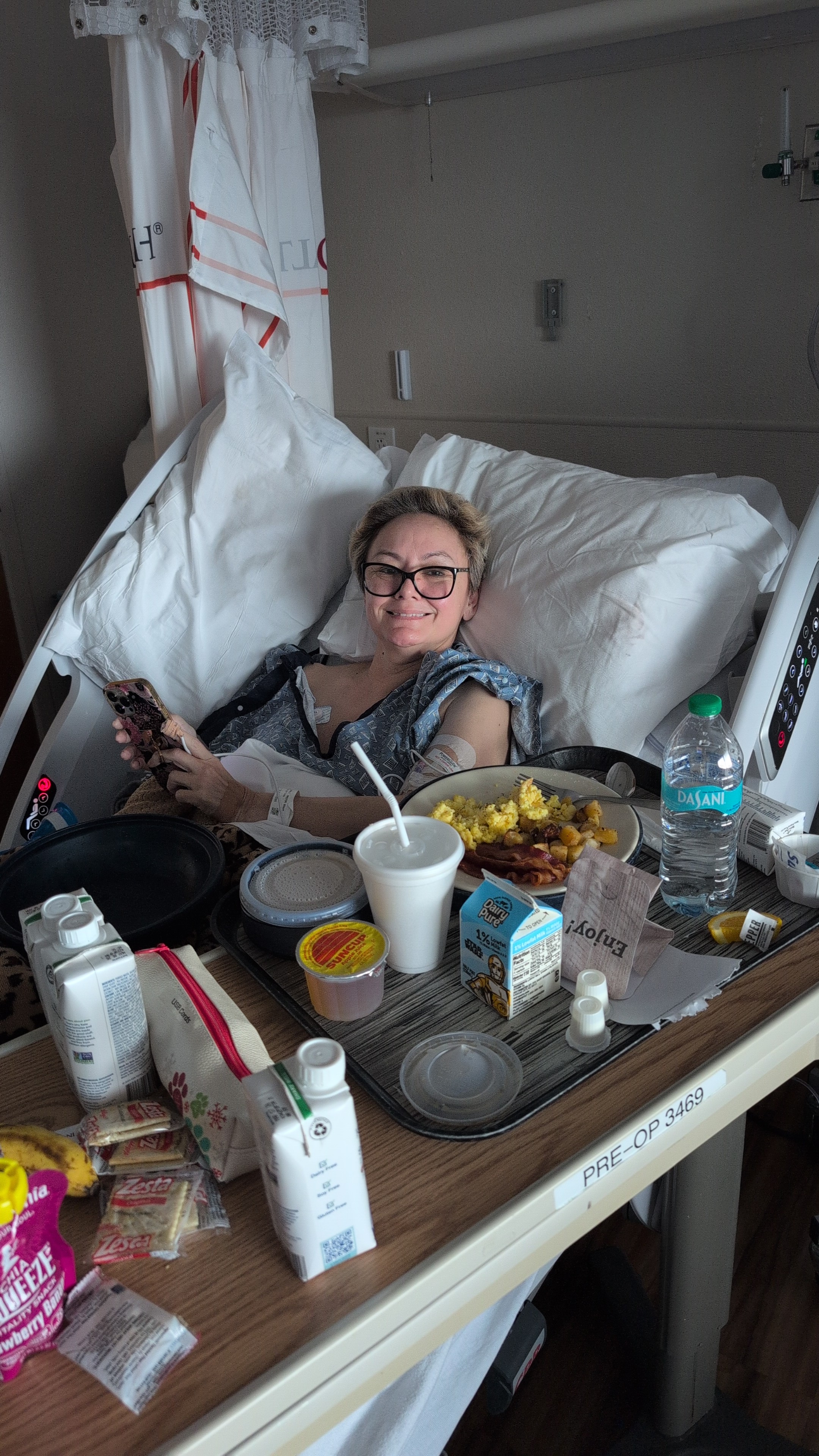


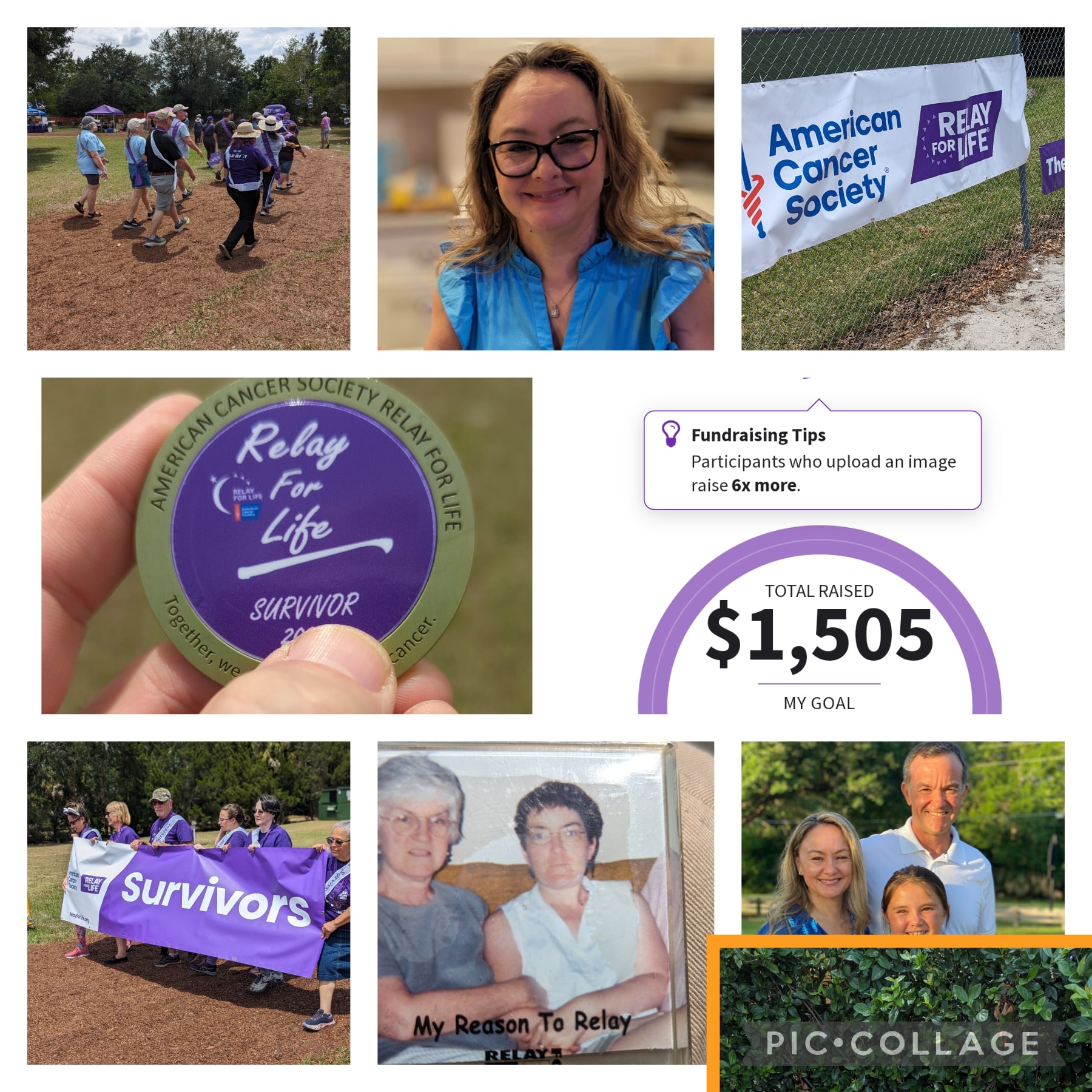
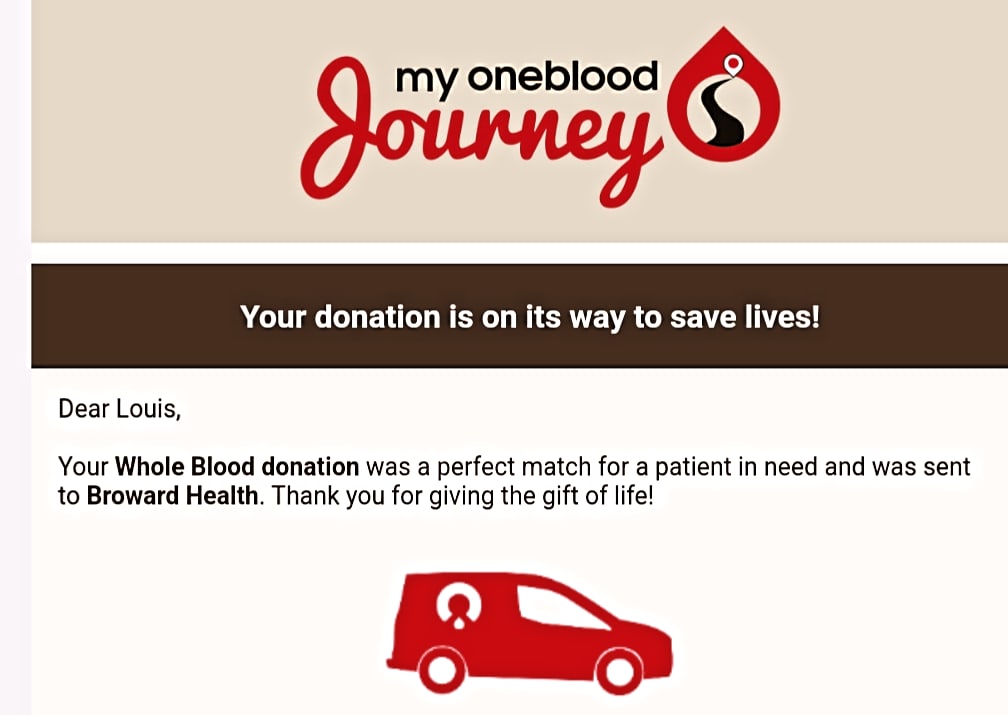


There are moments in life that transcend coincidence—moments that remind us of the deep interconnection between people, acts of service, and the enduring power of compassion. My wife and I recently experienced one of those moments firsthand.For years, we’ve both been regular blood donors. It was never about recognition or reward—it was simply the right thing to do. We believed in it. We knew that a single pint of blood could mean the difference between life and death for someone we might never meet. What we never imagined was how this quiet act of giving would one day come full circle in our own lives.Over 30 years ago, I required an emergency blood transfusion after surgery. I had been discharged from the hospital, only to collapse at home from undetected internal bleeding. As my strength faded and my consciousness waned, two pints of blood were administered, and within minutes, I felt myself come back to life. I will never forget that sensation—the sudden clarity, the renewed energy, the overwhelming gratitude for whoever had made that donation.Fast forward to the present: my wife is fighting cancer with a strength that humbles me every day. Recently, her care team determined she needed a blood transfusion. I told her what I had experienced—that maybe she, too, would feel the same miraculous lift. And she did. That night, she slept peacefully. Her color improved. Her energy returned. It was an almost immediate renewal of life.In that moment, all the years we spent donating blood felt like a sacred thread—woven into a story we could never have predicted. One act of generosity can become someone else’s lifeline. And sometimes, that “someone” is the person you love most in the world.Blood is more than a clinical fluid—it’s a vessel of hope, a symbol of our shared humanity. Donating blood is not just a medical gesture; it’s a profound act of connection. When we give, we’re not only offering a piece of ourselves—we’re becoming part of a legacy of compassion that could touch lives in ways we may never see.I encourage everyone reading this to consider becoming a donor. You may never know whose life you’ll save—but one day, that life might just be someone you love.
Embracing Change: Life Lessons from a Soldier’s Past
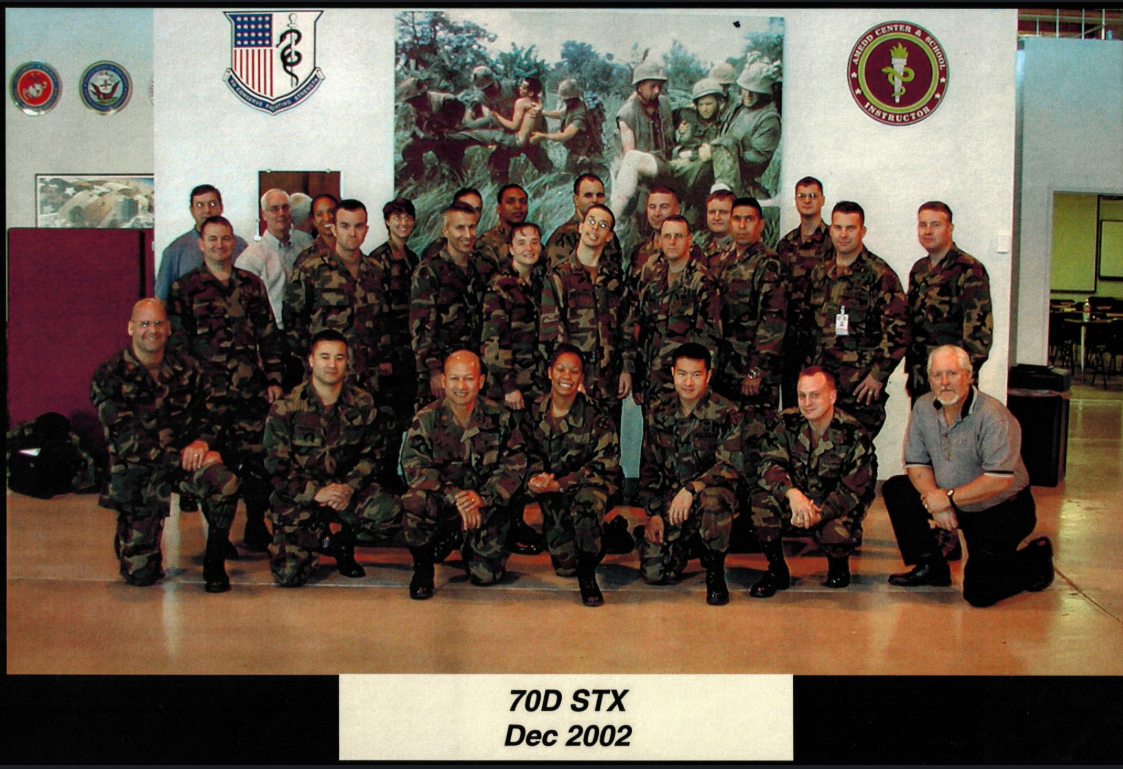
Earlier today, I was tagged in a photo on social media—a group shot taken in December 2002 during our 70D STX training, just months before the Iraq invasion. My first reaction was surprise, followed quickly by a flood of memories. No smartphones. MySpace was still the king of connection. I was in uniform, standing tall, trying to wear my best “war face.” I even had hair back then.
At that moment in time, my personal life was uncertain. I was recently divorced, unsure of where I’d live, and even more uncertain of what I’d be doing professionally. All I knew was that I wanted to stay close to my children, even as the Army had me moving in the opposite direction. Everything felt like it was shifting under my feet.
But looking back, I realize something: everything is always shifting. Like water, life never stays in the same place—it’s always in motion. Sometimes slow, sometimes raging, but always flowing. I used to crave control over every aspect of my personal and professional life. And I convinced myself that, at times, I had it. That illusion helped me sleep at night, helped me lead others, helped me believe I was making all the right moves.
Now, with 23 more years of living, learning, and letting go behind me, I’ve come to embrace a different truth: it’s okay not to control everything. In fact, that surrender has helped me grow. It’s made me more accepting of people, setbacks, and life’s curveballs. Some of the biggest disappointments in my life eventually rerouted me to something far better than I had planned.
Today, I’m working through some of the biggest challenges I’ve ever faced—accepting my wife’s ongoing battle with cancer and her limited mobility, navigating the rollercoaster of parenting a teenage daughter, and growing a business that’s rooted in purpose and resilience. I try to take it one day at a time. Like nurturing an oak sapling—you water it a little each day, give it sunlight, protect it during storms. And over time, without you even noticing, it becomes a mighty oak.
That photo reminded me who I was—and affirmed who I’m becoming. The young soldier I was then would be proud of the man I am now, not because everything turned out perfect, but because I kept showing up. I kept growing. I kept going.
I wonder if anyone in that picture can spot me. Look closely—I’m there, trying to be serious, probably thinking about the mission ahead. That version of me had no idea what was coming. But I’m grateful for him. And I’m even more grateful for who I’ve become.

Finding Strength in Fear: A Roadmap for Resilience
Sometimes we all need strength to persevere. Some days are harder than others. Some moments are like ice. Sometimes we need to have a plan to move forward. This is mine.
That feeling—of being stuck in place while time barrels forward like a freight train—is terrifying. The quiet becomes a roar. Your heart races while your body doesn’t move. It feels like you’re standing on a shore, watching a storm roll in, knowing you can’t hold back the waves.
But you’re not alone in this.
When fear takes over, survival doesn’t look like bravery. It looks like breathing, getting out of bed, putting one foot in front of the other, even if you don’t know where you’re going yet.
Here’s a small roadmap—just enough to get through one moment, then the next:
1. Name It
Say out loud (or write it down):
“I’m afraid of ____. I feel like ____.”
Giving fear a name takes away some of its power. It makes it something you are experiencing—not something that is you.
2. Shrink the Future
When the future feels unbearable, don’t try to live it all at once.
Try living just the next five minutes.
Then the next hour.
You’ll be surprised how far that can carry you.
3. Choose One Thing You Can Control
Maybe it’s taking a walk.
Making a cup of coffee.
Writing a message to someone you trust.
Control just one thing. That can be enough to anchor you today.
4. Let Others Be Your Strength
Even if you feel like a burden—you’re not.
Let someone carry a bit of this with you.
You don’t have to have the right words. Just say:
“I’m not okay. Can you just sit with me in this for a moment?”
5. Grace Over Guilt
If all you did today was survive—that counts.
You don’t have to fix everything. Not today. Maybe not even tomorrow.
You just have to keep showing up. You already are.
You asked how you can survive it.
You survive it the same way you’ve survived every hard thing before:
With a cracked heart and the quiet strength you don’t even realize you have.
And when you’re ready, we can talk about how to walk forward—not fast, just real.
I’m here for that walk whenever you are.


Navigating Self-Employment: Lessons from an Entrepreneur’s Journey
Starting your own business is a bit like setting off in a dinghy down the Mississippi—exciting, unpredictable, and, at times, terrifying. My wife and I took that plunge when we decided to work as independent contractors. That meant companies would pay us, but we had to figure out everything else—health insurance, taxes, payroll, and all those benefits that working for an established company provides. It was a kick in the pants, a push away from the directions our parents had given us, into the unknown.
As with most things in life, I turned to my friends for advice. “What business structure should I choose?” I asked. The overwhelming response: an S-Corp. It was supposedly the best fit for two independent contractors making (hopefully) over $80,000 a year. Simple enough. So, I did what any modern entrepreneur would do—I searched for help on Thumbtack. I hired another veteran, Connie, to handle the formation of our S-Corp. Anyone willing to take a call on April 16th—tax day—has to be organized. For $180, she set up: our EIN, corporate documents, election of a small business, and state Department of Revenue filings. One phone call in, and I had already surrendered a bit of my independence. No more TurboTax; now, I had a recurring expense for professional tax filing.
I asked Connie, “Do you take the federal and state taxes out of the payments from the companies I work with?” Of course not—why make it that easy? Instead, she referred me to a payroll service. So, after setting up a business bank account with a credit union, I added payroll administration to my growing list of responsibilities. Another necessary ally in the battle of self-employment.
Next came insurance—because nothing says “I’m a business owner” like signing up for multiple policies. We got umbrella insurance, professional liability, general liability, and even medical and dental coverage for our one employee (me, for now). Each policy brought its own admin portal, its own customer service lines, and, of course, another recurring expense. But hey, they’re all tax deductions, right?
Since my wife was both the co-owner and sole employee, she couldn’t have a business-provided HSA. That was one thing she had to set up separately, which was a small relief—I had enough programs to manage. Instead, I found myself stepping into a different role: webmaster. It was a throwback to my younger years and a chance to write, something I’ve always enjoyed.
Fast forward two years. The business we started has completely transformed. The contracts ended, the payroll services were canceled, and all the insurance policies were dropped. My wife, battling health challenges, could no longer work, which led to some incredibly lean months. I had to reinvent myself. Instead of project and capture management, I focused on something more meaningful: helping veterans get federal small business credentials and assisting them with disability claims.
It was a tough pivot. To make ends meet, I worked part-time at three different large retailers while also working on commission-only deals. The financial anxiety was relentless, but so was my drive to provide for my family and uphold my responsibilities. Slowly, through persistence and the kindness of others, things started to turn around. Former clients and friends began reaching out, and I found my footing as a fractional professional service provider in sales and operations.
After more than a year of working for commission only, I’m finally seeing the fruits of that labor. The journey has been anything but easy, and I’ve had moments where I wondered if it was all worth it. But as they say, “A soldier ain’t happy if he ain’t bitchin’.” So, I guess that means I’m happy. I’m happy.


Learning from Mistakes: A DUI Reflection
For over 40 years, I have been behind the wheel, driving without incident—until now. I got a DUI. It still feels surreal to write those words. But the reality is, it happened, and I have no excuse. I have asked myself over and over, why did I not realize how dangerous and serious this was? And if I did, why did I not care?
Maybe it’s the weight of family burdens. Maybe it’s the inescapable reality of watching someone you love battle cancer—the most fatal form of it—a cruel, relentless adversary. Maybe it’s the anger and pain of an adolescent facing the potential loss of her mother. Maybe it’s depression, anxiety, or the gnawing exhaustion that comes with carrying so much.
The truth is, sometimes I feel like giving up on being the best version of myself. And I hate that feeling. But when it comes, it consumes me until something shakes me awake. This time, it was my DUI.
For years, I pushed the envelope. Since before I was 19, I thought I had control. How I managed to avoid hurting myself or someone else all these years is nothing short of a miracle. I could lie to myself and say, I never drove under the influence before—that I felt fine driving home that night. But that’s just not true.
I know chemistry. I understand biology. I know how alcohol affects the body, how it impairs judgment, and how much is too much. Yet, on that night, I just didn’t care. That’s the scariest part.
I passed the field sobriety test, but that didn’t matter. As I sat handcuffed in the back of the sheriff’s patrol car, all I could think was, It’s about time. I was taken to the DUI intake center and given a breathalyzer test—.10% BAC, 2% over the legal limit. From there, I was booked into the county jail and spent several hours waiting to post bail.
What came next was worse than my own shame. Scammers took advantage of the situation, calling my family including my children and friends, pretending to be a bail bonds company. My wife, out of concern, sent them $1,000 through Apple Pay. That loss, that embarrassment, was the worst part of the whole ordeal.
I am an Eagle Scout. An Army officer. I have built my life on helping others. And yet, I let this happen. It’s a humbling and haunting realization. But the response from my loved ones has been my saving grace. They did not ridicule me. They did not abandon me. Instead, they supported me, reminding me that one mistake—however significant—does not erase a lifetime of integrity and service.
This DUI is my wake-up call, my ghost of Christmas future, showing me what could be if I don’t change. It has forced me to confront my own choices, my vulnerabilities, and my need to truly take care of myself so I can continue taking care of others. I will take this harbinger seriously. I will strive to be better.
For those who may find themselves in a similar position, my message is simple: take responsibility, learn from it, and don’t ignore the signs. You don’t want to wait for your own wake-up call. Be better now.


The Last Penny: A Personal Reflection
The news that the penny is being removed from circulation made me pause and reflect on something far more valuable than its monetary worth. The penny was once a daily connection between my father and me, a lighthearted gauge of the world around us.
Every day on his walk, my father would keep an eye out for lost pennies. If he found one, it was a good day. If he found two, well, “The economy is looking up!” he’d say with a chuckle when he called me to report his findings. It was his personal economic indicator, a small but amusing tradition that made us both smile.
Over the years, I picked up the habit myself. If I spotted a penny on the ground, I’d snap a picture and send it to my closest friends and my sons. “Looks like things are turning around!” I’d joke, carrying on my father’s tradition with the same ridiculous insight. But we never left the penny behind. We picked it up, and added it to our collection—a tangible reminder of life’s little fortunes and the simple joys of paying attention.
Now, with the penny becoming a thing of history, finding one will feel even more special. No longer just a quirky sign of economic optimism, it will be a rare token of the past, a link to my father’s voice on the other end of the phone, laughing about his new found fortune.
So, when I spot a penny on the ground, I’ll pause. I’ll smile. I’ll pick it up. And I’ll think of him.
And you know what? The economy—and life—are still looking up.

Overcoming Life’s Challenges: Lessons from a Bike Ride
Not long ago, I found myself in a dark place. Life had become incredibly challenging: my wife is battling a severe illness, my relationship with my teenage daughter is strained, and my income has dried up. To cope, I turned to unhealthy habits—overeating, drinking excessively trying to seek temporary comforts. But those “fixes” never provided the lasting relief I craved; they really only intensify the darkness.
Then, life forced a change. My truck has been awaiting parts for three weeks, (not a Ford). Frustrated and without transportation, I dusted off my bike—something I hadn’t touched in over a year and a half, ever since I was hit by a car while riding it. Although I was only slightly injured it made me subconsciously avoid it. Hesitant at first, I eventually gave in to necessity.
Now, I ride 3.5 miles each way to my workouts at Orange Theory Fitness. Those seven miles a day have become more than just a commute; they’ve become a lifeline.
I’d forgotten how it felt to glide along the pavement, the cold wind on my face while music fills my ears. I’d forgotten the simple joy of moving under my own power, of feeling connected to the world as I navigate to my destination. In those moments on my bike, I feel truly alive.
This rediscovery has been transformative. It’s not just about the physical movement—it’s about the mental shift. That bike ride has reminded me that improvement begins with a single step (or pedal). One small action, no matter how insignificant it seems, can set off a chain reaction. For me, it’s been this daily ride.
It hasn’t solved all my problems—my wife is still fighting her battle, my daughter and I still have work to do, and life’s stressors haven’t disappeared. But it’s given me something invaluable: a sense of control, a feeling of progress, and a reminder that even in the darkest times, there’s a way forward.
If you’re feeling stuck, overwhelmed, or burdened by life’s challenges, I encourage you to start small. Take one step. Maybe it’s a bike ride, a walk around the block, a call to a friend, or just five minutes of quiet reflection. Whatever it is, try. Because that one small effort can grow into something bigger than you imagined.
For me, it’s been my bike. And I’ll keep riding, one mile at a time, until the road ahead feels a little brighter.

Revenue: The Lifeblood of Every Business
As a small business owner and fractional executive for two other small businesses, one lesson stands out above all: nothing matters without revenue. You’re not even in business if you don’t generate revenue. It’s the foundation, the validation of your ideas, and the fuel that keeps everything running.
A few years ago, I left the stability of Corporate America to chart my own course. It wasn’t a straight path—it was a journey of trial and error, an exploration to find my next great “work thing.” Along the way, I worked in retail, call centers, consulting, and eventually landed in my current role as a fractional executive. Through this journey, I learned one critical truth: your business model must align with generating value and translating that value into revenue.
From Stability to Uncertainty
For most of my adult life, I enjoyed the comfort of a regular paycheck—monthly or bi-weekly deposits that arrived like clockwork. But when I stepped out on my own, I made a conscious decision to trade stability for the uncertainty of risk and reward. I shifted my approach from being a retained resource to someone who gets paid only when I generate value for the company.
As a self-proclaimed change management “expert,” embracing this shift became an objective in itself. The transition wasn’t easy. Even with the privilege of not living paycheck to paycheck, the mental adjustment was profound. The stakes were higher. The challenges, more personal. But I leaned into the discomfort, using my love for risk management and mitigation to navigate the uncertainties.
Revenue First, Always
In my role as COO for a talent acquisition company, the mantra is clear: if we don’t “fill roles with quality souls,” we don’t eat well. All the talk about CRMs, KPIs, and business plans is just that—talk—until revenue rolls in. My CEO reinforces this every day, and it’s a message I’ve fully embraced.
Recently, after more than a year of building our structure, processes, client relationships, marketing strategy, operations, and brand, we placed our first two candidates—our first two “quality souls.”
It was a milestone worth celebrating, not just because of the hard work it took to get there but because it validated the value we’ve worked so hard to create.
Revenue isn’t just about dollars in the bank; it’s about demonstrating value to your customers. It’s the ultimate proof that your business matters.
A Moment of Reflection
When the placements were confirmed, I celebrated in my own quiet way. My wife, who is bravely battling a severe illness, couldn’t join me for a glass of champagne or outing. So, I went outside, looked up at the full moon, and allowed myself a moment of gratitude and reflection.
I told myself: I can still do new things. I still have value. I will continue to grow.
I thought about the journey I’ve been on—from the stability of Corporate America to the ever-changing landscape of entrepreneurship. Revenue is the lifeblood of my businesses, but it’s also a symbol of something deeper: the ability to adapt, create value, and prove to yourself that you’re still growing, still evolving, and still capable of new achievements.
Lessons Learned
For anyone considering a similar leap, here’s what I’ve learned:
- Revenue validates your business. Until you make money, you’re just planning.
- Risk and reward go hand in hand. Stepping away from a steady paycheck is hard, but it forces you to focus on creating value.
- Celebrate every win. Even the small victories matter—they’re milestones in your journey.
- You’re never done growing. Every challenge, every risk, and every success adds a new layer to your personal and professional growth.
If you’re considering stepping out on your own or are in the trenches of entrepreneurship, remember: it’s all about the value you create and the revenue that value generates. Everything else is just details. Keep pushing, keep learning, and keep growing. The full moon will be waiting to remind you of your progress.


