Category Archives: Leadership
My thoughts on it

Why Nonprofits Should Register on SAM.gov: Key Advantages
Registering your nonprofit corporation in SAM.gov (System for Award Management) opens doors to
federal opportunities, funding, and resources while enhancing visibility and compliance.
- Eligibility for Federal Grants & Cooperative Agreements: SAM.gov registration is required to
apply for federal grants and assistance programs, ensuring your nonprofit is eligible for direct
funding opportunities. - Ability to Receive Federal Contracts: Nonprofits can compete for government contracts if their
services align with federal needs, such as training, research, logistics, or social programs. - Access to Federal Surplus Property: Through the General Services Administration (GSA),
registered nonprofits may qualify for federal surplus property programs, providing equipment and
resources at little or no cost. - Visibility in the Federal Marketplace: SAM.gov assigns your nonprofit a Unique Entity ID (UEI)
and CAGE Code, making it discoverable to federal buyers, prime contractors, and potential
partners. - Streamlined Compliance & Payment Processing: Federal agencies require SAM.gov
registration to set up EFT payments and verify compliance, ensuring your nonprofit receives funds
without delay. - Support for SBA & VA Certifications: SAM.gov registration is essential for maintaining
certifications like SDVOSB, HUBZone, and other socioeconomic designations, increasing
contracting opportunities.
Bottom Line: SAM.gov registration is a strategic step for nonprofits to access federal resources,
increase visibility, and strengthen credibility with government agencies and partners.
Hope we can help your organization too!
The Front Lines of Cancer
Yesterday, we reached acceptance. Not surrender — not quitting — but an understanding: this cancer is incurable. It continues to spread slowly, like a snake coiling itself around its prey.
And yet, in the middle of it all, there is beauty.
Our youngest is in high school now. She wakes up on her own, gets ready, eats breakfast. She is excited about life. She’s playing lacrosse, wants to go to practice, wants to do well in school. It’s such a good time.
The other night, my wife told her that she wanted her to have her wedding ring. Tears came, but then laughter too, as our daughter said it was too small for her finger. Somehow, the moment turned to a joke about making it into a “grill” for our dog with the terrible underbite. This is life and love — sorrow and laughter tangled together.
This weekend, our oldest came home. She’s about to start graduate school after years of working. She asked her mother, “Are you going to die?” My wife, steady as ever, said: “I will — but I don’t intend to do it soon. You need to go to graduate school and live your life. This is your dream. Keep going.” Then she gave her the diamond pendant we had made from her mother’s stone. They cried for hours.
One of our sons is getting married in October and then heading into the military. We already have our plane tickets and hotel. No setbacks. We will be there. We’ve become experts in travel planning and stress mitigation, as Sherri can only manage about two hours of chair time a day. No setbacks — we so want to be there.
And then there’s our granddaughter. Just 18 months old, already going down slides. We watched the video of her laughing all the way, and it filled us with joy.
It is a wonderful time.
That might sound strange to say, but it’s true. In these trying days, every moment of laughter, every milestone, every piece of ordinary life feels even more precious. The weight of suffering sharpens the beauty of joy. And when you know that time is short, you hold tighter to the moments that matter most.


VA Claims Processing: Success or Hidden Challenges?
In the July 2025 newsletter, the Department of Veterans Affairs proudly announced that it had “processed” over 2 million disability claims—faster than ever before. At first glance, this milestone sounds like a tremendous success. But for veterans who have lived at the intersection of military service and medical hardship, there’s a deeper story behind the headlines.
As a veteran and someone who assists others in navigating the VA claims process, I’ve learned to read between the lines. The newsletter fails to disclose how many of those 2 million claims were denied—a critical omission that affects real lives. A high throughput of claim processing does not necessarily equate to high-quality or just outcomes for veterans.
At the same time, the VA linked to its public repository of Disability Benefits Questionnaires (DBQs) available here. These are detailed, medically technical forms that the VA encourages veterans to bring to their private providers to “expedite” claims—allegedly reducing costs and time associated with VA-conducted exams.
On the surface, this sounds like a win-win. But if you’ve filled out one of these forms or asked a doctor to complete one, you know that each DBQ is 12 to 16 pages long, highly technical, and time-consuming. It could take an experienced clinician over an hour—per form—with no reimbursement provided by the VA.
Let’s pause there: the government is asking veterans to pay out of pocket or call in favors from already overburdened civilian providers, many of whom are unfamiliar with VA language, legal thresholds, or the 38 CFR standards. These forms may reduce government costs, but they shift that burden onto the backs of those who served.
And what’s more concerning is this: Is this an unspoken gatekeeping tactic? Is the sheer complexity of DBQs and the absence of compensation for providers quietly slowing down or stalling new claims from older-era veterans—those who served between 1965 and 2015—who didn’t benefit from the digital medical records era?
As someone working daily with veterans—at the proverbial GEMBA or “point of the spear”—I’ve witnessed firsthand how the standard of approval appears to have shifted. In the first few months of this administration, P&E exams were paused for over three months. Now, adjudications seem stricter than ever. Subjective? Perhaps. But for many veterans, this feels like a regression, not progress.
Questions We Should Be Asking the VA:
- What percentage of the 2 million “processed” claims were denied, granted, or partially awarded?
- Why are providers not compensated for the time it takes to complete detailed DBQs?
- Has the standard of adjudication shifted from the traditional “at least as likely as not” (51%) burden of proof?
- Why are we not leveraging modern AI and automation tools to reduce claim burden for the veteran?
- How does the VA plan to assist older veterans—whose medical records are often incomplete or paper-based—in navigating these requirements?

AI Can’t Care – Why Human Trust Still Wins in a Tech-Driven World
In a world that feels increasingly automated, one thing is becoming clearer every day: people still crave connection. Especially when they’re hurting. Especially when they’re trying to navigate something as emotional and complex as the VA disability claims process.
At LOUJSWZ INC, we embrace technology. We use AI to make our work more efficient, more accurate. But AI is not our product. Our product is trust. And there isn’t a line of code out there that can replicate that.
I recently sat down with a fellow veteran who shared how rushed his transition was and how unsure he felt even after submitting his claim. He used the free services available to him—VFW, county VSO, mobile VA outreach—and still felt like something might have been missed. And you know what? He’s not alone. That “what did I forget?” feeling is far too common.
There are tools now that can read disability guides and recommend conditions. They’re fast. They’re free. But they don’t know how to look you in the eye and ask, “What really hurts?” They don’t hear the pause in your voice or notice the symptoms you forgot to say out loud. They don’t walk your journey. I do. I have lived it.
Porter’s Five Forces tells us that AI is shaking every industry—lowering barriers, increasing buyer power, and making substitutes more accessible. But it also tells us something else: the key to success in a competitive landscape is differentiation.
LOUJSWZ isn’t just another support service. We’re your battle buddy through bureaucracy. We know the system, yes—but more importantly, we know you. And we’re here to make sure you get what you’ve earned. No shortcuts. No automated empathy. Just people helping people, with the support of the best tools available—not the replacement of them.
Because at the end of the day, AI may shape strategy, but it’s still heart that shapes trust.

Understanding LinkedIn Connections: A Reflection on Bias
As a lifelong learner and someone who prides himself on asking tough questions—of others and especially of myself—I recently posed one I hadn’t considered before: What do my LinkedIn connections say about me?
At first glance, the question might seem simple—just a casual curiosity. But the more I thought about it, the more I realized it held a mirror to my worldview, my network, and even my decision-making process. After all, our professional circles say something about how we seek advice, what we value, and—whether we admit it or not—how we perceive credibility and leadership.
So, I did what I’ve done my whole life investigated.
What I Found: A Familiar Reflection
The results were humbling, if not entirely surprising. My network largely looks like me: white, male, and with a military or law enforcement background. Not wrong, not intentional—but also not reflective of the broader society I serve or want to understand better.
This is the core of unconscious bias—it isn’t malicious or even deliberate, but it quietly shapes how we see the world and, in turn, how we act in it.
What I’m Doing About It: Intentional Inclusion
I believe in action, not just awareness. That’s why I’ve made a change to my daily habits. Every day, until I hit LinkedIn’s weekly connection limit, I intentionally send connection requests only to women—diverse in background, career, and experience.
I don’t overthink it. I see the picture and I click “Connect.”
No agenda beyond expanding my view of the world. My hope is that by increasing the diversity of my network, I’ll increase the diversity of thought I’m exposed to—and in doing so, improve the quality of the decisions I make, the advice I take, and the work I do.
Why It Matters
LOUJSWZ INC is committed to helping people grow—businesses, veterans, individuals—through integrity, process improvement, and purpose-driven consulting. But growth has to start with self-awareness.
This isn’t a story about checking a box. It’s about building a network that challenges me, reflects the real world, and ultimately makes me better at what I do—because I see more of the people I serve.
I still have a long way to go. But that’s the point of growth—it’s never over.
#UnconsciousBias #InclusiveLeadership #GrowthMindset #LOUJSWZ #VeteranOwned #LeadershipEvolution
The Joy of Collecting: Finding Meaning in Everyday Treasures
I’ve always collected things—medals, pennies, shark teeth, rocks, golf balls, even tire valve caps. Some of these were intentional, others accidental. But all of them, in their own way, represent little victories and moments of peace.
Just the other night, I went on a walk after dinner, a habit more about unwinding than fitness. I came back with five golf balls. Five. That might not seem like a lot to some people, but for someone who’s spent a lifetime collecting, five of anything in one outing is a haul. It got me thinking—not about golf balls, but about collecting, and more curiously, why I do it.
Let me start with this: I’ve begun using lost golf balls as my own personal economic indicator. A kind of SWAG (scientific wild-ass guess). I know it’s a stretch, but hear me out—if people are out playing golf in the middle of the week and losing $20 sleeves of balls without a second thought, then someone out there is doing alright. I’m no fan of trickle-down economics, but the existence of a well-funded slice of the population still swinging away gives me a small sense of hope that the world hasn’t completely unraveled. Still, that’s not why I walk. I walk to escape that kind of thinking.
This post isn’t about economics. It’s about collecting.
My father used to collect pennies he found on walks. Before that, as a boy, he collected stamps. I picked up the penny habit from him, and at one point, my collection was medals—military ones. Now? It’s golf balls, and teeth from long-dead sharks. And that’s the distinction I want to make. Stamps and medals feel like hobbies. You go out, you pay money, you build your collection. But to me, collecting has always been about the hunt—the unplanned, unscheduled discovery. The moment you spot something unexpected glinting in the grass or poking out from the sand. That’s collecting.
There’s real joy in that moment—when you pause, bend down, and confirm that yes, it’s a golf ball or a shark tooth or some little artifact the world left behind. It feels like you’ve won something. Like you’re seeing what others overlook. It might sound like a stretch, but in those moments I feel capable, even special.
Turns out, there’s science to back that up. Psychologists have long studied the drive to collect. Some say it’s tied to our ancestral instincts—early humans were gatherers, after all. Others say collecting brings order to chaos, structure to a fast-moving world. According to researchers, collecting can also provide a sense of control, personal identity, even legacy. But more than that, when we find something—especially something unexpected—our brain releases a hit of dopamine. The same reward chemical that fires when we eat good food, laugh, or fall in love. So yes, spotting a golf ball in the grass isn’t just coincidence—it’s chemically rewarding. No wonder I keep looking.
In those moments, I’m not thinking about work, or stress, or the headlines. I’m just walking. And collecting. And somehow, connecting to the people who came before me—my dad and his pennies, the long-lost owner of the golf ball, even the shark whose tooth found its way into my palm.
Collecting, for me, isn’t about things. It’s about finding meaning in the everyday. It’s about knowing that even in a world spinning out of control, there are still small, lost treasures waiting to be found.

Embracing Change: Life Lessons from a Soldier’s Past
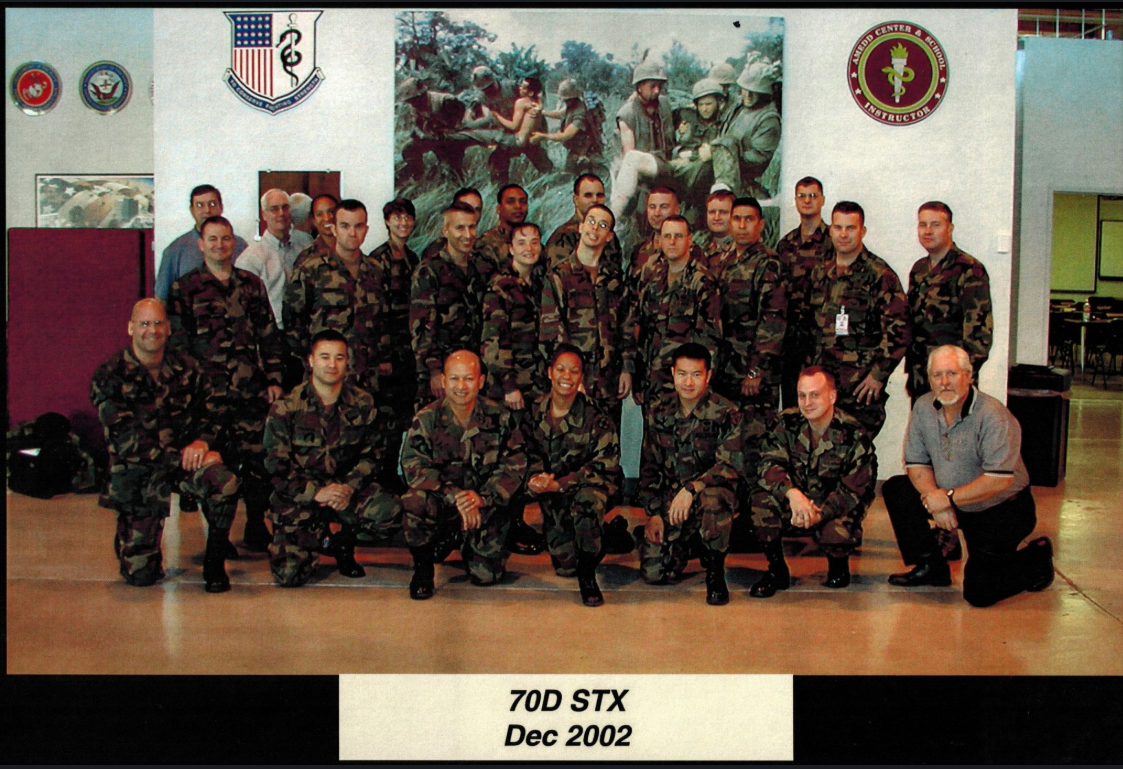
Earlier today, I was tagged in a photo on social media—a group shot taken in December 2002 during our 70D STX training, just months before the Iraq invasion. My first reaction was surprise, followed quickly by a flood of memories. No smartphones. MySpace was still the king of connection. I was in uniform, standing tall, trying to wear my best “war face.” I even had hair back then.
At that moment in time, my personal life was uncertain. I was recently divorced, unsure of where I’d live, and even more uncertain of what I’d be doing professionally. All I knew was that I wanted to stay close to my children, even as the Army had me moving in the opposite direction. Everything felt like it was shifting under my feet.
But looking back, I realize something: everything is always shifting. Like water, life never stays in the same place—it’s always in motion. Sometimes slow, sometimes raging, but always flowing. I used to crave control over every aspect of my personal and professional life. And I convinced myself that, at times, I had it. That illusion helped me sleep at night, helped me lead others, helped me believe I was making all the right moves.
Now, with 23 more years of living, learning, and letting go behind me, I’ve come to embrace a different truth: it’s okay not to control everything. In fact, that surrender has helped me grow. It’s made me more accepting of people, setbacks, and life’s curveballs. Some of the biggest disappointments in my life eventually rerouted me to something far better than I had planned.
Today, I’m working through some of the biggest challenges I’ve ever faced—accepting my wife’s ongoing battle with cancer and her limited mobility, navigating the rollercoaster of parenting a teenage daughter, and growing a business that’s rooted in purpose and resilience. I try to take it one day at a time. Like nurturing an oak sapling—you water it a little each day, give it sunlight, protect it during storms. And over time, without you even noticing, it becomes a mighty oak.
That photo reminded me who I was—and affirmed who I’m becoming. The young soldier I was then would be proud of the man I am now, not because everything turned out perfect, but because I kept showing up. I kept growing. I kept going.
I wonder if anyone in that picture can spot me. Look closely—I’m there, trying to be serious, probably thinking about the mission ahead. That version of me had no idea what was coming. But I’m grateful for him. And I’m even more grateful for who I’ve become.

Winning Proposals for Veteran-Owned Businesses
I just submitted my very first proposal to the State of Florida—and I have to admit, I didn’t think I stood a chance.
This wasn’t some minor RFP. Florida is recompeting its Management Consulting Services Consolidated Schedule, and I chose to compete in Service Category 4: Executive Leadership Development and Customized Training—one of nine powerful categories, all dominated by big-name firms with deep pockets and armies of employees.
But here I am. A veteran, a founder, a team of one, pushing through multiple websites, platforms, registrations, certifications, documents, file formats, and yes—those relentless character count limits—just to be considered viable. To even get a seat at the table.
And I made it.
It was not easy. The process was time-consuming, mentally exhausting, and filled with moments of doubt. But it was also one of the best learning experiences I’ve had as a business owner.
And here’s what I want other small businesses—especially my fellow Veteran-Owned Small Businesses (VOSBs) and Service-Disabled Veteran-Owned Small Businesses (SDVOSBs)—to know:
If you don’t try, you can’t win.
The State of Florida spent over $82 million on management consulting services last year alone. That’s not just a number—it’s an opportunity. One that we, as small, capable, values-driven businesses, can pursue. If you have the right NAICS codes, the right mindset, and the willingness to navigate the process, there’s a real path forward.
Yes, the back-office requirements are real. But compared to the federal government, the state-level procurement process is far more accessible. You don’t need a team of ten compliance officers. You just need to be intentional, organized, and committed to understanding the rules of the game.
I don’t know if I’ll win this one. But I do know this:
- I now understand how the process works.
- I can replicate and refine my submission.
- I’ve proven to myself—and maybe to others—that I belong at the table.
- And I’m ready to bring in some of the most mission-driven leaders I know to serve with excellence.
To anyone else out there feeling like a one-person army going up against giants: keep going.
The journey matters. The learning is real. And your impact—when your moment comes—will be undeniable.

Thinking About Filing for VA Disability? Read This First.
If you’re reading this, someone probably told you, “You should file a VA claim.” Maybe they’ve been saying it for years. Maybe it’s the first time you’re thinking about it seriously. Either way, I’ve been where you are—wondering if it’s worth the time, energy, and vulnerability.
Let me tell you something I wish someone had told me sooner: it’s okay to ask for help. And it’s okay to want clarity before you step into the process. So let me walk you through the VA disability claims journey—step by step—with free resources I personally trust, and some rough timeframes to expect.
🛠️ Step 1: Determine If You Qualify
Timeframe: Immediate – 1 week
You need a current diagnosis, evidence that the condition was caused or worsened during military service, and a “nexus” connecting the two.
Free Resources:
- VA Benefits Eligibility Tool
- VA Lay Statement Guide
- HadIt.com Forums (veteran-run discussions, peer guidance)
- DAV.org Help with Claims
If you’re not sure, connect with a Veterans Service Officer (VSO). They work for you, not the government.
📄 Step 2: File Your Initial Claim (Intent to File First)
Timeframe: 1 hour to prepare + VA average: 125–150 days
Start by submitting an Intent to File. That locks in your effective date while you gather evidence. Then you file the full claim.
Free Resources:
- VA Intent to File Tool
- VA Form 21-526EZ (Application for Disability)
- Vets Guardian (for-profit but offers free consultations; good for complex cases)
🔍 Step 3: Evidence Gathering & Adjudication
Timeframe: 4 to 5 months average (can vary)
The VA reviews medical evidence, service treatment records, and may schedule a C&P exam (Compensation & Pension).
Free Resources:
- VA C&P Exam Guide
- Military Service Records Request (NPRC)
- Veterans Law Blog – C&P Exam Tips (private site but very educational)
🧾 Step 4: Decision & Rating Letter
Timeframe: Included in the 125–150 day total (Step 2)
The VA issues a decision: denied, granted, or partial. You’ll get a rating decision letter explaining why.
Free Resources:
🔁 Step 5: Appeal or Supplemental Claim (if denied or underrated)
Timeframe: Varies greatly – 4 to 18 months depending on option
You can:
- Request a Higher-Level Review (125–150 days)
- Submit a Supplemental Claim with new evidence (125–150 days)
- Appeal directly to the Board of Veterans Appeals (average: 12–18 months)
Free Resources:
- VA Appeals Process Overview
- NVLSP (National Veterans Legal Services Program) (Nonprofit legal help for appeals)
- Wounded Warrior Project – Benefits Services (free help from trained staff)
🔒 Step 6: Sustainment – Updates, Increases, Secondary Claims
Timeframe: Ongoing (review every 3–5 years or as conditions worsen)
Disabilities change over time. You can request increases, add secondary conditions (like depression caused by chronic pain), or file for TDIU if you can’t work.
Free Resources:
- VA Form 21-526EZ (Again – for increases)
- Hill & Ponton Guide to TDIU (for-profit legal group with helpful blog content)
- Veteran Appeals Resources – The American Legion
🎯 Final Thoughts
Starting a VA claim is a personal decision—one that can stir up emotion, old memories, and self-doubt. But you don’t have to do it alone. Reach out to a VSO, or me and get educated, and move at your own pace. There are people—like me—who once hesitated too. And we’re all better for finally taking that step.
You’ve served. You’ve earned this. And your well-being matters.
Navigating the Turbulent U.S. Federal Contracting Landscape

Introduction
Over the past several months, the U.S. federal contracting landscape has experienced significant turbulence. The implementation of hiring freezes, early retirements, and spending cuts has led to a slowdown in federal spending, leaving many agencies and contractors in a state of uncertainty. Drawing from firsthand insights from leaders within the IRS, USDA, DoD, VA, and other agencies, this post aims to shed light on the current challenges and potential future of federal contracting.
The Immediate Impact: A Contracting Slowdown
The extension of the federal hiring freeze through July 15, 2025, has had a profound effect on agency operations. Agencies are prohibited from filling vacant positions or creating new ones, with limited exceptions for roles related to national security and public safety . This has resulted in delayed contract awards, project cancellations, and a general hesitancy to initiate new solicitations.
For instance, the Department of Veterans Affairs is reviewing nearly $2 billion in contracts, with some terminations already announced . Similarly, the USDA has frozen funding for numerous grant programs, affecting projects that support farmers, small businesses, and food initiatives .
The Domino Effect on Contractors
The ripple effects of these federal actions are being felt across the contracting community. Many professional services contracts are being terminated, and the average sales cycle for federal contracts—often spanning three years—is being disrupted. Companies that have invested significant resources into shaping and pursuing these contracts now face the risk of sunk costs without the prospect of recouping their investments.
Moreover, the uncertainty surrounding the resumption of normal contracting activities has made strategic planning challenging. With leadership across various agencies unaware of when and how spending will restart, contractors are left in a precarious position, balancing the need to maintain readiness with the financial strain of prolonged inactivity.
A Glimmer of Hope: Long-Term Prospects
Despite the current challenges, there are reasons for cautious optimism. Historically, federal contracting has demonstrated resilience, rebounding after periods of austerity. The U.S. government remains the largest customer in the world, and its need for goods and services is enduring. Once the current constraints are lifted, there is potential for a surge in contracting activity to address backlogs and new priorities.
Note: For the most current information on federal contract opportunities and awards, visit SAM.gov.


